
2 Best UV sterilizer cabinets in the Philippines (2026)
The COCOBB 20L UV dish sterilizer is our Best Overall pick, a closed cabinet that dries and stores a small household's dishes instead of leaving them on an open rack. Below are the UV sterilizing cabinets worth considering on Shopee Philippines, ranked on capacity, disinfection method, and published specs.
In a hurry? The COCOBB 20L Mini UV Dish Sterilizer and Drying Cabinet is our top pick for most homes.
Our quick picks
- 1
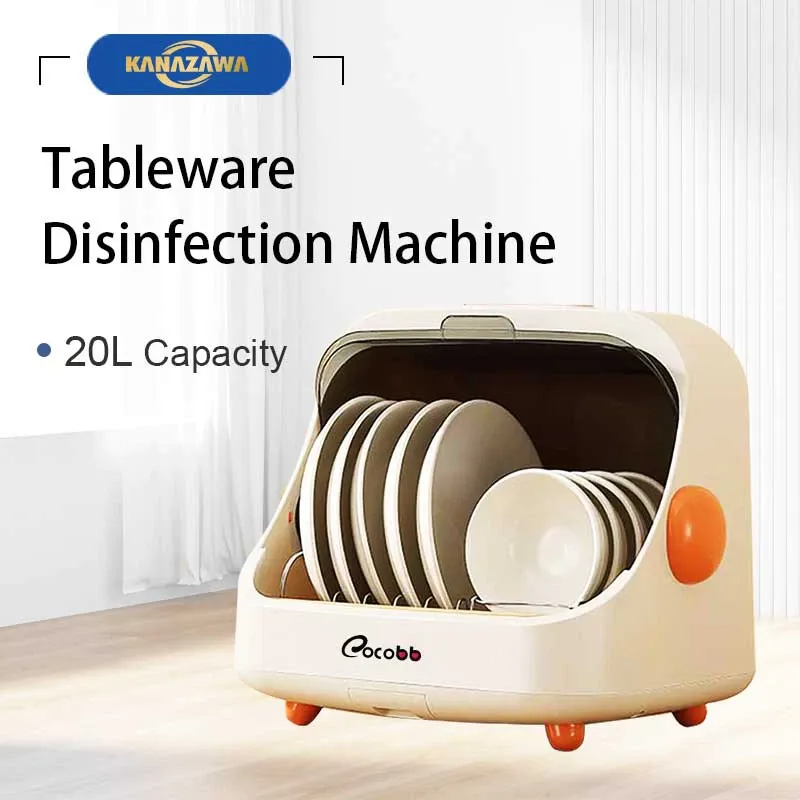
Best Overall: COCOBB 20L Mini UV Dish Sterilizer and Drying Cabinet
₱1,700as of Aug 3, 2026
A 20L cabinet that stores dishes as well as sterilizing them, so it replaces the dish rack rather than sitting beside it. Closed lid, UV plus heat, and full published specs.
- 2
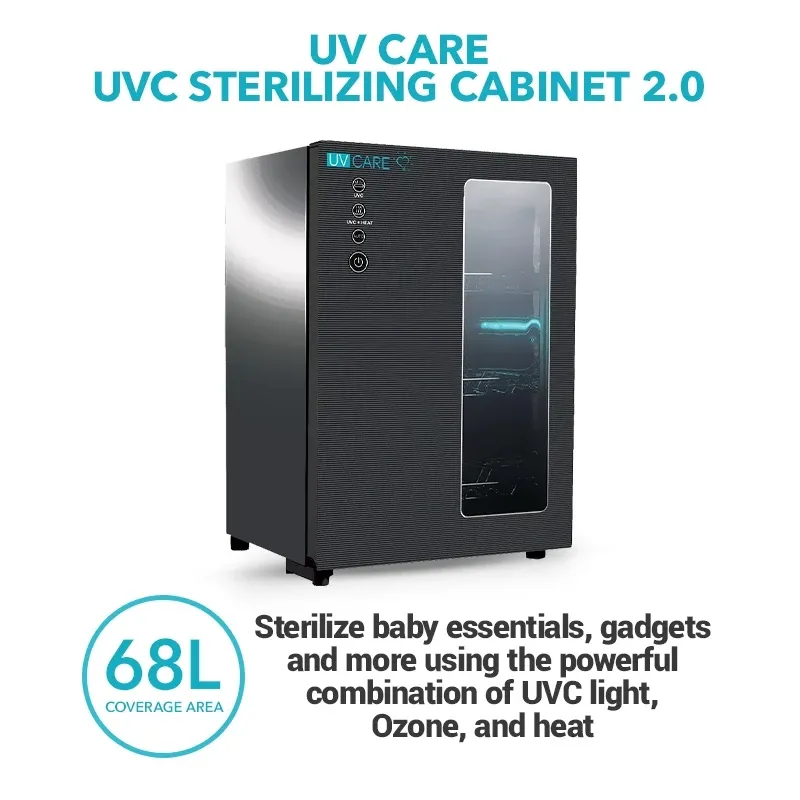
Best Premium: UV Care UVC Sterilizing Cabinet XXL 68L
₱20,000as of Aug 3, 2026
A 68L stainless-lined cabinet that combines UVC, ozone, and heat to sterilize bottles, gadgets, and household items in one 30-minute run. Serious equipment at a serious price.
Top picks compared
Swipe the table sideways to see Capacity and Rated power.
| # | Product | Award | Price | Shopee rating | Capacity | Rated power |
|---|---|---|---|---|---|---|
| 1 | COCOBB 20L UV Cabinet | Best Overall | around ₱1,700 | 4.9 ★ | 20 L | 100W |
| 2 | UV Care Cabinet XXL | Best Premium | around ₱20,000 | 5 ★ | 68 L | 160W |
Prices are Shopee PH listings as of each product's last check. See the linked reviews for dates. Ratings are the Shopee listings' own owner ratings, not our score.
A UV cabinet does something an open dish rack cannot: it closes. Your plates dry inside and then stay covered instead of collecting kitchen dust for the rest of the day. Here is how the UV sterilizing cabinets on Shopee PH compare.
Capacity and disinfection method
We compared interior capacity, disinfection method, drying temperature, published wattage and dimensions, interior material, and owner ratings. We weighted the disinfection method heavily, because ultraviolet light only treats the surfaces it directly illuminates, so a cabinet that pairs UV with heat or ozone does a meaningfully more complete job than one relying on light alone.
This is a small, sharply divided category rather than a crowded one. There is a domestic tier at under ₱2,000 and a professional tier around ₱20,000, with very little in between, so the honest question is which tier you belong in rather than which of ten similar boxes to buy.
UV only treats what it shines on, so load loosely
Worth being precise, because this is the claim the whole category rests on.
Ultraviolet light in the UVC band disrupts the DNA of bacteria and viruses on the surfaces it illuminates. That works, and it works quickly. The limitation is geometric rather than chemical: UV only treats what it directly shines on. Stack two plates and the lower face of the top one is shaded. Load a cup upside down and the inside is dark.
That is why the disinfection method on the listing matters more than the lamp wattage:
- UV alone is the weakest configuration. It is fine for flat items laid out with space around them, and unreliable for a packed cabinet.
- UV plus heat is the standard on domestic cabinets. The heat stage does the drying and adds a second mechanism that does not depend on line of sight.
- UV plus ozone plus heat is the professional configuration. Ozone is a gas, so it reaches into the shadows light misses. The trade is that the cabinet needs to air out before you unload it.
However good the method, load the cabinet loosely. A tightly packed box gives you an uneven result whatever the lamp is doing.
On a rack, dry plates sit out for twenty-three hours
The genuine argument for a cabinet is not sterilizing. It is storage.
An open dish rack dries your plates in about an hour and then leaves them sitting in the open for the other twenty-three, collecting kitchen dust, ipis, and whatever flies through. A cabinet dries them and then keeps them covered. If your kitchen is next to an open window or a busy street, that is a real difference rather than a marketing one.
What you give up is running cost and flexibility. A rack is passive and free. A cabinet draws 100W to 160W for a cycle of 30 minutes or more, needs an outlet, and holds only what fits inside it. A large family will still need an open rack alongside a 20L cabinet.
Will a 20L cabinet fit beside your sink?
- Around 20 litres is a desktop cabinet sized for a small household’s plates, bowls, cups, and cutlery, usually with a bottle rack included. It replaces the dish rack for one or two people.
- 60 litres and up stops being kitchenware and becomes a household appliance: bottles, breast pump parts, feeding bowls, phones, keys, and masks in a single run. These are floor-standing or need a dedicated stretch of counter.
Check the published body dimensions, not just the litre figure. A 20L cabinet is still a box roughly 35cm on a side, which is a lot of counter next to a sink.
What build details separate the tiers?
- Interior material. Stainless steel 304 takes repeated UVC and ozone exposure without degrading. The plastic linings on cheaper cabinets yellow and turn brittle over time.
- Lamp life. A published rating, such as 8,000 hours, gives you a real replacement interval. Without one you are guessing when the lamp output has faded below useful, and a faded lamp fails silently.
- Drying temperature. Typically 60 to 70°C on domestic models. Hot enough to dry properly, and hot enough to warp thin plastic.
- Published wattage and dimensions. As with any appliance, a listing that gives you a litre figure and nothing else is one you cannot compare or plan around.
Cycles run 30 minutes or more at 100W to 160W
Capacity sets what the cabinet replaces. Twenty litres holds a small household’s plates and doubles as the dish rack. Sixty-eight litres swallows bottles, pump parts, gadgets, and masks in one run.
UV alone is not enough. Light does not bend around a stacked plate. Look for heat, ozone, or both alongside the UV lamp.
Interior material matters over time. Stainless steel takes repeated UVC and ozone exposure without degrading. Plastic linings on cheaper cabinets yellow and turn brittle.
Count the running cost. These draw 100W to 160W for cycles of 30 minutes or more, which a passive rack does not.
The COCOBB 20L uses UV plus medium and high heat
The COCOBB 20L UV dish sterilizer takes Best Overall for households: it disinfects with UV plus medium and high temperature, dries at 60 to 70°C, includes a bottle rack, and publishes its full specification down to the body dimensions and wattage, which is rare at this price. For a small household that wants dishes stored covered rather than air-drying in the open, it is the sensible entry point.
The UV Care UVC Sterilizing Cabinet XXL is our Best Premium pick and a genuinely different class of machine: 68 litres, a stainless steel 304 interior, UVC at 253.7nm combined with ozone and heat, and an 8,000-hour lamp rating. It is more than ten times the price and it is not ten times better at sterilizing a plate, so buy it for the scale and the construction, not to do the COCOBB’s job.
Very little sits between 20L home cabinets and clinic-grade 68L
Prices are approximate and move around (Shopee PH ranges as of August 2026). Check the live listing.
| Budget | What you get |
|---|---|
| ₱1,500–₱2,500 | Domestic 20L desktop cabinets. UV plus medium and high temperature, 60–70°C drying, around 100W, touch control, bottle rack included |
| ₱20,000+ | Professional 68L cabinets. UVC plus ozone plus heat, stainless steel 304 interior, rated lamp life, around 160W, 30-minute cycles |
The gap between those tiers is real, not an omission on our part. This category divides sharply into household boxes and clinic-grade equipment with very little in the middle, so the useful question is which tier your situation calls for.
Frequently asked questions
What does a UV sterilizer cabinet actually do?
It uses ultraviolet light, usually alongside heat, to disinfect items inside a closed box, then stores them covered. The closed storage is half the value: an open dish rack dries your plates and then leaves them exposed to dust and insects all day.
Does UV light sterilize everything inside?
Only the surfaces the light physically reaches. Anything shaded by another object is missed, which is why the better cabinets combine UV with heat, or with ozone, to reach into the shadows. Do not stack items tightly and expect an even result.
Is a UV cabinet better than a steam bottle sterilizer?
They solve different problems. A steam sterilizer treats a rack of bottles in about ten minutes. A UV cabinet handles mixed items, plates, gadgets, and keys, then stores them. For bottles alone a steam unit is faster and cheaper.
Can I put plastic containers in a UV cabinet?
Be careful with thin plastic. These cabinets dry with heat, typically 60 to 70°C on domestic models, which is warm enough to warp lightweight tupperware. Plates, glass, ceramics, and heat-resistant items are the safe load.
How much electricity does a UV sterilizer cabinet use?
Domestic cabinets are rated around 100W, larger ones up to 160W, and cycles run 30 minutes or more. That is an ongoing cost a passive dish rack does not have, and it is worth counting before you replace a rack with a cabinet.
What does ozone add over plain UV?
Ozone is a gas, so it reaches into the shadows that a straight beam of ultraviolet light cannot. Cabinets that generate it need to air out before you unload them, which effectively lengthens the cycle beyond the stated time.
Disclosure: Product Choicest is reader-supported. We may earn a commission when you buy through our Shopee links, at no extra cost to you. Read our affiliate disclosure.