
4 Best emergency lights in the Philippines (2026)
The Omni AEL-9032L is our Best Overall emergency light on Shopee Philippines: its 12V 9Ah battery runs both lamps for 8 hours, which is the spec that actually matters when a brownout drags on. We compared the most popular automatic emergency lights on runtime, brightness, and battery size.
In a hurry? Omni Automatic Emergency Light AEL-9032L is our top pick for most homes, or go for the Akari Emergency Light 1.5W AELG-L411 at around ₱999 if you're on a budget.
Our quick picks
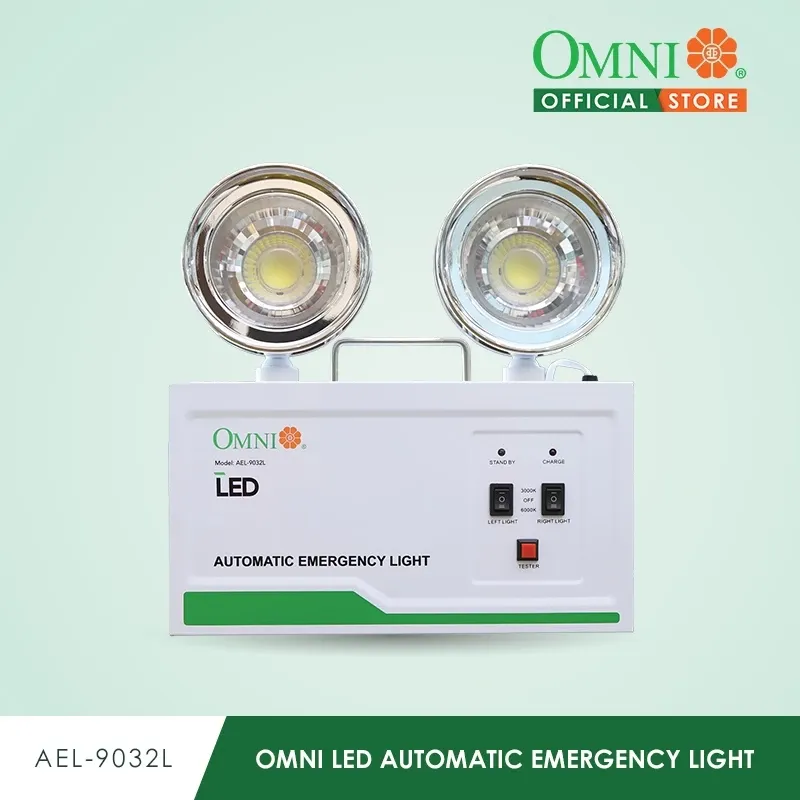
Best Overall: Omni Automatic Emergency Light AEL-9032L
₱2,800as of Jul 30, 2026
Read our review of the Omni AEL-9032L Emergency Light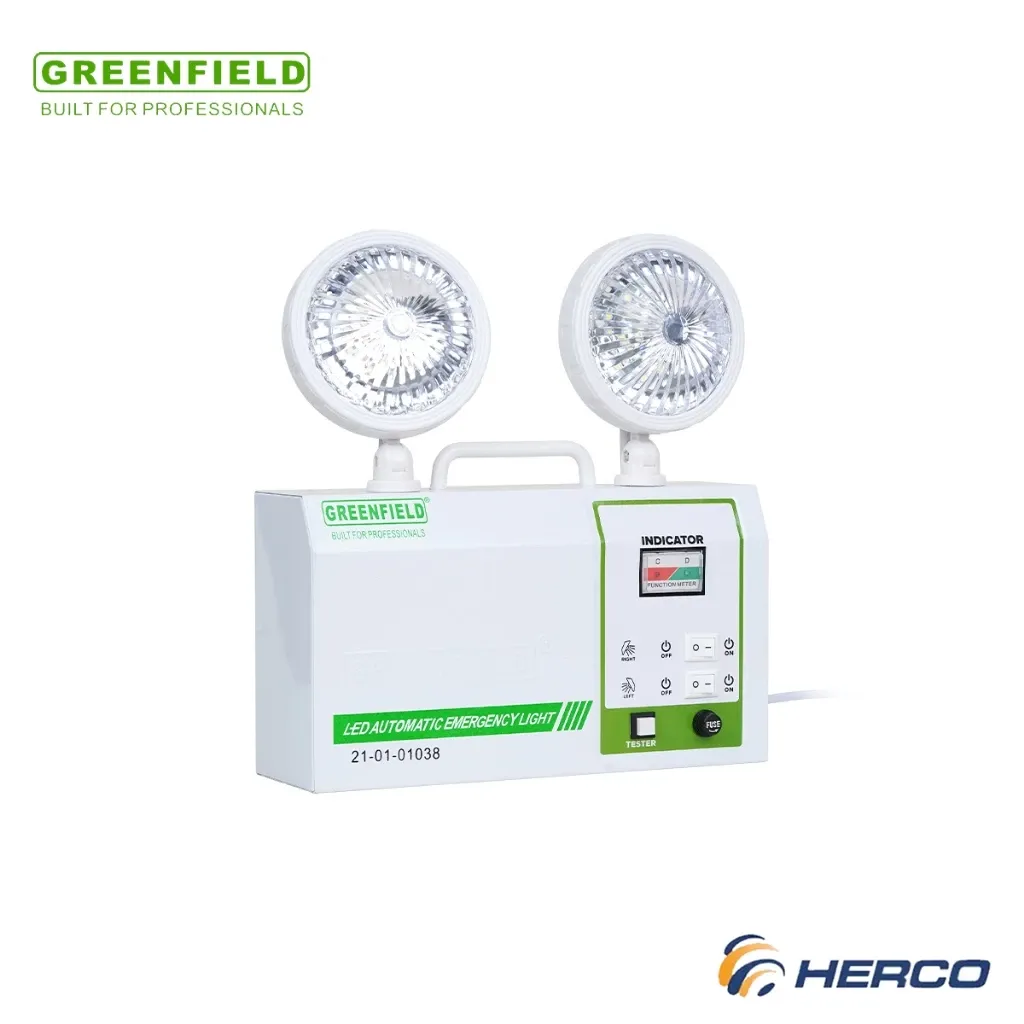
Best Value: Greenfield LED Automatic Emergency Light
₱1,100as of Jul 30, 2026
Read our review of the Greenfield LED Emergency Light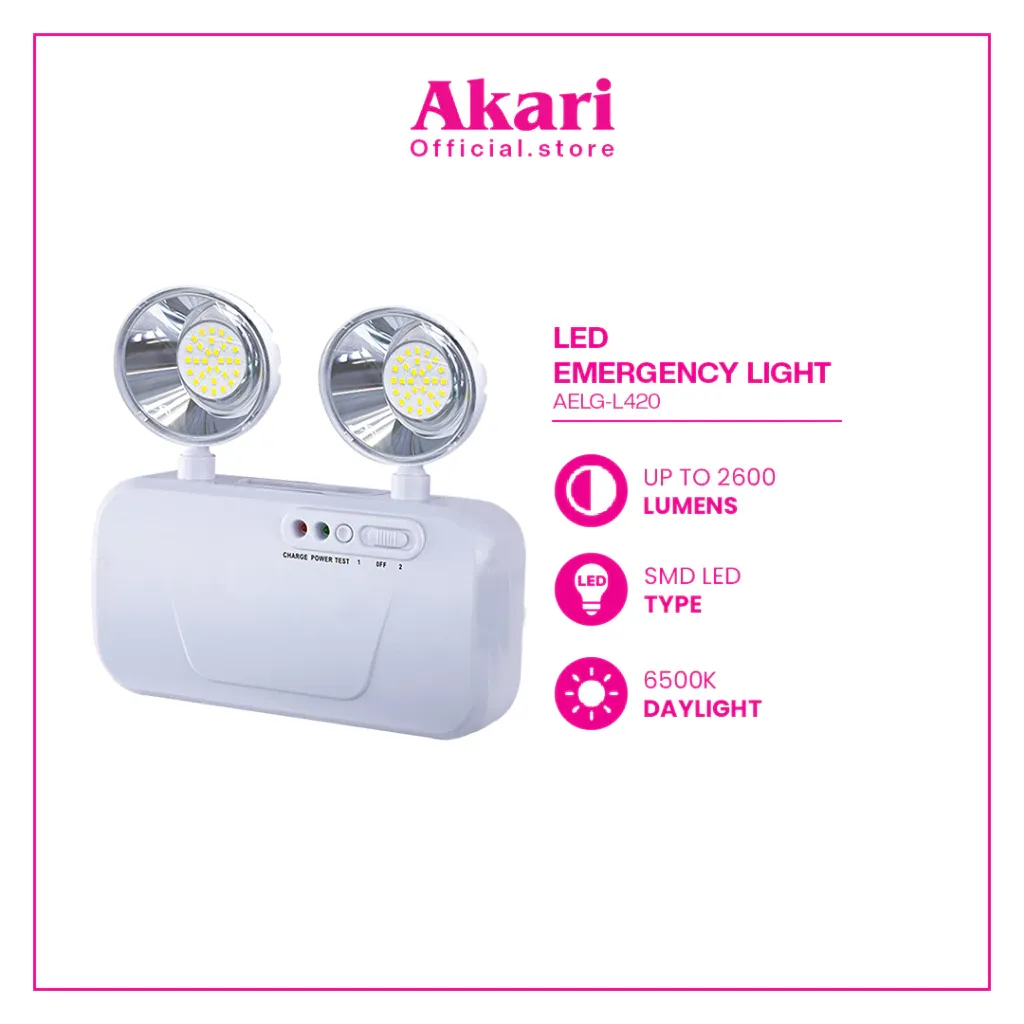
Brightest: Akari LED Ultrabright Emergency Light AELG-L420
₱2,500as of Jul 30, 2026
Read our review of the Akari AELG-L420 Emergency Light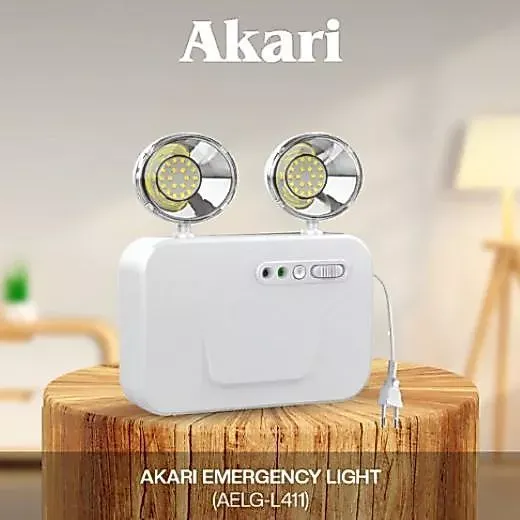
Best Budget: Akari Emergency Light 1.5W AELG-L411
₱999as of Jul 30, 2026
Read our review of the Akari AELG-L411 Emergency LightTop picks compared
Swipe the table sideways to see Lamps and Battery.
| # | Product | Award | Price | Shopee rating | Lamps | Battery |
|---|---|---|---|---|---|---|
| 1 | Omni AEL-9032L Emergency Light | Best Overall | around ₱2,800 | 4.9 ★ | 2x3 W SMT LED | 12 V 9.0 Ah sealed lead acid |
| 2 | Greenfield LED Emergency Light | Best Value | around ₱1,100 | 4.9 ★ | 2x2 W LED | 6 V 5 Ah heavy duty |
| 3 | Akari AELG-L420 Emergency Light | Brightest | around ₱2,500 | 4.9 ★ | 2x15 W SMD LED | 6 V 4,500 mAh sealed lead acid |
| 4 | Akari AELG-L411 Emergency Light | Best Budget | around ₱999 | 5 ★ | 1.5 W LED | 4 V 2.2 Ah lead acid |
Prices are Shopee PH listings as of each product's last check. See the linked reviews for dates. Ratings are the Shopee listings' own owner ratings, not our score.
Brownouts are a fact of life here, and an automatic emergency light is the cheapest way to stop one from being a scramble for phone torches. Here’s how the most popular emergency lights on Shopee Philippines compare.
Runtime, lumens, and battery type
We compared runtime on both lamps and on one, lamp wattage and rated lumens, battery type and capacity, switching behavior, and charge time, then weighed each against its price. Every spec here is checked against the manufacturer’s own Philippine data (Omni, Akari, and Greenfield all publish theirs), and where sellers disagree with each other we say so in the review rather than repeat a number we can’t stand behind. New to these? Start with our emergency light buying guide.
Will it outlast your brownout?
Runtime is the spec that matters, and it’s the one buyers skip. A light that floods your sala for 3 hours is worse than a dim one that lasts 8 if your power is out all evening, so start from how long your outages actually run. Battery capacity is the honest version of that number: a 12V 9Ah pack simply holds more than a 6V 4.5Ah one, whatever the listing claims. Lumens decide whether the room is usable or merely navigable, roughly 400 to move around and 1,500-plus to actually use a room. Automatic switching is the whole point, so confirm it comes on by itself rather than needing a button. Finally, look for overcharge and over-discharge protection, because these live permanently on charge and that circuit decides how many years the battery lasts.
Remember the core trade: brightness and runtime pull against each other on a fixed battery. No light here wins both.
Lights we would have ready
Omni AEL-9032L wins Best Overall: 8 hours on both lamps and 14 on one, from a 12V 9Ah battery, at around ₱2,800. The Greenfield LED automatic emergency light is our Best Value at around ₱1,100, dim at 2x2W but good for roughly 16 hours on a single lamp, and the best seller of the group. For a room you can actually use, the Akari AELG-L420 is the Brightest at 2,600 lumens for around ₱2,500, with the catch that it runs only 3 hours. On the tightest budget, the Akari AELG-L411 covers the basics for around ₱999 with 6 hours on one lamp.
All prices are as of July 30, 2026.
What a watt-hour of battery costs on this list
An emergency light is a battery with lamps attached, so the honest way to compare prices is per watt-hour of storage. Multiply the battery’s volts by its amp-hours and you get the number that decides how long the light stays on: the Omni’s 12 V 9.0 Ah cell is 108 Wh, the Greenfield’s 6 V 5.0 Ah is 30 Wh, the Akari L420’s 6 V 4.5 Ah is 27 Wh, and the Akari L411’s 4 V 2.2 Ah is 8.8 Wh.
| Pick | Price | Stored energy | Cost per watt-hour | Runtime |
|---|---|---|---|---|
| Omni AEL-9032L | around ₱2,800 as of July 30, 2026 | 108 Wh | ₱26 | 8 h on both lamps |
| Greenfield LED | around ₱1,100 as of July 30, 2026 | 30 Wh | ₱37 | about 16 h on one lamp |
| Akari AELG-L420 | around ₱2,500 as of July 30, 2026 | 27 Wh | ₱93 | 3 h on both lamps |
| Akari AELG-L411 | around ₱999 as of July 30, 2026 | 8.8 Wh | ₱114 | 3 h on both lamps |
The spread is more than four to one, and it explains the ranking on this page better than any other number. The Omni holds 108 Wh, more than the other three put together, and it is the cheapest storage here at ₱26 a watt-hour. That is the whole reason it takes Best Overall despite having the dimmest lamps of the twin-head units.
At the other end, the Akari AELG-L411 is the cheapest thing on the page at around ₱999 and the most expensive storage on it, at ₱114 a watt-hour. You are not paying for a small light. You are paying for a small battery.
Brightness or endurance: you cannot have both here
Two of these publish a lumen figure, and the pair of them shows the trade exactly. The Akari AELG-L420 puts out 2,600 lumens from 2x15W of LED, which is the brightest thing on this page by a wide margin and works out at ₱0.96 a lumen. It runs for three hours. The Omni is 2x3W, a fifth of the lamp power, and it runs for eight.
That is not a design flaw on either one. It is arithmetic: 30 W of lamps draining 27 Wh of battery cannot last, and 6 W of lamps draining 108 Wh can.
So decide which failure you would rather have. If your outages are short and you want to keep working, take the light that floods the room. If they run into the evening, take the one that is still on at hour six. In Metro Manila a scheduled Meralco interruption is usually the first kind and a storm outage is the second, which is why the Omni is our default pick and the Akari L420 is the one we would put in a workshop.
Neither Omni nor Greenfield publishes a lumen rating, only lamp wattage, so we have not estimated one for them. Watts drawn and lumens produced are different things and the conversion depends on the LED.
Only 322 owner ratings, and what to do about that
This is the thinnest evidence base of any category we cover. All four picks together carry 322 Shopee ratings, and the biggest single count is the Greenfield’s 129. For comparison, one air fryer on our kitchen list has more than ten thousand.
The scores are 4.9, 4.9, 4.9 and a 5.0, and the 5.0 comes from 49 people. Treat none of that as settled. A category this quiet cannot give you a reliable owner consensus, and pretending otherwise would be the wrong read.
What it does tell you: nobody is reporting these as duds. Past that, weigh the things you can check yourself instead. All four are from named Philippine lighting brands with published specs, which is uncommon at this price and is the reason all four made the list. Omni, Akari and Greenfield have local distribution and parts. A no-name unit at ₱600 has neither, and its battery rating is whatever the listing says it is.
The ratings shown here are Shopee’s, not our score.
Which of these belongs in your house?
Most homes, most brownouts. The Omni AEL-9032L. Eight hours on both lamps covers an evening outage, it switches on by itself, and the 108 Wh battery is the most storage per peso here.
You want a spare in another room without spending much. The Greenfield LED at around ₱1,100. It is dim, it switches in under 0.1 second, and about 16 hours on a single lamp is enough to see by all night.
You need to actually work during an outage. The Akari AELG-L420 and its 2,600 lumens, as long as you accept three hours and a daylight-white 6,500 K that is too harsh for a bedroom.
You want the cheapest light that is still a real brand. The Akari AELG-L411 at around ₱999. Buy it as a hallway or CR light, not as your only one.
Keeping a lead acid emergency light alive
All four picks here run sealed lead acid batteries, and that chemistry has one habit worth knowing: it dies from being left flat, not from being used. A light that sat discharged in a cabinet for a rainy season is often the one that gives you twenty minutes when you needed eight hours, and the unit itself is fine. The battery is not.
So treat it the way you would a car battery.
- Leave it plugged in. Every one of these has overcharge protection, so permanent mains power is the intended state, not a risk. A unit that lives on the wall unplugged is a unit that will disappoint you.
- Run it flat on purpose, about twice a year. Switch it on, let it drain, then charge it fully. It tells you the real runtime you have left, which is the only way to find out before an outage does it for you.
- Charge it fully after every use. The Omni wants up to 48 hours and the others 20 to 24, so plug it back in the moment power returns rather than the following weekend.
- Expect two to four years. Then the runtime drops and you replace the battery, not the light. A 6 V 4.5 Ah or 12 V 9 Ah sealed lead acid cell is a standard part sold in any electrical shop, and swapping it is four screws and two spade connectors.
- Do not store it somewhere hot. Heat is what ages these cells fastest, so a cabinet above the stove is the worst place in the house for one.
Where to actually mount it
The instinct is to put an emergency light in the living room, where everyone is. It is usually the wrong spot, because during a brownout everyone has a phone torch there anyway.
Put the first one where a phone torch is not enough and where the dark is genuinely a hazard: the top of the stairs, then the kitchen, then the CR. Those are the three places where people get hurt during an outage, and the automatic switching on all four picks means the light comes on before anyone has found their phone.
Mount it high, above head height and pointed across the ceiling rather than straight down. The ceiling scatters the light around the whole room, and a 2x15W head aimed down at eye level is dazzling in a dark house. This is also why the Omni’s softer 2x3W is more pleasant to live with than the numbers suggest, and why the 6,500 K Akari is better in a workshop than a bedroom.
Where these picks fall short
Every one of them is lead acid. Not one uses lithium. Sealed lead acid is cheap and heavy, it does not like being left flat, and it wears out after a few years whether you use it or not. Budget for a replacement battery, and charge the unit even in months with no brownouts.
They are slow to recharge. The Omni needs up to 48 hours for a full charge and the other three need 20 to 24. If outages come back to back, none of these will be at full capacity for the second one.
Two of them run three hours on both lamps. The Akari L420 and L411 will be out before a long evening outage ends. Run one lamp instead of two and you roughly double it.
Runtime figures conflict on the Greenfield. Different listings for it quote different numbers, so we have used the single-lamp figure and would treat the two-lamp one as unconfirmed.
These are wall-mounted lights, not lamps. The Omni in particular is meant to be screwed to a wall and left there. If you want something to carry from room to room, you want a rechargeable lamp, not an emergency light.
Pros and cons of our top picks
- 1
Omni Automatic Emergency Light AEL-9032L
✓ Pros
- 8 hours on both lamps outlasts every other pick here, enough for a long brownout
- 12V 9Ah battery is roughly double the capacity of the 6V units
✗ Cons
- 2x3W is dimmer than the 2x15W panels, it lights a room rather than floods it
- Sealed lead acid is heavier than lithium and wears out after a few years
- 2
Greenfield LED Automatic Emergency Light
✓ Pros
- Around 16 hours on one lamp, so it can carry a whole night's brownout
- Best seller of the emergency lights we looked at, with 846 sold and a 4.9 rating
✗ Cons
- 2x2W is the dimmest twin-head here, fine for moving around, not for reading
- Published runtime figures conflict between listings, so treat the 2-lamp number with care
- 3
Akari LED Ultrabright Emergency Light AELG-L420
✓ Pros
- 2,600 lumens genuinely lights a whole room, not just a path to the door
- 2x15W panels are five times the wattage of the budget twin-head units
✗ Cons
- 3 hours on both lamps is the shortest runtime here, a long brownout will outlast it
- The 4,500mAh 6V battery is small for 30W of lamps, which is why runtime is short
- 4
Akari Emergency Light 1.5W AELG-L411
✓ Pros
- Cheapest way to get an automatic emergency light from a known PH brand
- 6 hours on a single lamp is respectable for a 4V battery
✗ Cons
- 400 lumens at most, which is enough to move around by and not much more
- The 4V 2.2Ah battery is the smallest here, so a long outage will drain it
Frequently Asked Questions
How many hours should an emergency light last?
Match it to your area's outages. If brownouts are the announced two-hour maintenance kind, 3–4 hours is plenty. If they run all evening, you want 8 hours or more on both lamps, which in practice means a 12V battery of 7Ah or larger. Buying on brightness alone is the common mistake.
What's the difference between an emergency light and a flashlight?
An emergency light stays plugged in and switches on by itself the moment power cuts, so you never have to find it in the dark. A flashlight is handheld and has to be located first. Most homes want one automatic light per floor plus a torch, not one or the other.
How many lumens do I need?
Around 400 lumens is enough to move around a room safely. To actually use a sala or kitchen, you want 1,500 lumens or more. Brightness costs runtime on a fixed battery, so decide which you need before you compare models.
Should I leave an emergency light plugged in all the time?
Yes. These are designed for it, and the better ones have overcharge protection. Leaving a lead acid battery flat for months is the fastest way to ruin it, so permanent charging is both safe and correct.
Are lead acid batteries in emergency lights a problem?
They work fine but they don't last forever: expect to replace the pack after a few years. Lead acid is also heavier than lithium, which is why these are wall-mounted rather than carried. Models with over-discharge protection last noticeably longer.
Disclosure: Product Choicest is reader-supported. We may earn a commission when you buy through our Shopee links, at no extra cost to you. Read affiliate disclosure.