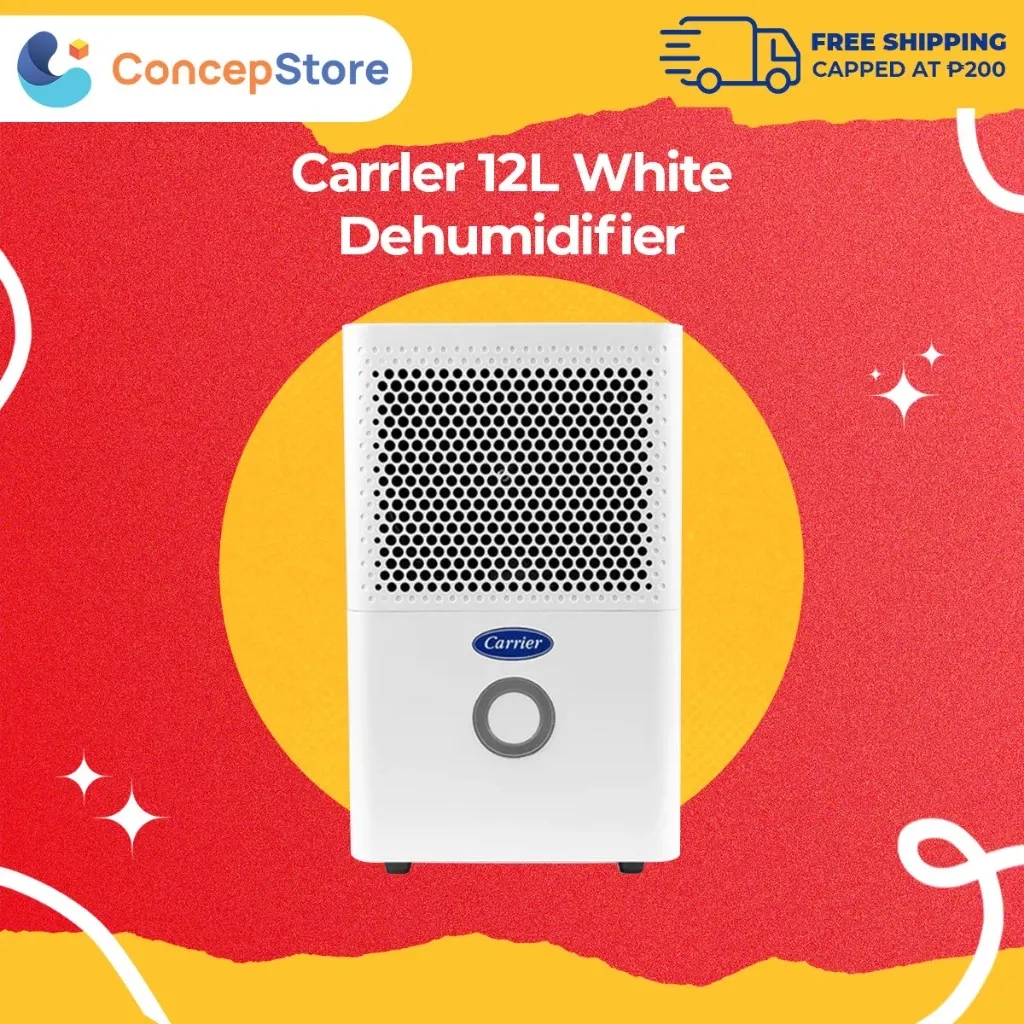
Carrier 12L White Dehumidifier
₱9,500as of Aug 12, 2026

The Carrier 12L covers a bigger room for less money and has a nationwide service network. The Xiaomi Lite is the one to buy if noise is your deciding factor: 38 dB is the quietest published figure here, and it is the only unit with app scheduling.
The Carrier 12L Dehumidifier is our top dehumidifiers pick. On value, the Carrier 12L Dehumidifier costs less (₱9,500 vs ₱12,000), and the Xiaomi Dehumidifier Lite 13L has the higher owner rating (5.0★ vs 4.9★).
₱9,500as of Aug 12, 2026
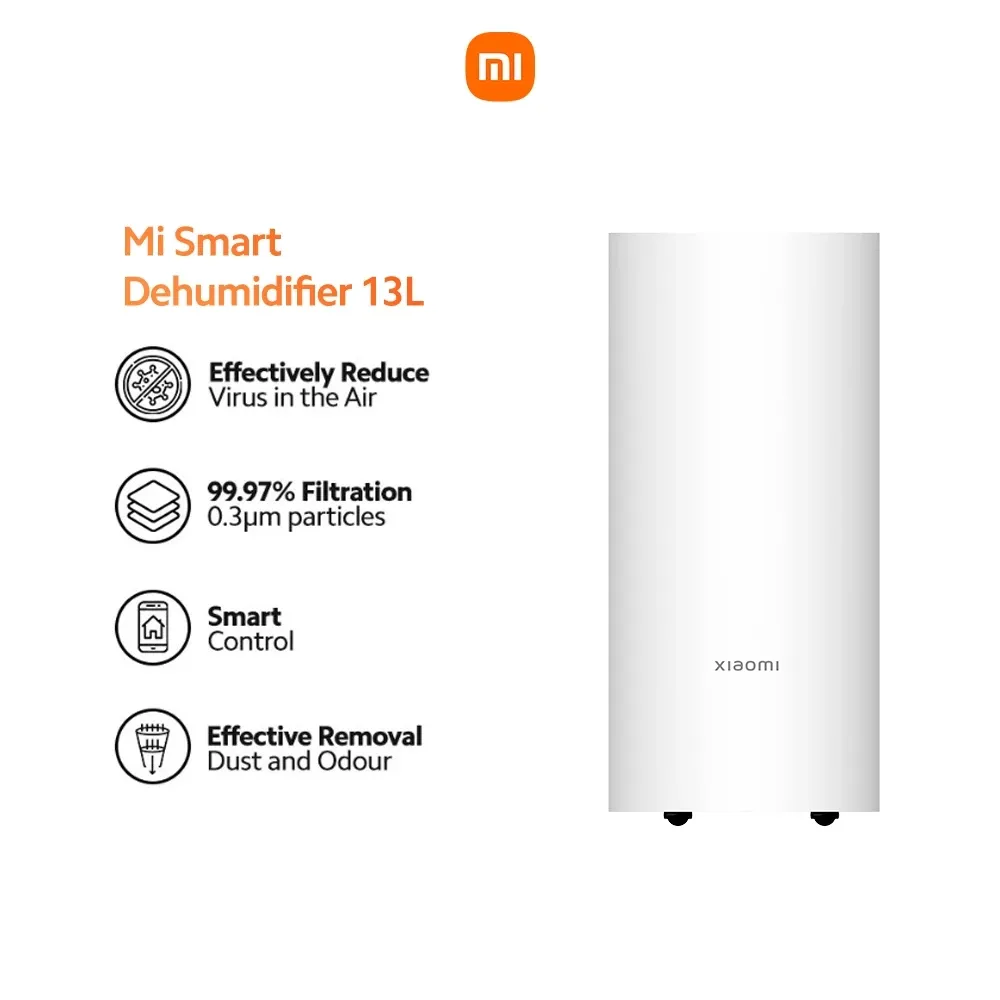
₱12,000as of Aug 12, 2026
| Spec | Carrier 12L Dehumidifier | Xiaomi Dehumidifier Lite 13L |
|---|---|---|
| Shopee rating | 4.9★ | 5.0★ |
| Price | ₱9,500 | ₱12,000 |
| Type | Compressor dehumidifier | Compressor dehumidifier |
| Extraction rate | 12 L/day | 13 L/day at 30°C, 80% RH |
| Coverage | Up to 30 sqm | 15–25 sqm |
| Power / Wattage | 240W | 190W rated, 250W max |
| Dimensions | 256 x 203 x 415 mm | – |
| Weight | 10 kg (gross) | – |
| Features | Auto mode, drying function, continuous drain option | Smart defrosting, refrigerant leak protection, child lock |
| Model | – | DM-CS13BFA5B |
| Water tank | – | 3 L |
| Air flow | – | 140 m³/h |
| Noise level | – | Up to 38 dB(A) |
| Connectivity | – | Wi-Fi 2.4GHz, Mi Home app |
The Xiaomi extracts slightly more water and costs noticeably more. The Carrier covers a bigger room for less. Neither of those is the reason most people end up choosing one, though.
For a bedroom unit, it usually is.
The Xiaomi publishes up to 38 dB(A). That is the only noise figure any unit in this category gives us, and 38 dB is quiet enough to sleep through.
Carrier publishes nothing on noise. It is a compressor machine, so expect fridge-like sound rather than fan sound, but we cannot tell you how much and will not guess.
If the dehumidifier is going into a bedroom and will run overnight, the Xiaomi is the safer buy on the strength of that one published number.
The Carrier, despite the smaller extraction figure.
Carrier: 12 L/day, up to 30 sqm coverage, 240W. Xiaomi: 13 L/day, 15 to 25 sqm coverage, 190W rated with a 250W maximum, 140 m3/h airflow.
Extraction rate is how much water the unit can pull in ideal conditions. Coverage is how big a room it can actually keep dry, and it depends on how fast it moves air. The Xiaomi pulls marginally more water in a smaller space; the Carrier reaches further.
For one bedroom, either is fine. For a sala or an open-plan area, the Carrier is the correct size.
The Xiaomi’s, and this is worth saying plainly because it is unusual in this category.
Xiaomi publishes a full sheet: model number, extraction at a stated temperature and humidity, tank size, airflow, noise, rated and maximum wattage, operating temperature range, and named features including smart defrosting, refrigerant leak protection and a child lock. You can compare it to anything.
Carrier publishes extraction, coverage, wattage and dimensions. That is more than most rivals and less than Xiaomi.
Where Carrier wins is after the sale: a nationwide aircon service network in the Philippines, against thinner Xiaomi parts and filter support here. For a compressor appliance you expect to own for years, that is not a small thing.
Buy the Carrier for a larger room, a lower price, and the confidence that someone can service it locally. Accept that you do not know how loud it will be.
Buy the Xiaomi for a bedroom where quiet matters, if you already use Mi Home, or if you simply want the unit that documents itself properly. Accept the smaller coverage and the thinner local parts support.
Read the full Carrier 12L review or the Xiaomi Smart Dehumidifier Lite review, and see the whole field in our best dehumidifiers in the Philippines ranking.
Prices shown above were ₱9,500 and ₱12,000 when we last checked. Shopee is the live source.
The Xiaomi, and it is the only one in our ranking that publishes a number: up to 38 dB(A). Carrier publishes no noise figure at all. Both are compressor units, so neither is silent, but 38 dB is roughly library quiet and is the strongest argument for the Xiaomi in a bedroom.
The Carrier, at up to 30 sqm against the Xiaomi's 15 to 25 sqm, despite the Xiaomi extracting slightly more water per day (13L against 12L). Extraction rate and coverage are different things: coverage accounts for airflow and how fast the unit can turn the room's air over.
No. It runs from its own controls. The Mi Home app adds scheduling and remote control, which is genuinely useful if you want the unit to run while you are out and stop before you get home. If you already run Xiaomi gear it slots straight in; if you do not, it is another app and account.
Neither is designed for one, but the Xiaomi states its limits: rated for 5 to 35°C. Compressor dehumidifiers lose efficiency as temperature drops, which is why they suit Philippine humidity well and unheated cold rooms badly. In an air-conditioned bedroom set to 24°C, both work fine.
See both ranked in our Best dehumidifiers in the Philippines (2026), or compare other dehumidifiers. Read the Carrier 12L Dehumidifier review. Read the Xiaomi Dehumidifier Lite 13L review.
Disclosure: Product Choicest is reader-supported. We may earn a commission when you buy through our Shopee links, at no extra cost to you. Read our affiliate disclosure.