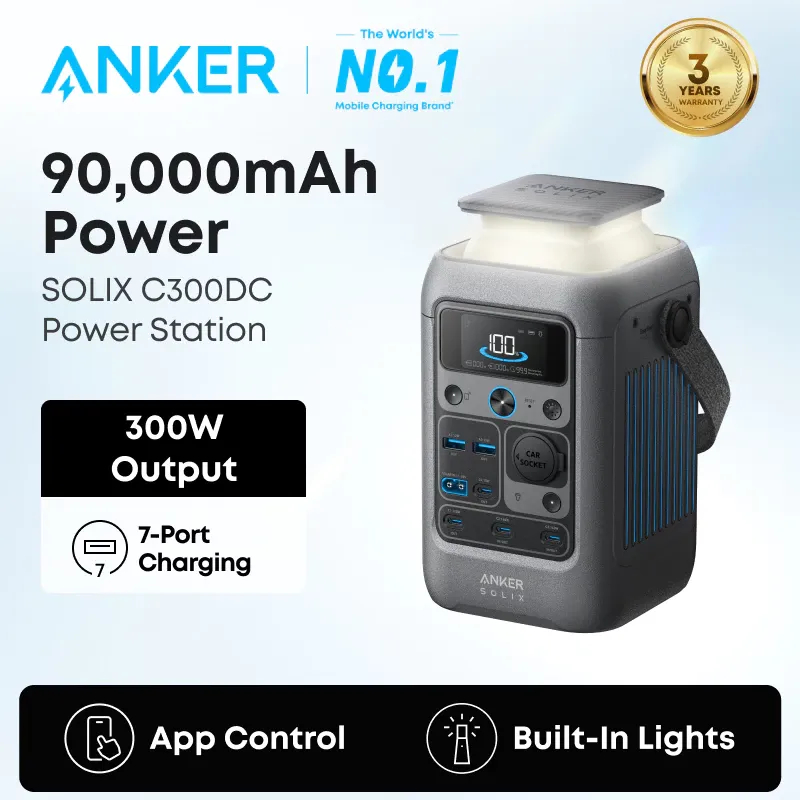
Anker SOLIX C300 DC Portable Power Station 288Wh A1726
₱13,000as of Jul 31, 2026
COD · Shopee-protected payment

How we reviewed this: we read the Shopee PH listing, checked the listed specs, and went through 650 owner ratings.
Anker SOLIX C300 DC Portable Power Station 288Wh A1726A well-built 288Wh LiFePO4 pack for around ₱13,000, but the DC version has no AC outlets at all, so it cannot run a fan or a lamp during a brownout.
₱13,000as of Jul 31, 2026
COD · Shopee-protected payment
| Brand | Anker |
|---|---|
| Type | Portable power station |
| Price | ₱13,000 (as of Jul 31, 2026) |
| Shopee owner rating | 5.0 ★ from 650 Shopee ratings |
| Shop | Anker Flagship Store |
| Units sold | 644 |
Specs per Anker; the DC model omits the inverter and has no AC outlets
| Type | Portable power station |
|---|---|
| Model | A1726 |
| Capacity | 288 Wh (90,000 mAh) |
| Battery | LiFePO4, 3,000 cycles |
| Output | 300 W |
| AC outlets | None, this is the DC-only version |
| Ports | 4 x USB-C plus a 12 V car socket |
| Weight | About 2.8 kg |
The Anker SOLIX C300 DC is a well-built 288Wh LiFePO4 pack for around ₱13,000. Before you consider it for brownouts, know this: it has no AC outlets at all.
The DC version removes the inverter entirely. You get four USB-C ports and a 12V car socket, and that’s it. No wall sockets.
So it will not run an electric fan, a lamp, a router with a wall adapter, a rice cooker, or anything else you plug into a normal outlet. For the household brownout job most Filipino buyers want a power station for, it simply doesn’t do it.
The listing calls it a “Power Bank Station,” a “Portable Power Station,” and a “300W Solar Generator.” None of that makes the limitation obvious, which is why we’re leading the review with it.
If you take it as what it is, a large, efficient device-charging pack, it’s a good one.
288Wh of LiFePO4 rated for 3,000 cycles is real capacity from a brand with actual Philippine retail presence. Four USB-C ports charge a phone, tablet, laptop, and camera at once. At around 2.8kg it’s roughly 1.3kg lighter than the AC version of the same battery.
There’s a genuine efficiency argument too: inverters waste energy converting DC to AC and give off heat doing it. Charging straight over USB-C means more of that 288Wh reaches your devices.
Around ₱13,000 as of July 31, 2026. Check the latest price on Shopee. That’s the hard part. One number makes it easier to weigh: the LiFePO4 pack is rated for 3,000 cycles, so across its rated life the sticker works out to roughly ₱4 per full charge. That is the fairer way to judge a battery than the figure on the listing, as long as you actually use it enough to get there.
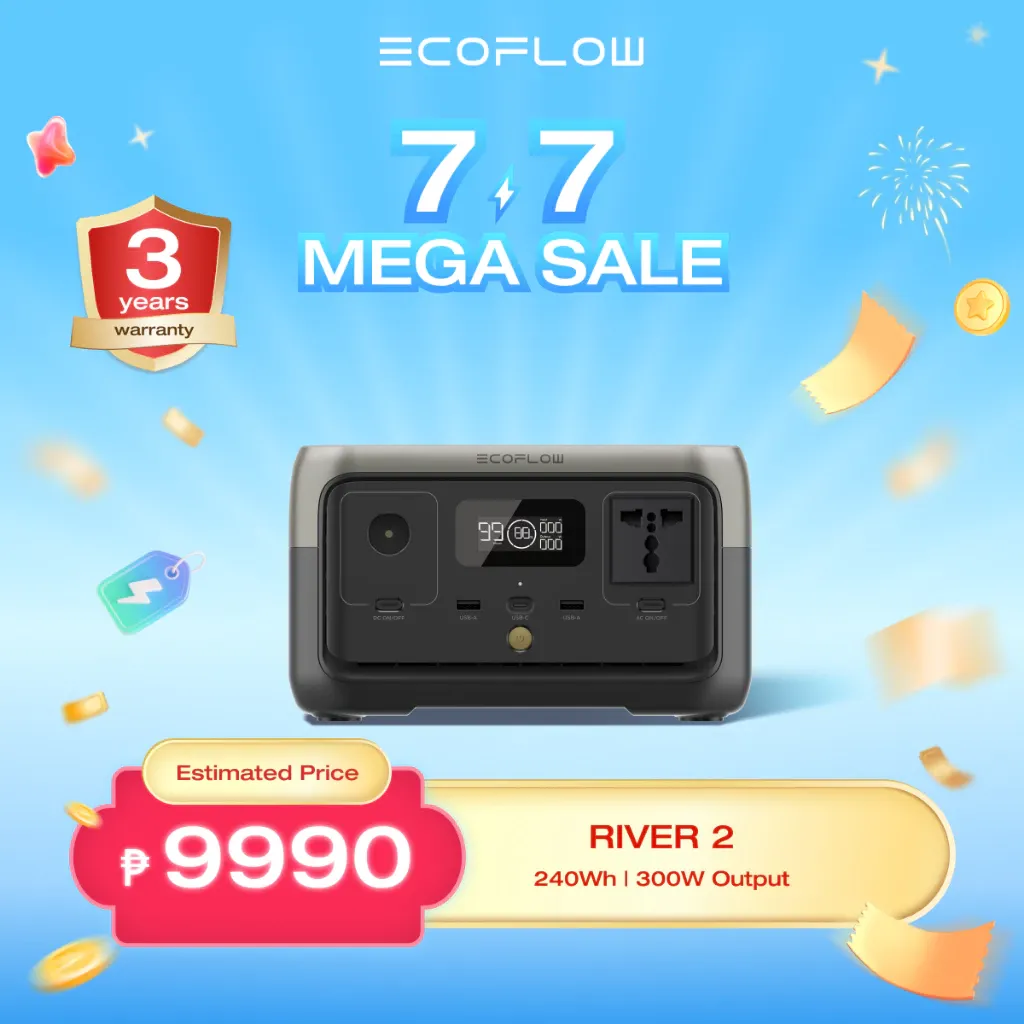
The EcoFlow RIVER 2 costs around ₱10,000, holds a comparable 256Wh of LiFePO4, and has an AC outlet with 300W of output. It’s cheaper and does more. Unless the weight saving and the USB-C efficiency are specifically what you need, that comparison is difficult to argue with.
For campers, photographers, and drone pilots charging gear off-grid, the case is better: lighter, no wasted inverter, four fast USB-C ports.
Buy this if you charge gadgets away from mains power and you know you’ll never need a wall socket from it. Do not buy it as household brownout backup. See the picks that do that job in our best portable power stations in the Philippines roundup, or browse more on our Home Improvement page. Our portable power station buying guide explains what to check before buying.
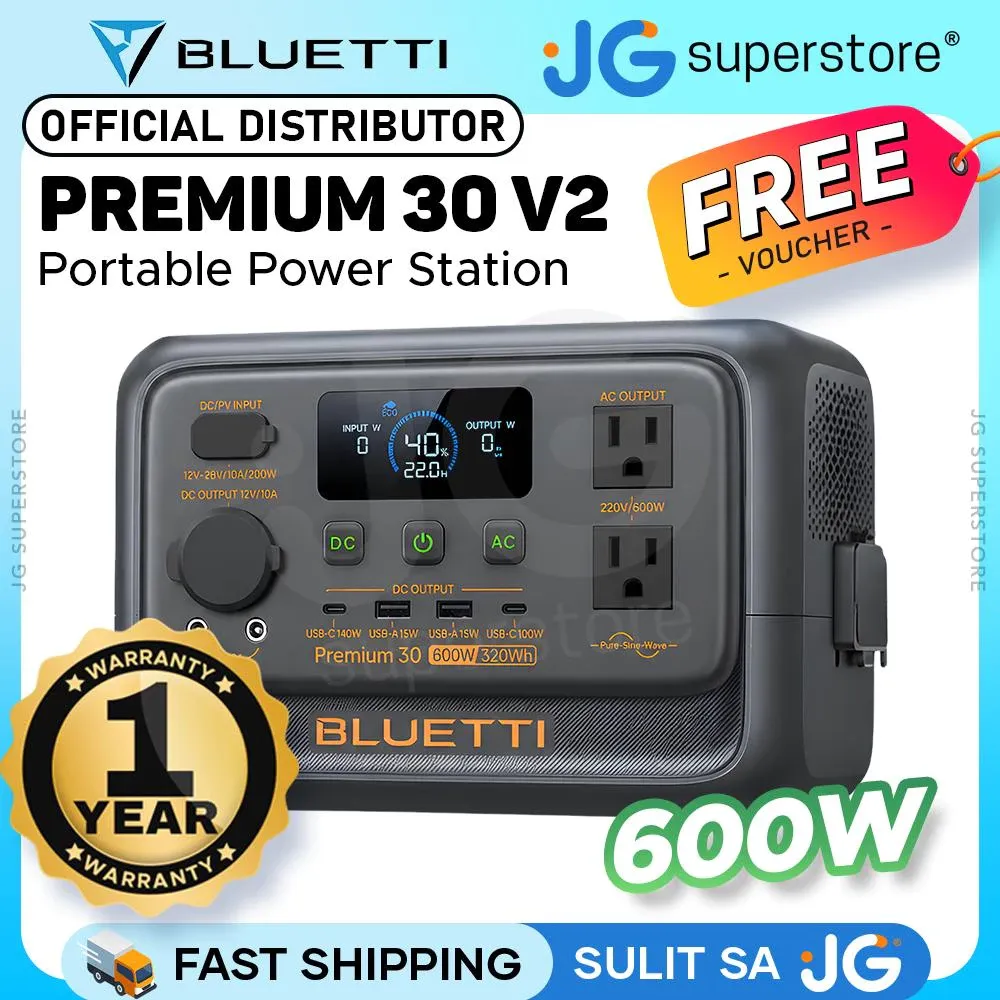
For less money, the EcoFlow RIVER 2 gives you similar capacity plus a working AC outlet, which is our Best Value pick at around ₱10,000. If you want a light unit with real AC output and UPS protection, the BLUETTI Premium 30 V2 is 4.3kg with 600W and a 10ms switchover.
See how it compares with the other top picks in our portable power stations comparison.
No. The DC version has no AC outlets. It has four USB-C ports and a 12V car socket, so it charges phones, tablets, laptops, cameras, and drones, but nothing with a normal wall plug. If you want to run a fan or a lamp during a brownout, this is the wrong model.
The AC version has three AC outlets and an internal inverter; the DC version removes both. That drops about 1.3kg of weight and the price, but it also removes the ability to power anything with a wall plug. Same 288Wh LiFePO4 battery in both.
Yes, two. It's lighter, around 2.8kg, and inverters waste energy converting DC to AC, so more of the 288Wh actually reaches your devices when you charge over USB-C. For a pure device-charging pack, that's a real efficiency gain.
People charging gadgets away from power: campers, photographers, drone pilots, anyone working from a car or a site. As household brownout backup, it doesn't do the main job.
Every card links to our full review.
₱10,000as of Jul 31, 2026
₱27,900as of Jul 31, 2026
Disclosure: Product Choicest is reader-supported. We may earn a commission when you buy through our Shopee links, at no extra cost to you. Read affiliate disclosure.