
7 Best portable power stations in the Philippines (2026)
The BLUETTI AC70P is our Best Overall portable power station on Shopee Philippines: 864Wh with 1,000W continuous and 2,000W lifting for around ₱34,000, the only pick here that will actually boil a kettle. We compared the most popular power stations on continuous output, real capacity in watt-hours, and charge time.
In a hurry? The BLUETTI Premium 80 AC70P Portable Power Station 1000W 864Wh is our top pick for most homes, or go for the Yoobao EN300WLPD 300W 72000mAh Portable Power Station with LED Light at around ₱7,200 if you're on a budget.
Our quick picks
- 1
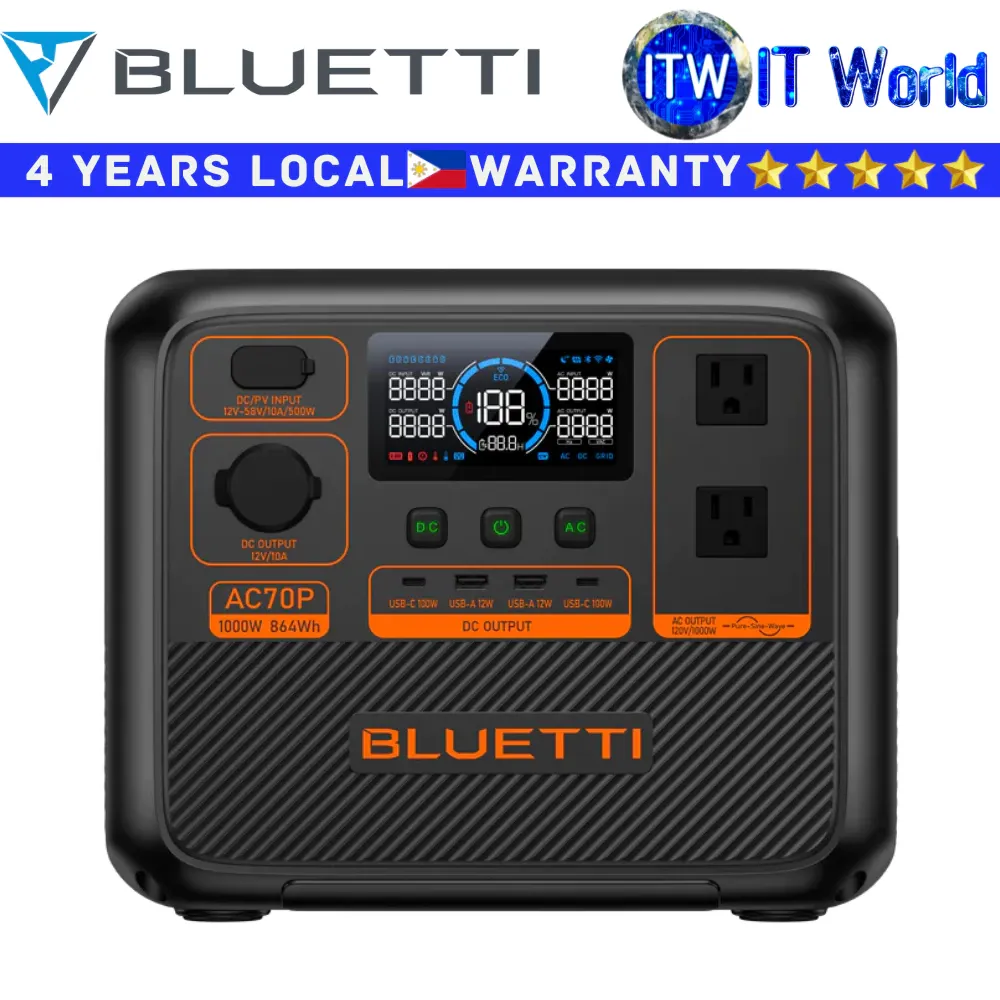
Best Overall: BLUETTI Premium 80 AC70P Portable Power Station 1000W 864Wh
₱34,000as of Jul 31, 2026
Our Best Overall power station: 864Wh with 1,000W continuous and 2,000W lifting for around ₱34,000, the only pick here that will boil a kettle.
- 2
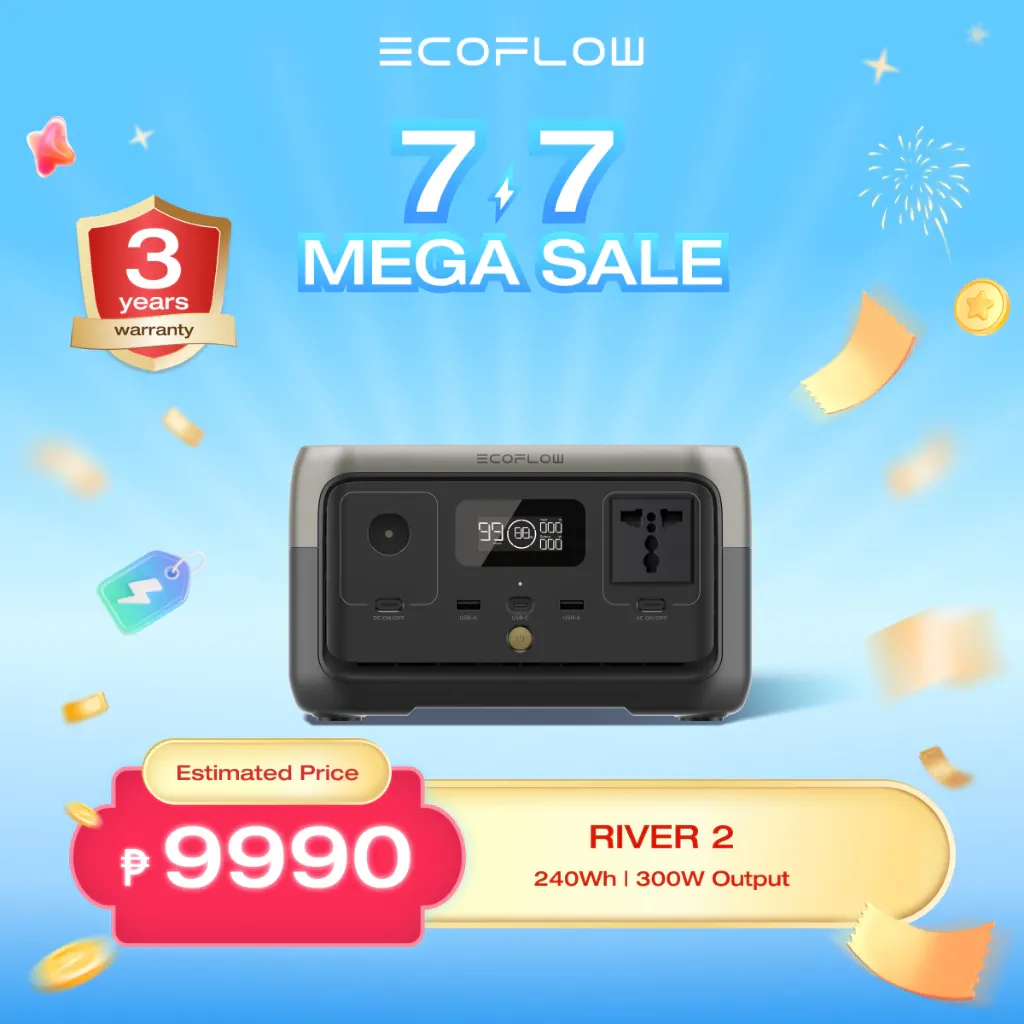
Best Value: EcoFlow RIVER 2 Portable Power Station 220V
₱10,000as of Jul 31, 2026
Our Best Value power station: 256Wh of LiFePO4 that fully charges in 60 minutes for around ₱10,000, the cheapest honest way into a tier-one brand.
- 3
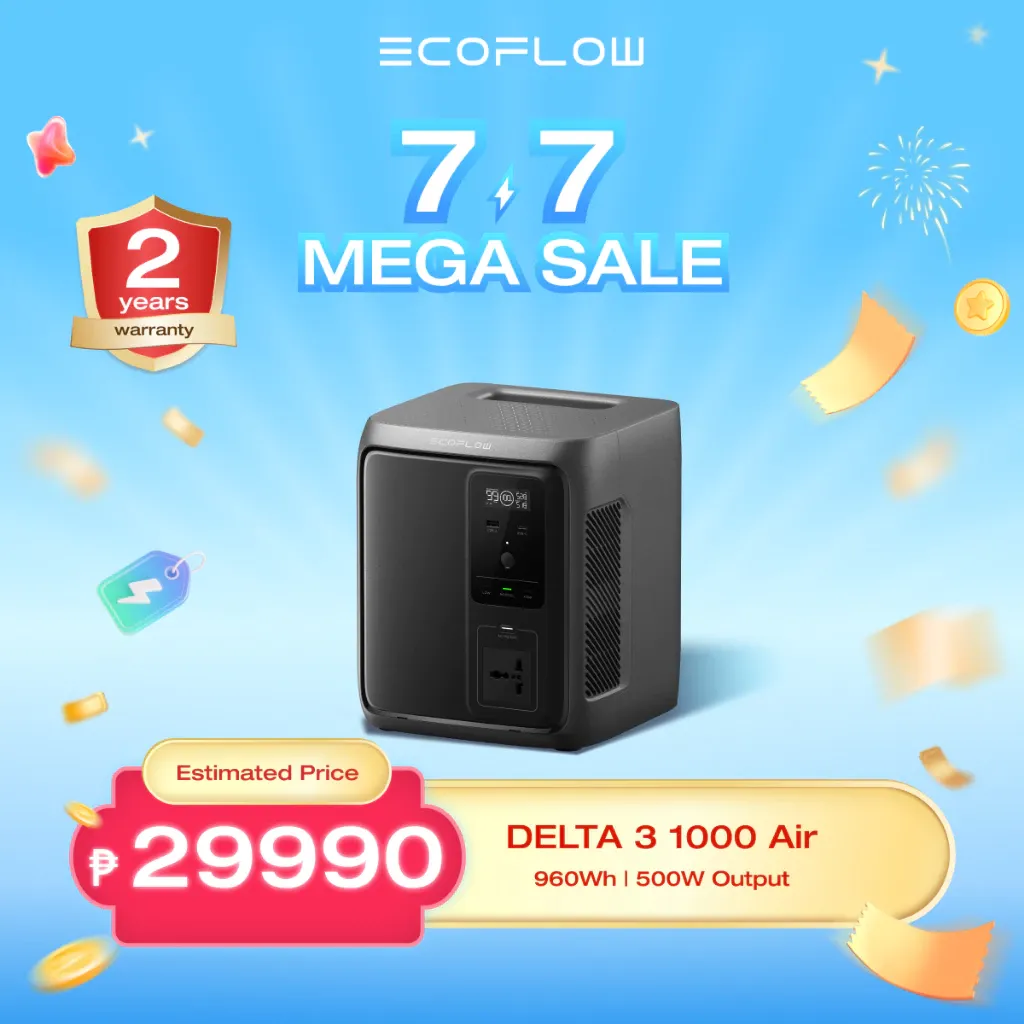
Best for Home Backup: EcoFlow DELTA 3 1000 Air Portable Power Station 960Wh
₱30,000as of Jul 31, 2026
Our Best for Home Backup pick: 960Wh with a 10ms UPS switchover for around ₱30,000, as long as you know the 1000 in the name isn't its output.
- 4
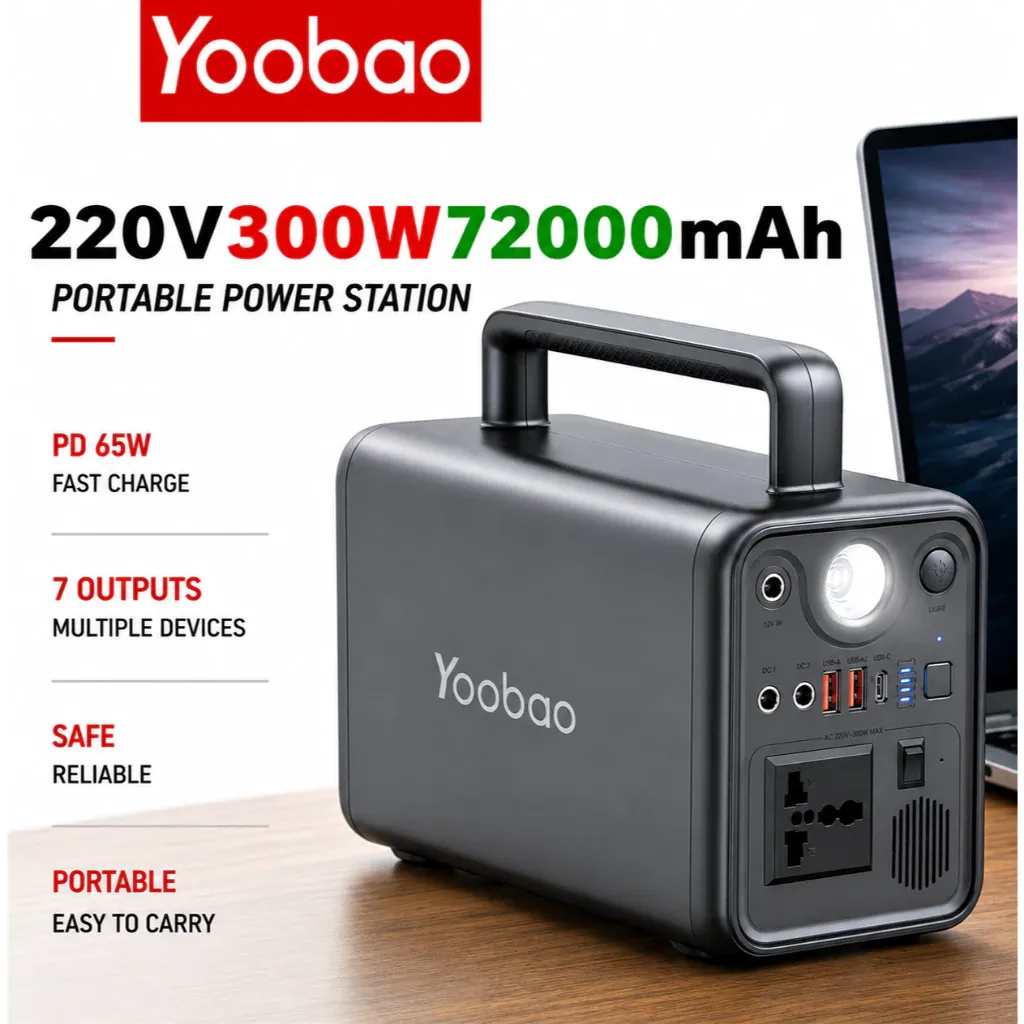
Best Budget: Yoobao EN300WLPD 300W 72000mAh Portable Power Station with LED Light
₱7,200as of Jul 31, 2026
Our Best Budget power station: 300W AC and 65W USB-C PD for around ₱7,200, the cheapest real AC output here, as long as you accept it publishes no watt-hour rating.
- 5
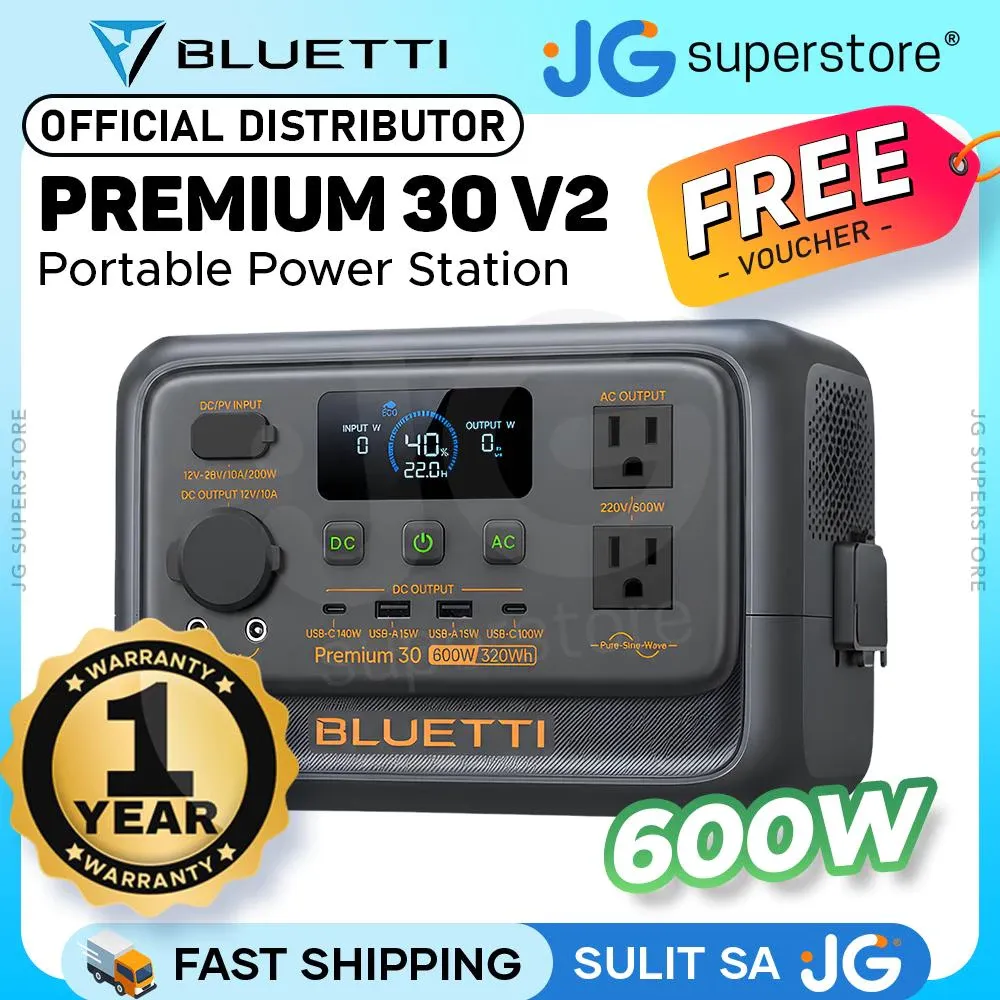
Most Portable: BLUETTI Premium 30 V2 Portable Power Station 600W 320Wh
₱26,300as of Jul 31, 2026
Our Most Portable pick: 4.3kg carrying a 10ms UPS and 600W output for around ₱26,300, expensive for 320Wh but the easiest real backup to move around.
- 6
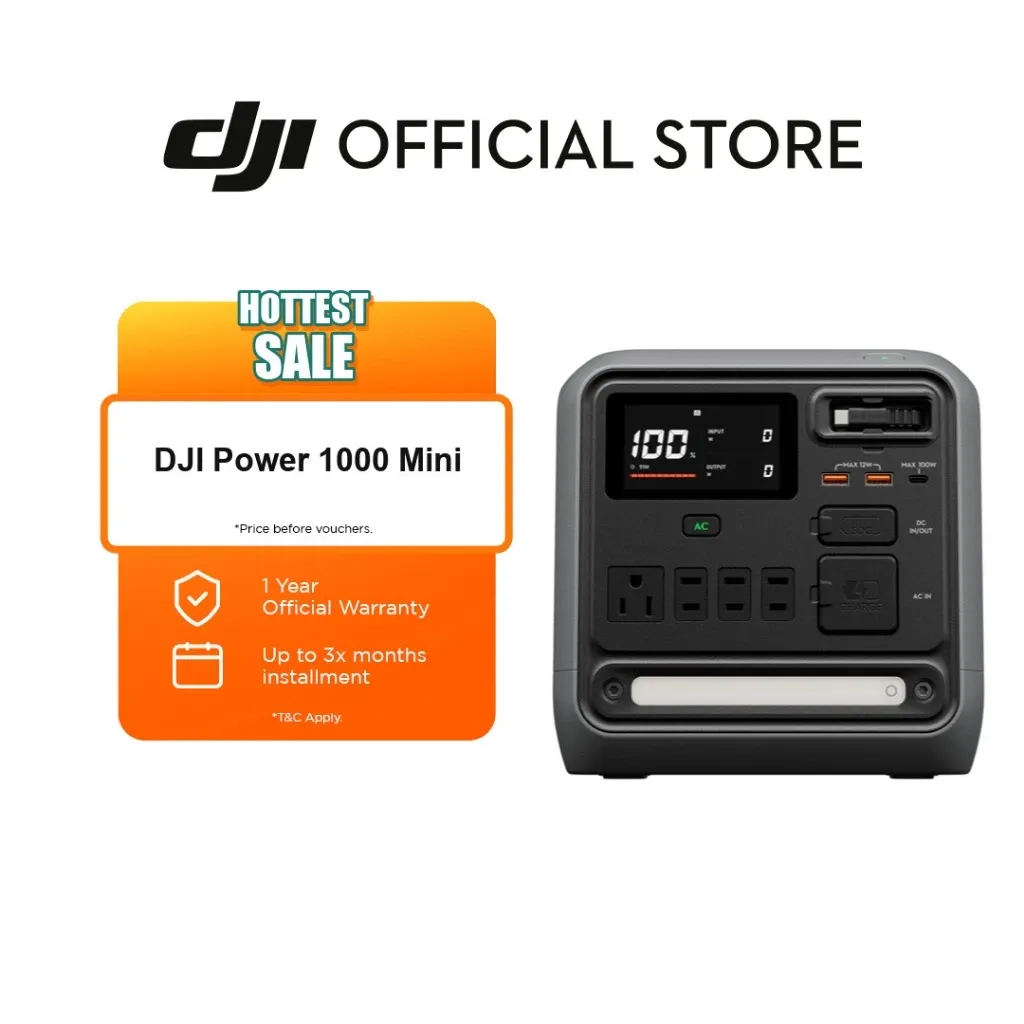
Best for Cameras and Drones: DJI Power 1000 Mini / 1000 V2 Portable Power Station
₱36,000as of Jul 31, 2026
Our Best for Cameras and Drones pick: around 1kWh with a stated 5-year warranty for about ₱36,000, but one listing covers two machines with wildly different output.
- 7
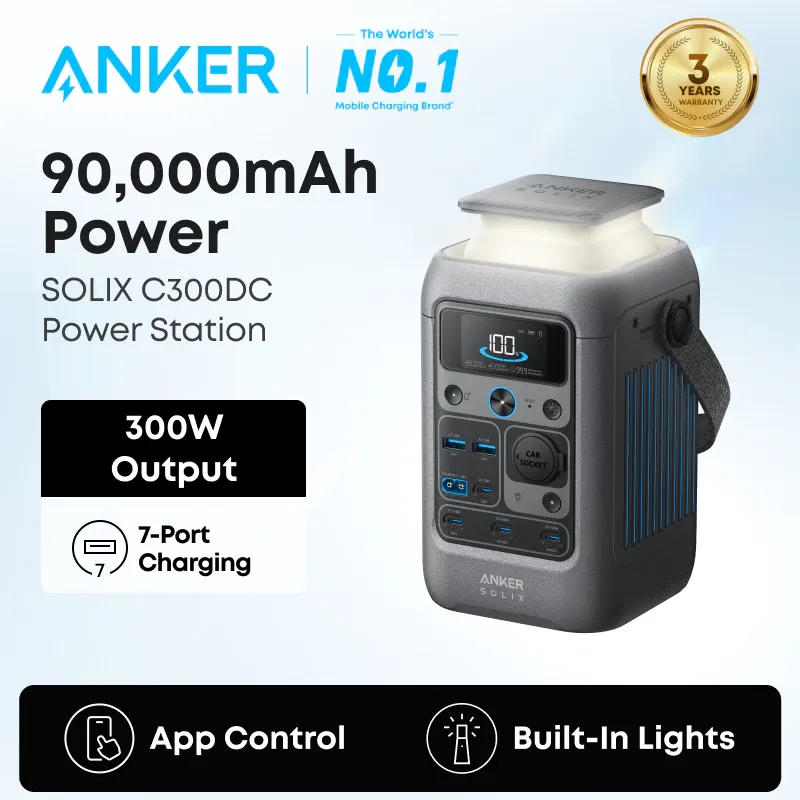
Best for Devices Only: Anker SOLIX C300 DC Portable Power Station 288Wh A1726
₱13,000as of Jul 31, 2026
A well-built 288Wh LiFePO4 pack for around ₱13,000, but the DC version has no AC outlets at all, so it cannot run a fan or a lamp during a brownout.
Top picks compared
Swipe the table sideways to see Capacity and Battery.
| # | Product | Award | Price | Shopee rating | Capacity | Battery |
|---|---|---|---|---|---|---|
| 1 | BLUETTI AC70P 864Wh Power Station | Best Overall | around ₱34,000 | 5 ★ | 864 Wh | LiFePO4, 3,000+ cycles to 80% capacity |
| 2 | EcoFlow RIVER 2 Power Station | Best Value | around ₱10,000 | 4.9 ★ | 256 Wh | LiFePO4, 3,000+ cycles to 80% capacity |
| 3 | EcoFlow DELTA 3 1000 Air | Best for Home Backup | around ₱30,000 | 4.9 ★ | 960 Wh | LiFePO4 |
| 4 | Yoobao EN300WLPD 300W | Best Budget | around ₱7,200 | 4.9 ★ | – | – |
| 5 | BLUETTI Premium 30 V2 320Wh | Most Portable | around ₱26,300 | 5 ★ | 320 Wh | LiFePO4, 3,000+ cycles |
| 6 | DJI Power 1000 Mini / V2 | Best for Cameras and Drones | around ₱36,000 | 5 ★ | 1,008 Wh (Mini) or 1,024 Wh (V2) | LFP, 4,000 cycles to 70% capacity (DJI) |
| 7 | Anker SOLIX C300 DC 288Wh | Best for Devices Only | around ₱13,000 | 5 ★ | 288 Wh (90,000 mAh) | LiFePO4, 3,000 cycles |
Prices are Shopee PH listings as of each product's last check. See the linked reviews for dates. Ratings are the Shopee listings' own owner ratings, not our score.
With brownouts a fact of life here, a portable power station is the quiet, indoor-safe alternative to a generator. Here’s how the most popular ones on Shopee Philippines compare, from ₱3,200 to ₱41,500.
Continuous output and watt-hours
We compared continuous AC output, capacity in watt-hours, battery chemistry and cycle life, charge time, UPS switchover, and warranty, then weighed each against its price. Specs come from manufacturer data wherever it exists: EcoFlow, BLUETTI, Anker, and DJI all publish complete sheets. Where a brand publishes nothing, we say so in the review rather than repeat a listing claim.
Two findings shaped this list. Listing titles are unreliable in this category: we found capacity understated (a 256Wh RIVER 2 sold as 240Wh, a 768Wh RIVER 2 Pro sold as 700Wh) and output overstated by naming (the “DELTA 3 1000 Air” is 500W continuous). And the budget tier publishes no watt-hours at all, rating in mAh instead, which can’t be compared against the documented units.
Watts cap what runs; watt-hours set how long
Both, and in that order.
Continuous watts is the size of the tap. It caps what you can run at any moment, and no amount of battery changes it. A 300W station cannot start a 1,000W kettle even with a huge pack behind it.
Watt-hours is the size of the tank. It sets how long you can run whatever fits through the tap.
Rough guide for Philippine households:
- Under 300W: router, LED lights, phone and laptop charging, usually a standard electric fan.
- 500–800W: the above plus a TV and a small fridge.
- 1,000W and up: adds heating appliances, a kettle, a rice cooker, a hairdryer.
- 2,600W: power tools, a microwave, a workshop.
And for runtime: a fan, router, phone charging, and LED lights together draw roughly 60–100W, so 256Wh carries them 4–6 hours and 864Wh carries them 8–10.
Don’t trust the number in the name
This is the trap in the category, and it’s worth reading twice.
Product names frequently quote surge output, not continuous. The EcoFlow DELTA 3 1000 Air is rated 500W continuous with 1,000W X-Boost. Its name says 1000. What runs your fridge all evening is the 500.
Listing titles get capacity wrong too, in both directions. Researching this list we found the RIVER 2 sold as “240Wh” when EcoFlow publishes 256Wh, and the RIVER 2 Pro sold as “700Wh” against a published 768Wh. Neither is a scandal, but it tells you the title is marketing and the spec sheet is the truth.
Also watch for “with Solar Panel” in a title. Panels are usually a separate purchase. Confirm what the price includes.
Why battery chemistry decides the real cost
LiFePO4 cells are typically rated beyond 3,000 cycles, roughly a decade of regular use. Cheaper lithium-ion fades much faster, which on a device you buy once and keep is the difference between good value and an expensive mistake.
Every tier-one unit we looked at states LiFePO4 and a cycle count. The budget tier states neither. Those units also rate capacity in mAh instead of watt-hours, which can’t be converted without the cell voltage they don’t publish. A 72,000mAh rating tells you almost nothing on its own.
That’s the real trade at the bottom of this market: you save money and give up the ability to check what you bought.
A one-hour refill and UPS switchover under 10ms
Charge time. Brownouts cluster, so a station that refills in an hour is ready for the next cut while a six-hour one isn’t. The best here does 0–100% in 60 minutes; another does 0–80% in 45.
UPS switchover under 10ms. Leave the unit plugged into the wall with your PC or modem plugged into it, and it takes over fast enough that nothing reboots. If you work from home, this single feature can justify the purchase.
Check both watt figures, then look for LiFePO4
Continuous watts decide what you can run, and it’s the number listings hide behind surge figures. Under 300W is devices and lights; 500–800W adds a TV and a small fridge; 1,000W and up starts to cover heating appliances. Watt-hours decide how long, so check both, because a big battery behind a small inverter still can’t start a kettle. LiFePO4 chemistry is worth insisting on at over 3,000 cycles, roughly ten years. Charge time matters more here than elsewhere, because brownouts cluster: an hour’s recharge means you’re ready for the next one. And a UPS switchover under 10ms turns the unit into an uninterruptible supply for a PC or a modem.
Finally, watch the retail channel. Several of these are carried by third-party shops rather than brand stores, which affects how a warranty claim actually goes.
Stations that carry a brownout
BLUETTI AC70P wins Best Overall at around ₱34,000: 864Wh, 1,000W continuous, 2,000W lifting, 80% charge in 45 minutes, expandable to 3,072Wh, with a stated 2-year warranty. The EcoFlow RIVER 2 is our Best Value at around ₱10,000, with 256Wh of LiFePO4 and the fastest recharge here at 60 minutes. For a home office, the EcoFlow DELTA 3 1000 Air is Best for Home Backup at around ₱30,000, with 960Wh and a 10ms UPS, though only 500W continuous. On a budget, the Yoobao EN300WLPD delivers 300W and a built-in LED light for around ₱7,200. The BLUETTI Premium 30 V2 is Most Portable at 4.3kg with UPS protection, the DJI Power 1000 is Best for Cameras and Drones with around 1kWh and a 5-year warranty, and the Anker SOLIX C300 DC is Best for Devices Only, with the crucial caveat that it has no AC outlets at all.
We also reviewed but did not rank the Jiditech 150W/200W.
Pair any of these with a panel from our best solar panels in the Philippines roundup and the station refills itself between brownouts.
All prices are as of July 31, 2026.
Only a fridge or a true UPS needs a big station
Real Shopee PH prices by tier, as of July 31, 2026:
| Tier | Price range | What you get |
|---|---|---|
| Entry / undocumented | ₱3,200–₱7,200 | 150–300W output, capacity in mAh only, chemistry unstated. Runs a router, lights, and a fan. Cheapest way in, least you can verify. |
| Tier-one small | ₱10,000–₱13,000 | 256–288Wh of LiFePO4, 300W, 60-minute charging, published specs. The sweet spot for fans, lights, and devices. |
| Household backup | ₱26,000–₱36,000 | 320–1,024Wh, 500–2,600W, 10ms UPS on some, expansion batteries, stated warranties. Runs a fridge, and at the top a kettle. |
Most Filipino households are well served by the tier-one small band. Step up to household backup only if you need a fridge running or a genuine UPS.
Frequently asked questions
How many watt-hours do I need for a brownout?
Work backwards from your loads. A fan, router, phone charging, and LED lights draw roughly 60–100W together, so 256Wh runs them 4–6 hours and 864Wh runs them 8–10. Add a fridge and you'll want 800Wh or more. Anything that heats, like a kettle or rice cooker, needs 1,000W or more of output regardless of capacity.
What's the difference between watts and watt-hours?
Watts are how much you can run at once; watt-hours are how long you can run it. A 300W unit can't power a 1,000W kettle no matter how big its battery. Check the continuous watt rating against your appliances first, then the watt-hours for runtime.
Why do some units say 1000 but only output 500W?
Because the name often refers to surge or boost output, not continuous. The EcoFlow DELTA 3 1000 Air is rated 500W continuous with 1,000W X-Boost. Always read the continuous figure, because that's what runs your appliances all evening.
Is LiFePO4 worth insisting on?
Yes. LiFePO4 cells are typically rated beyond 3,000 cycles, roughly ten years of regular use, where cheaper lithium-ion fades much faster. Every tier-one pick here states LiFePO4; the budget units don't state their chemistry at all, which is the main risk in buying one.
Can a power station replace a generator?
For electronics, lights, fans, and a fridge, yes, and it's silent and safe indoors, which a generator isn't. For running an aircon, a water pump, or a whole house, no. Power stations top out around 2,600W here, and their runtime on heavy loads is measured in hours.
Disclosure: Product Choicest is reader-supported. We may earn a commission when you buy through our Shopee links, at no extra cost to you. Read our affiliate disclosure.