
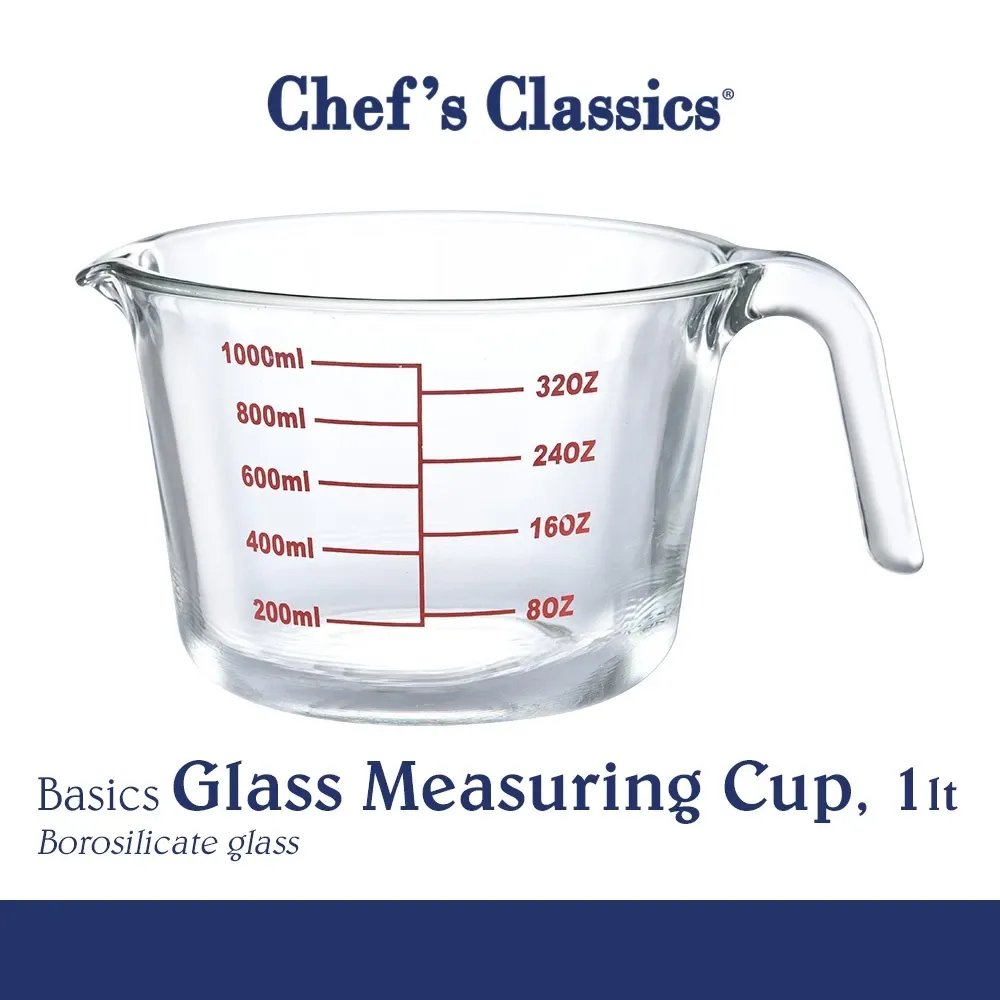
Chef's Classics Basics 1L glass measuring cup review
How we reviewed this: we read the Shopee PH listing, checked the listed specs, and went through 611 owner ratings.
Chef's Classics Basics 1L Glass Measuring CupThe cheaper of the two litre jugs here, and the one whose listing says glass where the other says borosilicate, which is the whole decision.
- Price: ₱335 as of Aug 19, 2026
- Biggest pro: 4.9 rating from 611 ratings, with 1K+ sold
- Main catch: Glass chips or breaks if you knock it off the counter
At a glance
| Brand | Chef's Classics |
|---|---|
| Type | Liquid measuring cup |
| Price | ₱335 (as of Aug 19, 2026) |
| Shopee owner rating | 4.9 ★ from 611 Shopee ratings |
| Shop | Chef's Classics |
| Units sold | 1K+ |
Specifications
| Type | Liquid measuring cup |
|---|---|
| Material | Glass |
| Capacity | 1L |
Pros and cons
✓ Pros
- 4.9 rating from 611 ratings, with 1K+ sold
- Glass build, as stated on the listing
✗ Cons
- Glass chips or breaks if you knock it off the counter
- Heavier to pour one-handed than a plastic cup when full
- Just the one cup, not a full measuring set
A litre of glass at around ₱335 as of August 19, 2026, rated 4.9 from 611 Shopee ratings. The specification line is where this review lives.
Glass and borosilicate are not the same claim
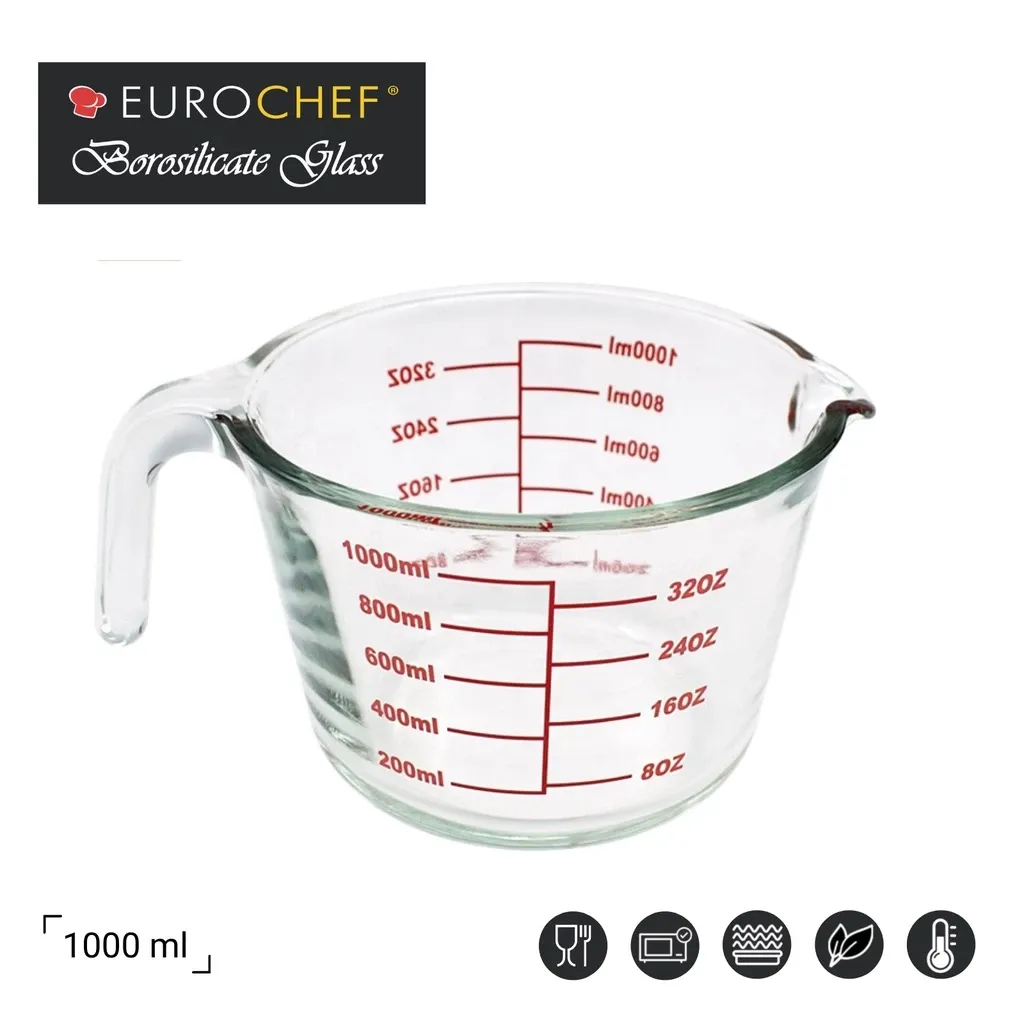
This listing states glass. The Eurochef 9100 1L, the other litre jug on this page, states borosilicate and costs more.
The difference is thermal shock. Ordinary soda-lime glass expands noticeably as it heats, so pouring something hot into a cold jug makes one part of the glass grow while the rest has not caught up, and the stress can crack it. Borosilicate expands very little and shrugs that off, which is why laboratory glassware uses it.
Nothing on this listing says which glass it is. It may well be borosilicate, since many kitchen jugs are, but the page does not claim it, so the safe reading is that it is not.
That turns into a straightforward decision. Cold liquids, juice, iced tea, milk, oil: the saving is real and the jug is fine. Boiling stock, water hot enough for yeast, melted butter: spend the extra and buy the one that names its glass.
What a litre is actually for
Rarely baking on its own. Cake and bread recipes ask for amounts that read badly this far down a wide jug.
A litre earns its place with stock for a pot of soup, brine for chicken, batter poured straight into the pan, and drinks made in one go. Those are the jobs where a small jug means measuring twice.
The precision the size costs you
Volume is read against a line, and in a wide vessel every millimetre of height is a lot of millilitres. So 50ml in a litre jug is an estimate.
Most kitchens end up with two jugs for this reason: something like the Eurochef 250ml for small amounts and a large one for bulk. If you can only own one, 500ml is the compromise most people should make.
Reading it honestly
Flat surface, eye level with the mark, every time. Looking down into a jug from above reads low, and the wider the jug the bigger the error.
Who should buy the Chef’s Classics 1L
Buy this if you want a large jug for cold liquids, batter and drinks, and you would rather put the saving elsewhere.
Skip it if hot liquids are the reason you want a jug at all.
The hot-liquid alternative and the smaller sizes
For a litre that names borosilicate, see the Eurochef 9100 1L. For the size most kitchens use daily, the Eurochef 9500 500ml is the better single jug.
Compare Chef's Classics Basics 1L Glass Measuring Cup
See how it compares with the other top picks in our measuring cups comparison.
Frequently Asked Questions
Can I pour boiling water into an ordinary glass jug?
Not safely as a habit. Soda-lime glass expands as it heats, and a sudden change can crack it. Borosilicate expands far less, which is why it is the material to look for if hot liquids are the point.
How does it compare with the other 1L jug on this page?
It is cheaper on the same date and its listing states glass rather than borosilicate. If your jug is for cold liquids, that saving is real; if it is for stock, it is not.
Is a litre too big for baking?
On its own, usually. The lower graduations on a wide jug are hard to read, so most kitchens want a smaller jug alongside it.
More measuring cups we've reviewed
Every card links to our full review.
Disclosure: Product Choicest is reader-supported. We may earn a commission when you buy through our Shopee links, at no extra cost to you. Read affiliate disclosure.
Chef's Classics Basics 1L Glass Measuring Cup₱335 when last checked
See today's price 🛒