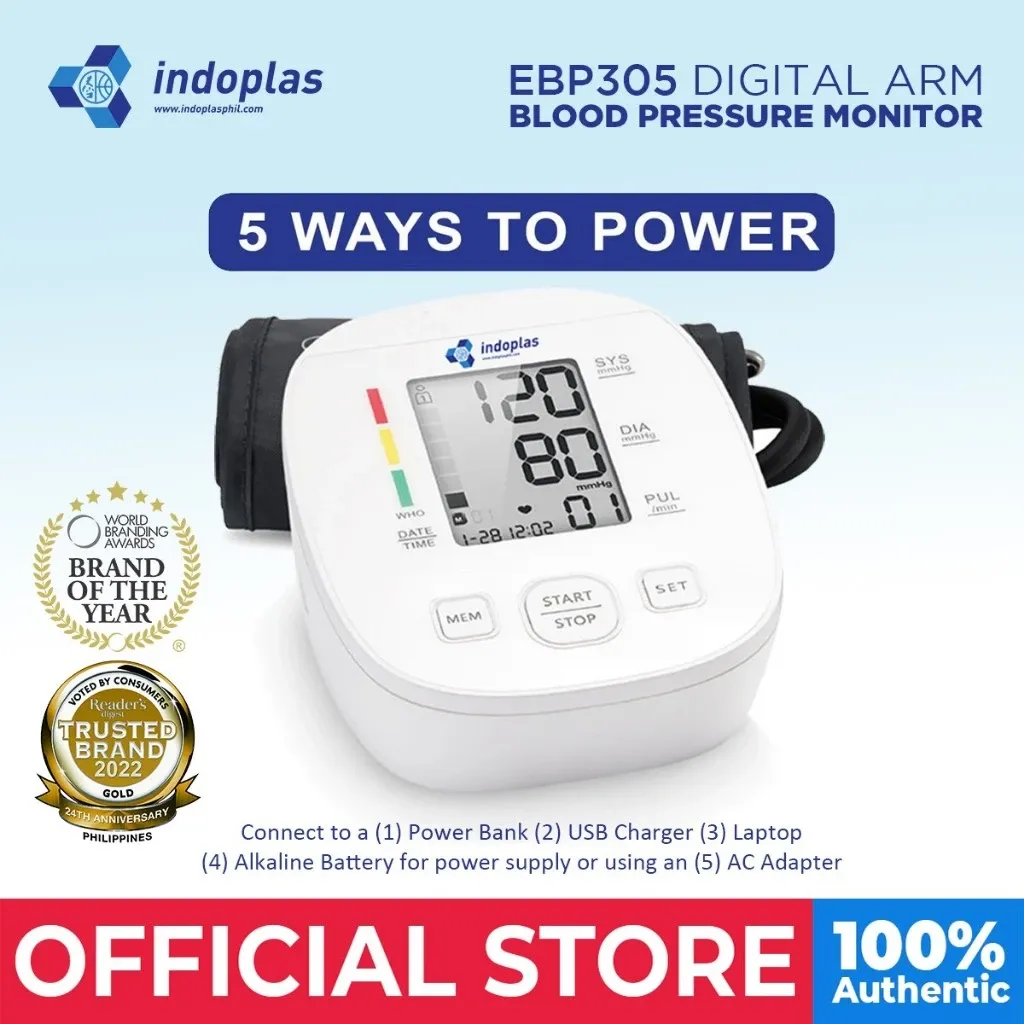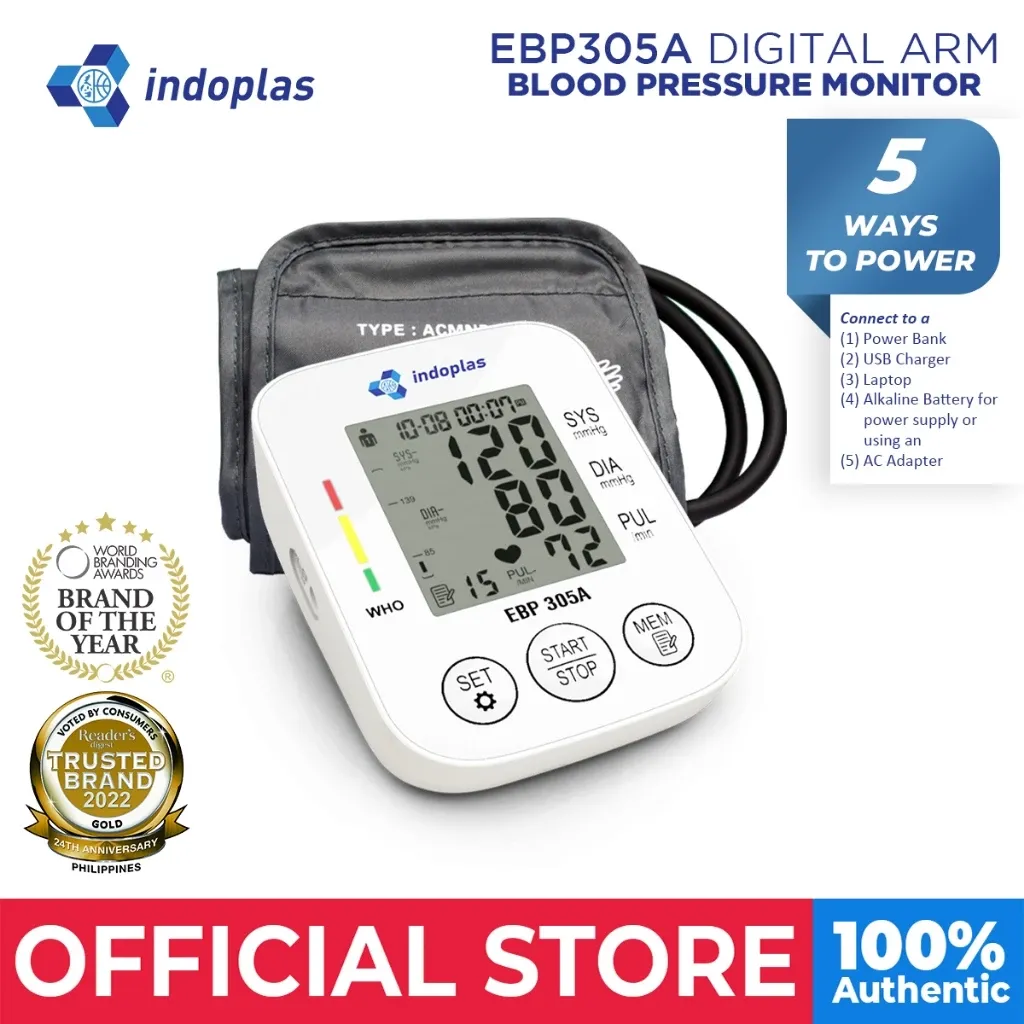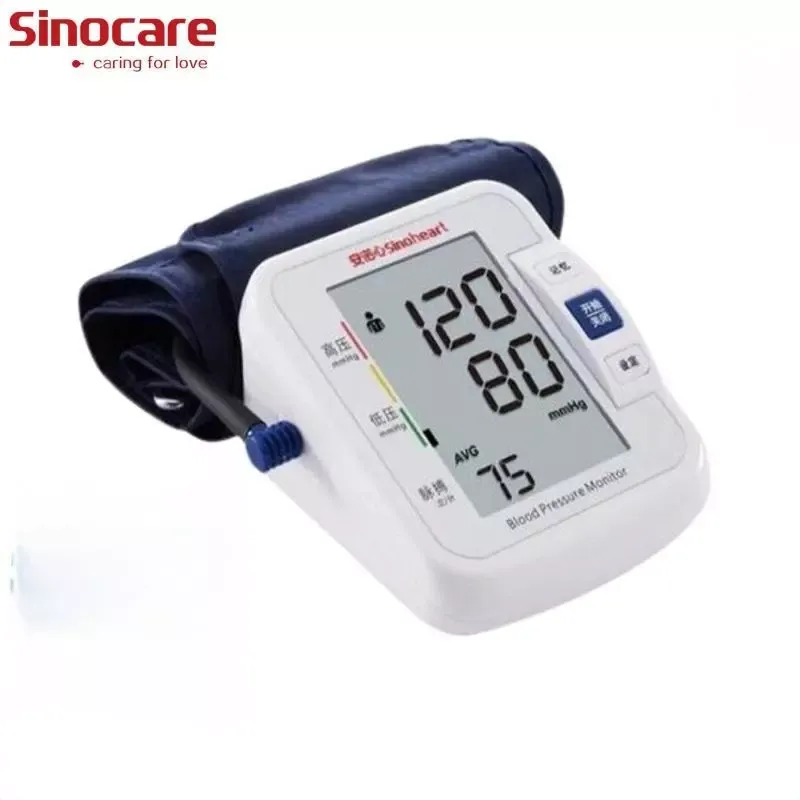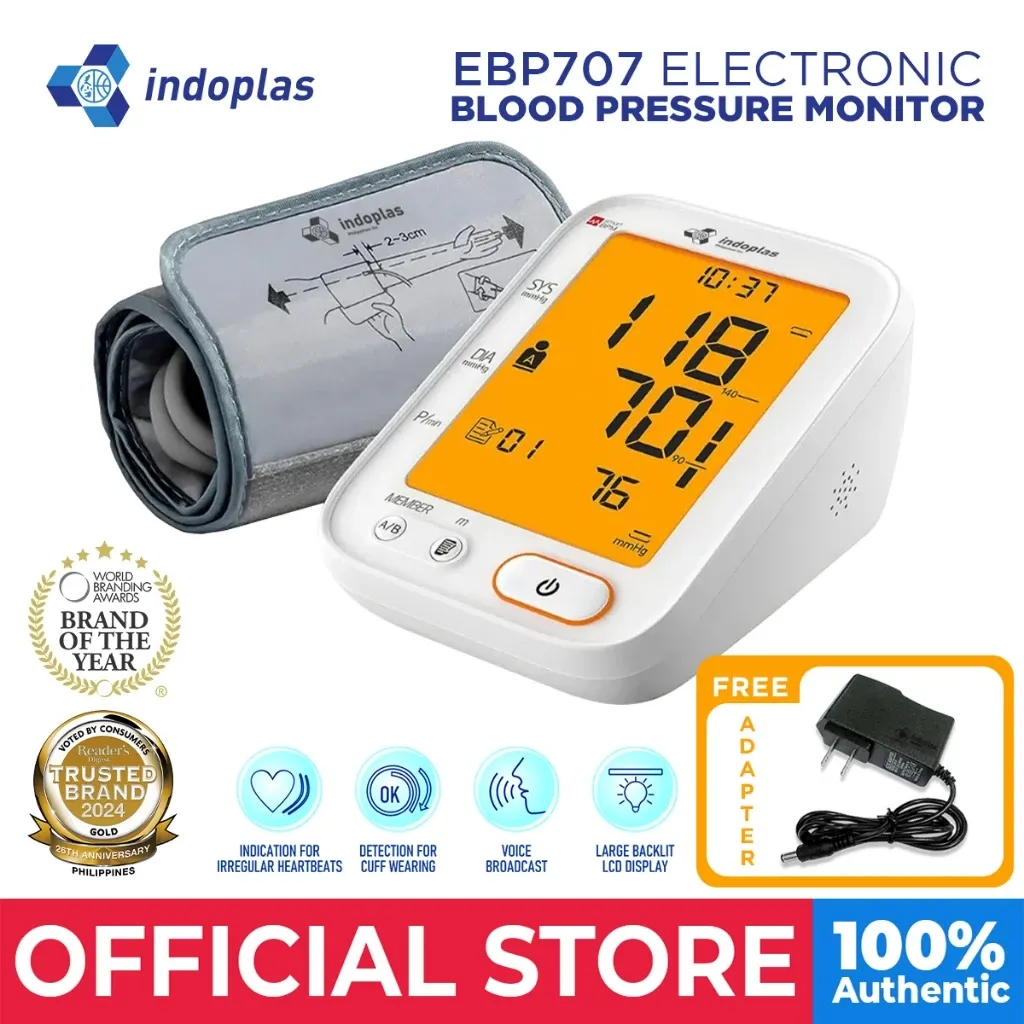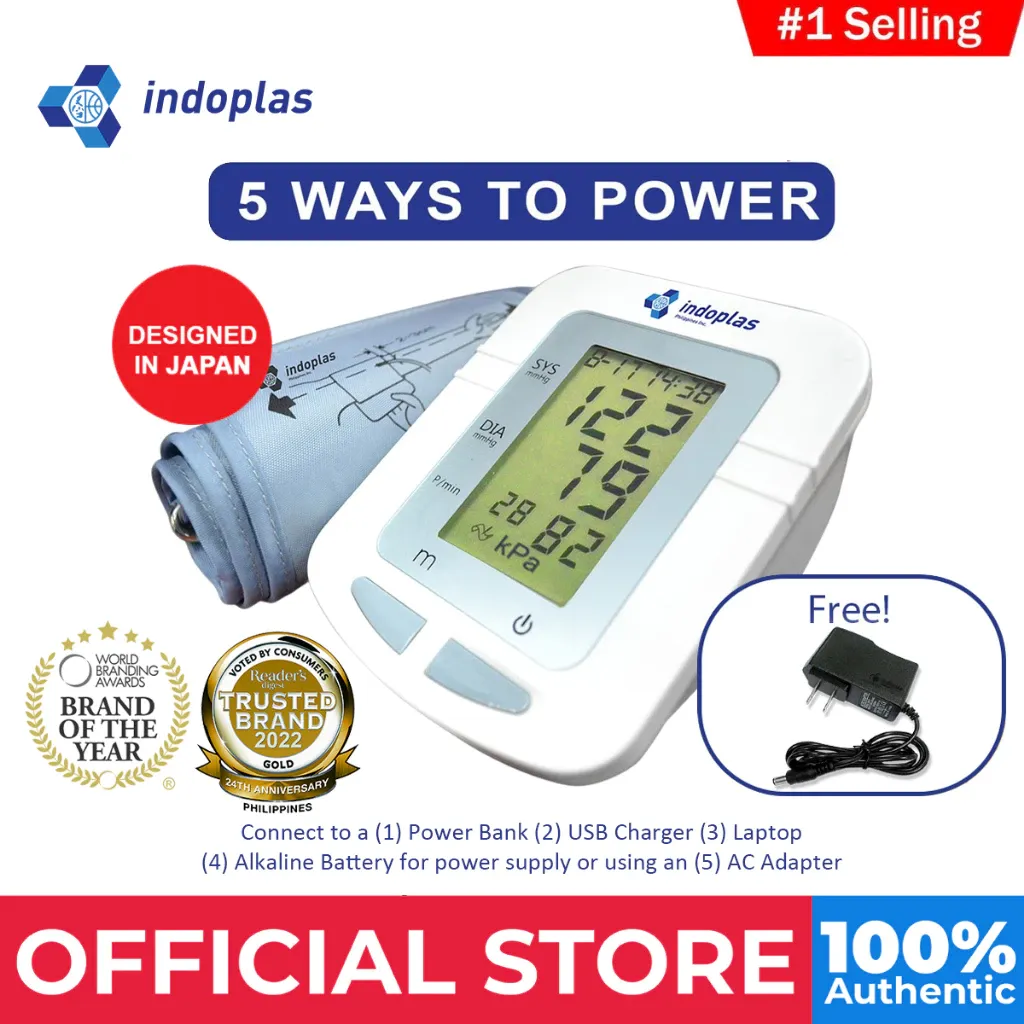
Indoplas Blood Pressure Monitor BP105 with Free Adapter
₱749as of Aug 13, 2026
COD · Shopee-protected payment

How we reviewed this: we read the Shopee PH listing, checked the listed specs, and went through 10,452 owner ratings.
Indoplas Blood Pressure Monitor BP105 with Free AdapterAn upper-arm monitor at a fair price, and the 22 to 34cm cuff is the specification to check against your own arm before anything else.
₱749as of Aug 13, 2026
COD · Shopee-protected payment
| Brand | Indoplas |
|---|---|
| Type | Automatic upper-arm blood pressure monitor |
| Price | ₱749 (as of Aug 13, 2026) |
| Shopee owner rating | 4.9 ★ from 10,452 Shopee ratings |
| Shop | Indoplas Philippines |
| Units sold | 10K+ |
Specs per Indoplas retailer listings.
| Type | Automatic upper-arm blood pressure monitor |
|---|---|
| Cuff size | 22–34 cm |
| Memory | 74 readings |
| Display | LCD |
| Power | Battery or USB (5V) |
| Measurement | Oscillometric |
| Irregular heartbeat | Detected |
At around ₱749 as of August 13, 2026, with a 22 to 34cm cuff, 74 readings of memory and irregular heartbeat detection. Start with the cuff, because it decides whether anything else matters.
Not the electronics. The cuff.
A cuff that is too small for the arm has to inflate to a higher pressure to compress the artery underneath, and the monitor reports that higher pressure as your blood pressure. The error runs in one direction and it can be substantial, enough to turn a normal reading into an apparently high one.
This cuff covers 22 to 34cm, which is the standard adult range and does not stretch to larger arms. So before ordering, take a tape measure to the midpoint of your upper arm, between shoulder and elbow, and measure the circumference.
If you are over 34cm you want a large-cuff model, and buying this one will produce readings that worry you for no reason.
Home monitors come as upper-arm and wrist units, and clinical guidance consistently prefers the upper arm.
Wrist monitors are sensitive to position: the wrist has to be held at exactly heart level, and a few centimetres out changes the reading. Arteries at the wrist are also smaller and less regularly placed. They exist because they are convenient, and convenience is the whole argument for them.
This is an upper-arm monitor, which is the format to buy.
More than half the value of a home monitor is in how you use it. All of this is free and most people skip it.
Sit for five minutes first, back supported, feet flat on the floor, legs uncrossed. Rest the arm on a table at heart level. Do not talk during the measurement, which raises readings measurably. Empty your bladder first, and avoid caffeine or smoking for half an hour before.
Then take two readings a minute apart and average them, at the same times each day, usually morning and evening.
A single reading in a random position after climbing the stairs is not information. A week of properly taken pairs is.
It means the monitor detected an uneven rhythm while measuring. That is worth mentioning to a doctor, particularly if it appears repeatedly, because atrial fibrillation is common, treatable and a significant stroke risk when missed.
It is not a diagnosis, and it can be triggered by moving, talking or shivering during the measurement. Repeat the reading sitting still before reading anything into it.
Two reasons that a clinic visit cannot cover. White coat hypertension, where pressure rises at the doctor’s office and is normal at home, leads to overtreatment. Masked hypertension, the reverse, leads to no treatment at all. Only home readings distinguish them.
Keep the log, bring it to appointments, and do not adjust any medication on your own.
Buy this if your arm measures inside 22 to 34cm, you want an upper-arm monitor at a modest price, and you will use the routine above.
Skip it if your arm is larger, where the readings will be wrong in a way no feature fixes.
For a cheaper upper-arm monitor with a published accuracy figure, see the Sinocare AXD-809. For the manual format used in clinics, and the skill it needs, read the Indoplas aneroid sphygmomanometer IP168.
See how it compares with the other top picks in our blood pressure monitors comparison.
Accessories we have reviewed that the maker lists as compatible with this model.
Measure the circumference of your upper arm at the midpoint between shoulder and elbow. This cuff covers 22 to 34cm, so anything larger needs a wide-cuff model.
It reads high, sometimes by a lot. A cuff that has to squeeze harder to occlude the artery reports a higher pressure, which is the most common reason home readings alarm people unnecessarily.
That the monitor saw an uneven rhythm during the measurement. It is a prompt to mention it to a doctor, not a diagnosis, and it can also be triggered by moving or talking.
Every card links to our full review.
Disclosure: Product Choicest is reader-supported. We may earn a commission when you buy through our Shopee links, at no extra cost to you. Read affiliate disclosure.