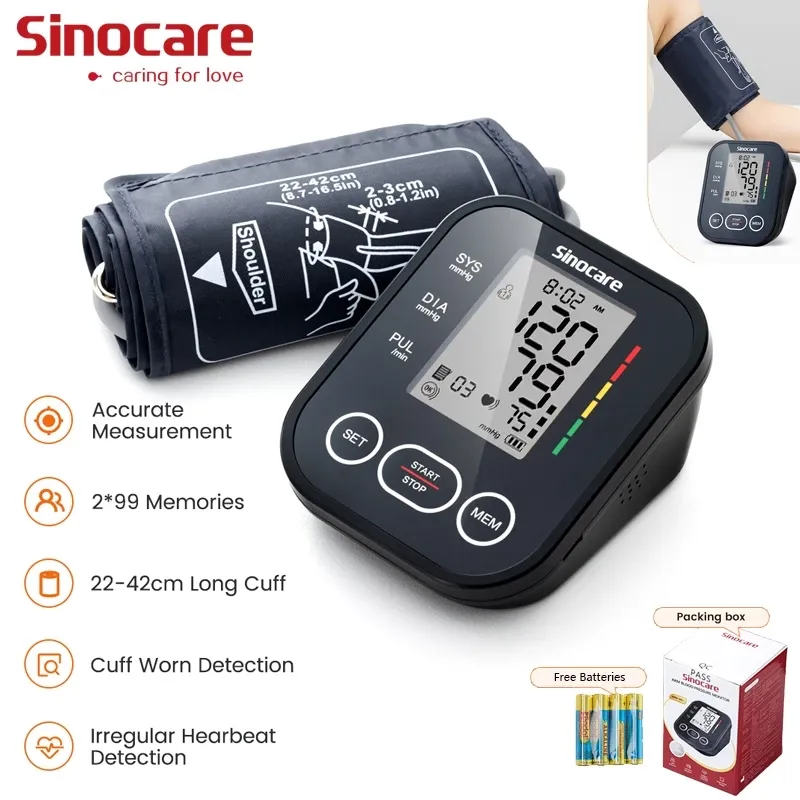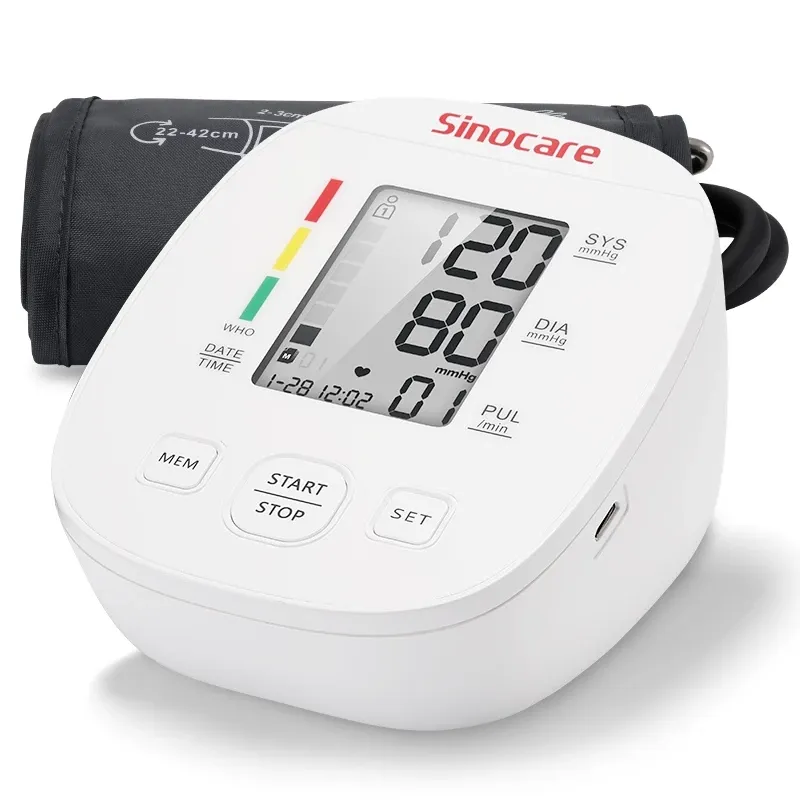
Sinocare AXD-809 Automatic Arm Blood Pressure Monitor
₱599as of Aug 13, 2026
COD · Shopee-protected payment

How we reviewed this: we read the Shopee PH listing, checked the listed specs, and went through 445 owner ratings.
Sinocare AXD-809 Automatic Arm Blood Pressure MonitorPublishes an accuracy tolerance and two-user memory at a low price, and the tolerance is a device specification rather than the clinical validation worth asking about.
₱599as of Aug 13, 2026
COD · Shopee-protected payment
| Brand | Sinocare |
|---|---|
| Type | Automatic upper-arm blood pressure monitor |
| Price | ₱599 (as of Aug 13, 2026) |
| Shopee owner rating | 4.9 ★ from 445 Shopee ratings |
| Shop | Sinocare Healthcare PH |
| Units sold | 1K+ |
Specs per Sinocare AXD-809 listings.
| Type | Automatic upper-arm blood pressure monitor |
|---|---|
| Memory | 2 users × 90 readings |
| Display | LCD |
| Power | 4 × AAA batteries, or USB / AC adapter |
| Measurement | Oscillometric |
| Accuracy | ±3 mmHg (pressure), ±5% (pulse) |
At around ₱599 as of August 13, 2026, with two-user memory of 90 readings each, USB or battery power, and a stated ±3 mmHg pressure accuracy. Two of those are worth a closer look.
±3 mmHg is the pressure-sensing tolerance of the device, and it is the standard figure quoted across this whole class of monitor. Every automatic monitor on this page that publishes anything publishes roughly that.
What it does not describe is how well the monitor estimates your blood pressure. These devices are oscillometric: they do not listen for sounds, they measure pressure oscillations in the cuff and run them through an algorithm that estimates systolic and diastolic values. The sensor being accurate to ±3 mmHg says nothing about whether the algorithm gets the estimate right.
The thing that tests that is clinical validation, where a monitor is compared against trained observers on real people under a recognised protocol. Independent lists of validated monitors exist and are searchable, and checking a model against one is the single most useful thing you can do before buying.
This listing does not claim validation. That is normal at this price and it is the question to ask.
Cuff size. The listing does not state a range, and it is the biggest source of error in home blood pressure measurement.
A cuff that is too small for the arm has to squeeze harder to compress the artery, and the monitor reports that higher pressure as your reading. The error runs in one direction and can be large enough to turn a normal reading into an apparently high one.
Measure the circumference of your upper arm at the midpoint between shoulder and elbow, then ask the seller what this cuff covers. For comparison, the Indoplas BP105 states 22 to 34cm, which is the standard adult range.
A monitor bought because one person was told to watch their pressure ends up being used by their spouse too, which is how a Filipino household actually works.
Without separate stores, two people’s readings pile into one list and the averages become meaningless. Ninety readings each is about a month and a half of morning and evening pairs per person, which is the right amount of history to bring to an appointment.
Sit for five minutes first, back supported, feet flat, legs uncrossed. Arm resting on a table at heart level. Do not talk during the measurement. Empty your bladder first; skip caffeine and smoking for half an hour before.
Then take two readings a minute apart and average them, at the same times each day.
One reading taken standing in the kitchen after climbing the stairs is not information, whatever the device cost.
Home readings do not change medication. They show your doctor a pattern that a single clinic visit cannot, including white coat hypertension, where pressure is high only at the clinic, and masked hypertension, where it is high only at home.
Keep the log. Take it to the appointment. Do not adjust anything yourself.
Buy this if you want a cheap upper-arm monitor for two people, you have confirmed the cuff fits, and you will use the routine.
Skip it if you want a clinically validated model, which is worth paying more for if pressure is being actively managed.
For a monitor that states its cuff range, see the Indoplas BP105. For a manual kit with a much wider cuff, and the skill it demands, read the Indoplas aneroid sphygmomanometer IP168.
See how it compares with the other top picks in our blood pressure monitors comparison.
It is the device's stated pressure-sensing tolerance, which is a standard figure for this class. It is not the same as clinical validation, which tests the whole monitor against trained observers on real people.
Because a monitor bought for one person is usually used by two. Separate stores stop a couple's readings mixing into one meaningless average.
The listing does not state one, which is the specification that matters most. Measure your upper arm and ask the seller before ordering.
Every card links to our full review.
Disclosure: Product Choicest is reader-supported. We may earn a commission when you buy through our Shopee links, at no extra cost to you. Read affiliate disclosure.