
7 Best solar panels in the Philippines (2026)
The EcoFlow 125W Bifacial is our Best Overall solar panel on Shopee Philippines: 125W of 25% TOPCon cells with a bifacial back face for around ₱9,000, the cheapest watts of any full-size panel we compared. We ranked thirteen panels on cost per watt, documented efficiency, weather rating, and what each one can actually charge.
In a hurry? EcoFlow 125W Bifacial Solar Panel is our top pick for most homes.
Our quick picks
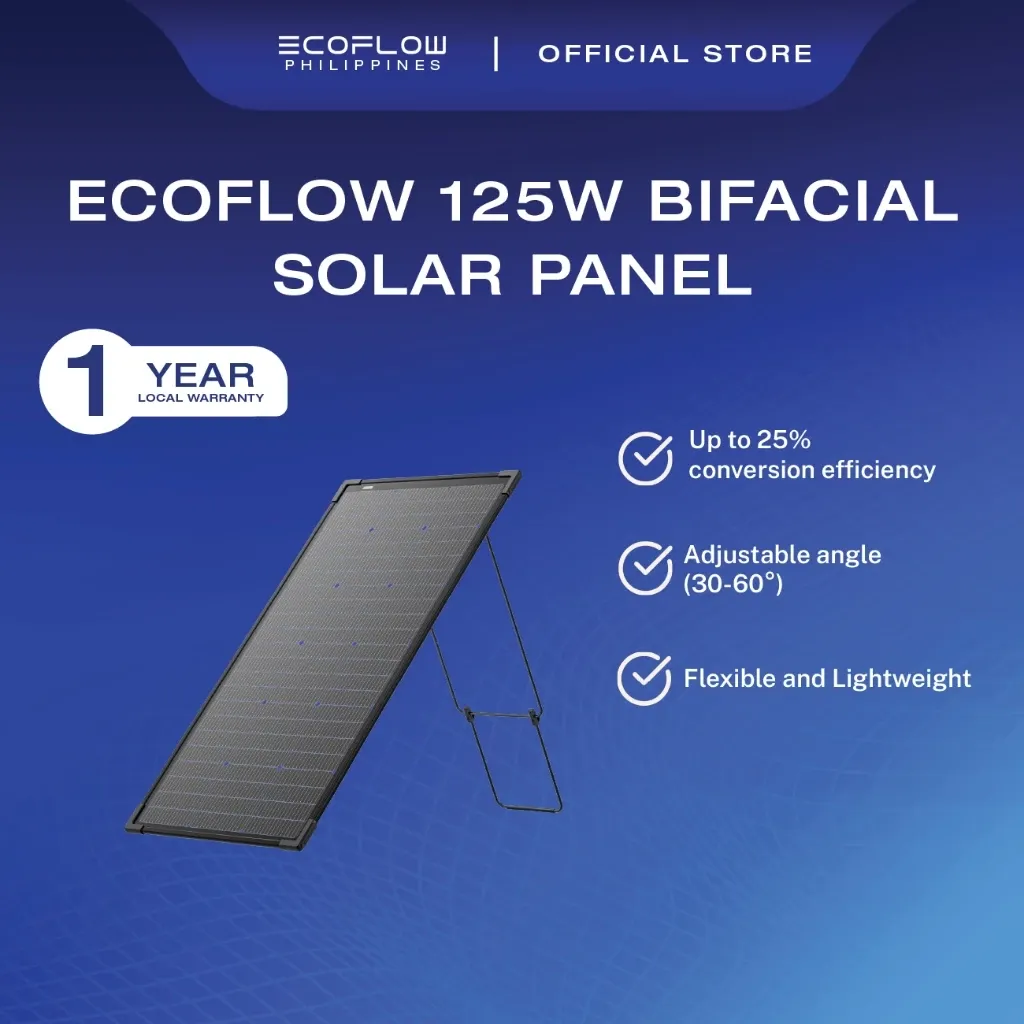
Best Overall: EcoFlow 125W Bifacial Solar Panel
₱9,000as of Aug 2, 2026
Read our review of the EcoFlow 125W Bifacial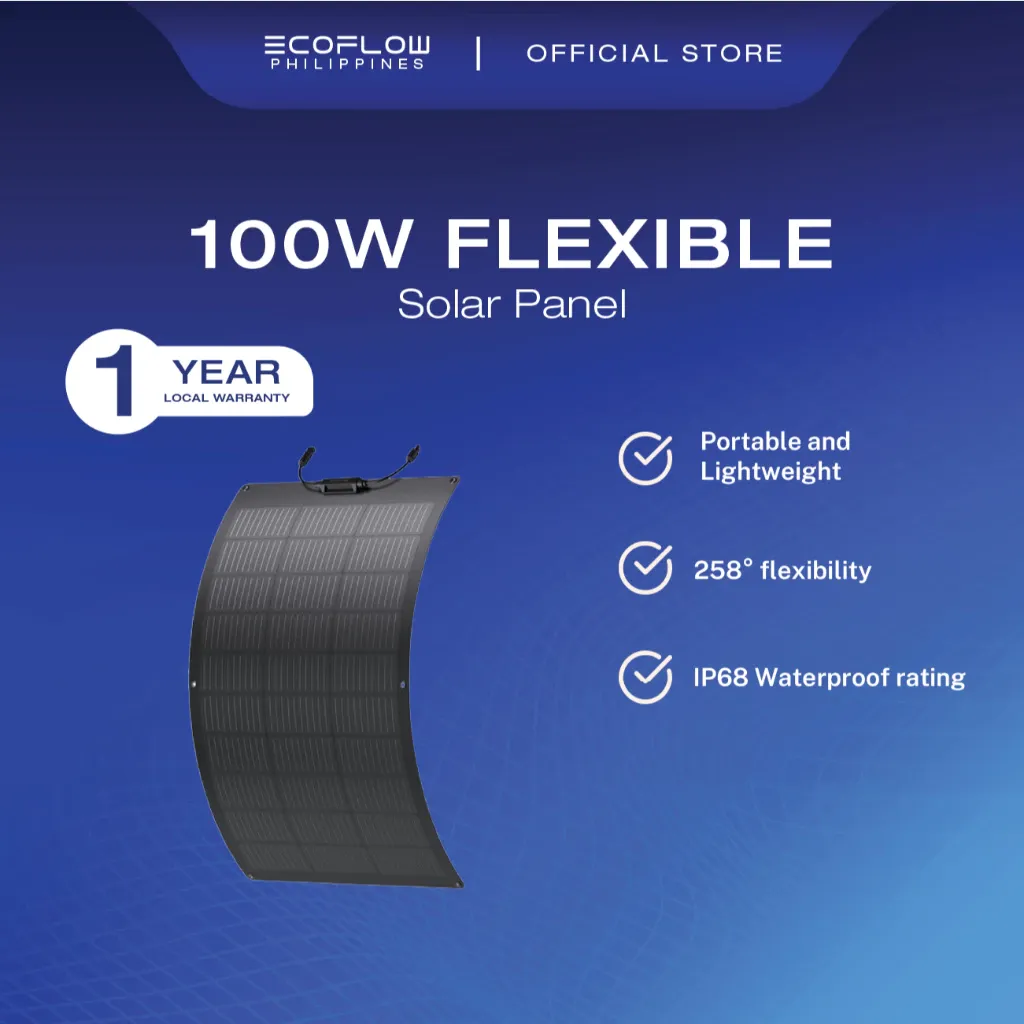
Best for Curved Roofs: EcoFlow 100W Flexible Solar Panel
₱8,000as of Aug 2, 2026
Read our review of the EcoFlow 100W Flexible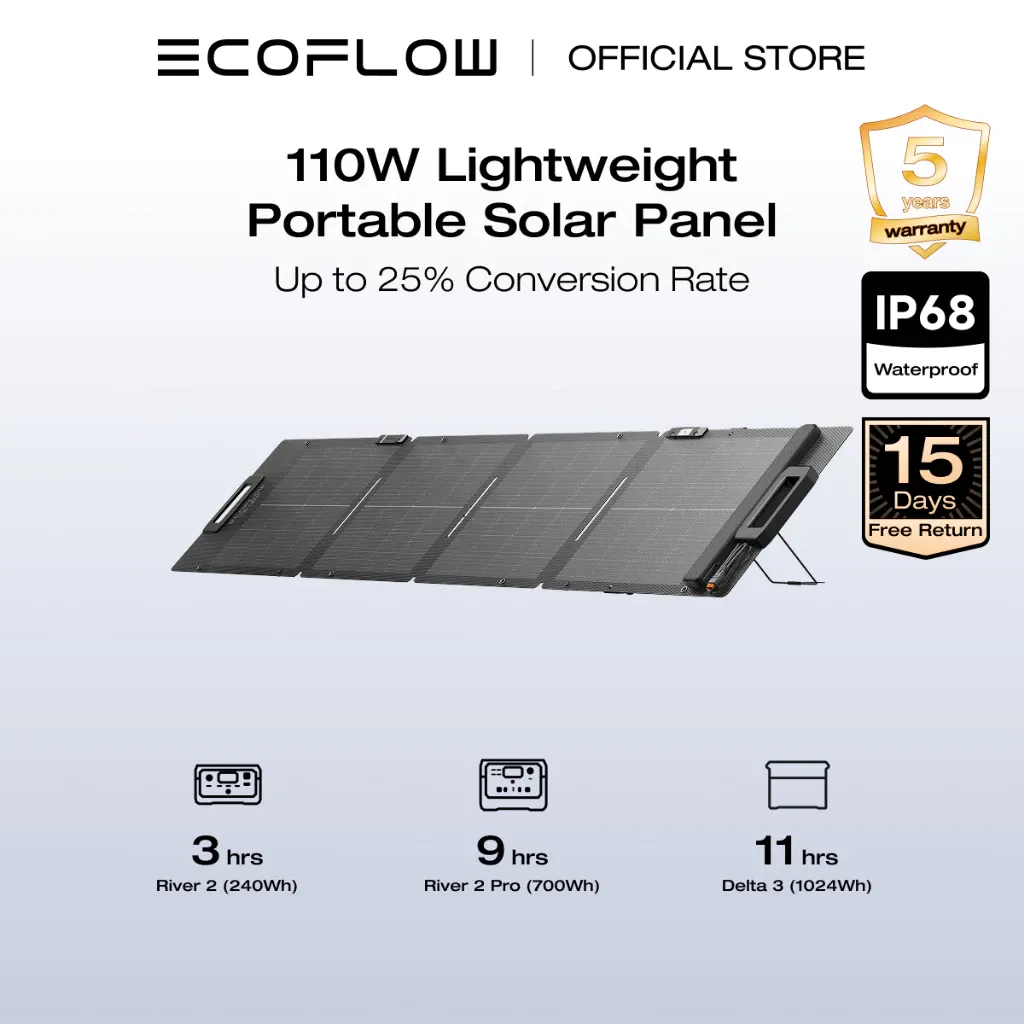
Best First Panel: EcoFlow 110W Portable Solar Panel Kit
₱15,000as of Aug 2, 2026
Read our review of the EcoFlow 110W Panel Kit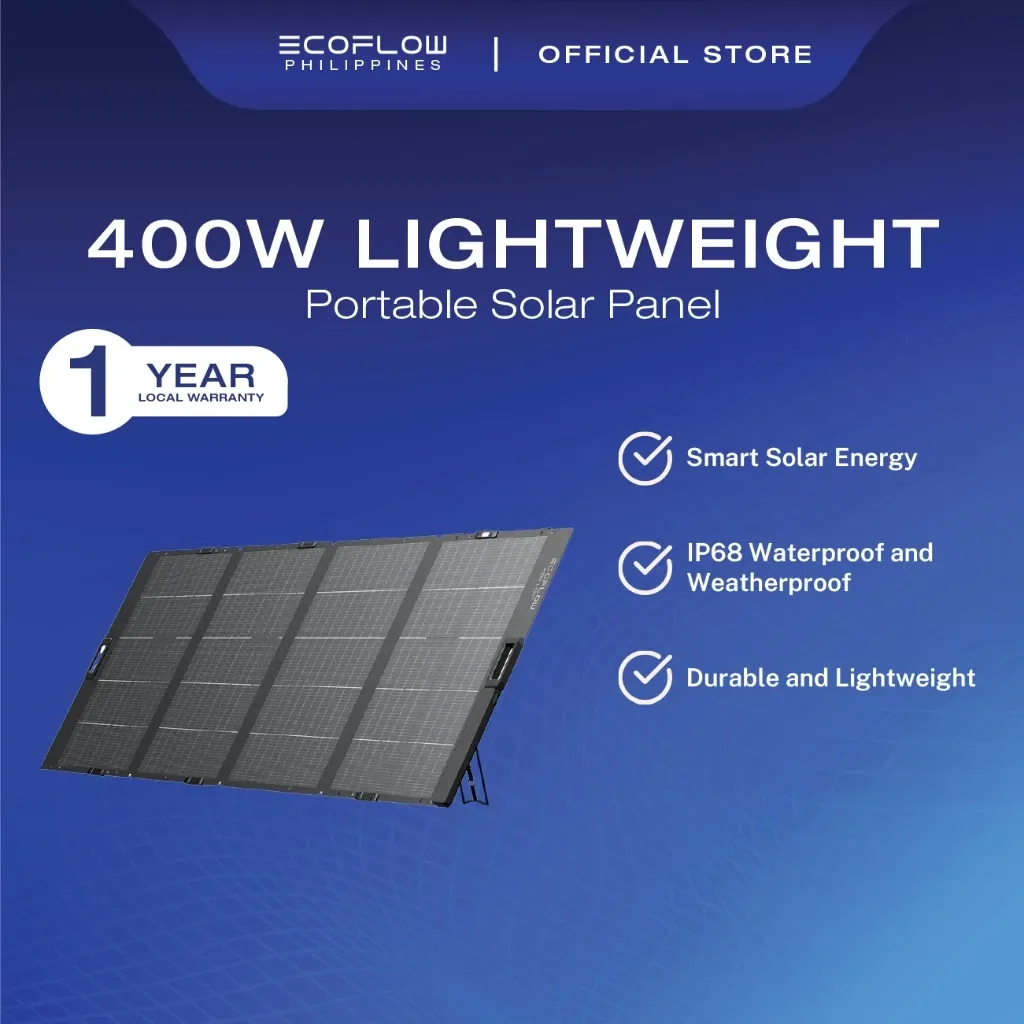
Best Premium: EcoFlow 400W Lightweight Portable Solar Panel
₱35,000as of Aug 2, 2026
Read our review of the EcoFlow 400W Portable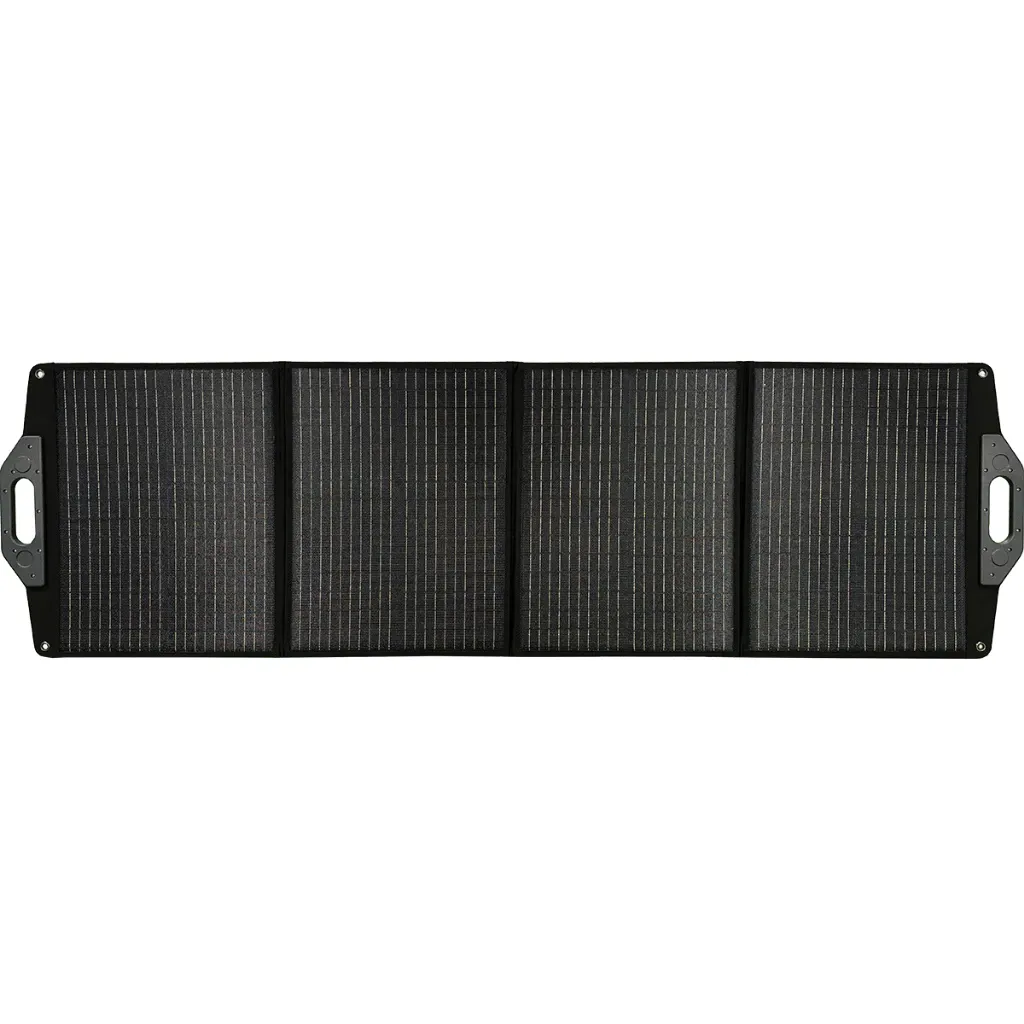
Best Local Brand: Firefly Monocrystalline Solar Panel FSP120/18
₱13,500as of Aug 2, 2026
Read our review of the Firefly FSP120/18 Panel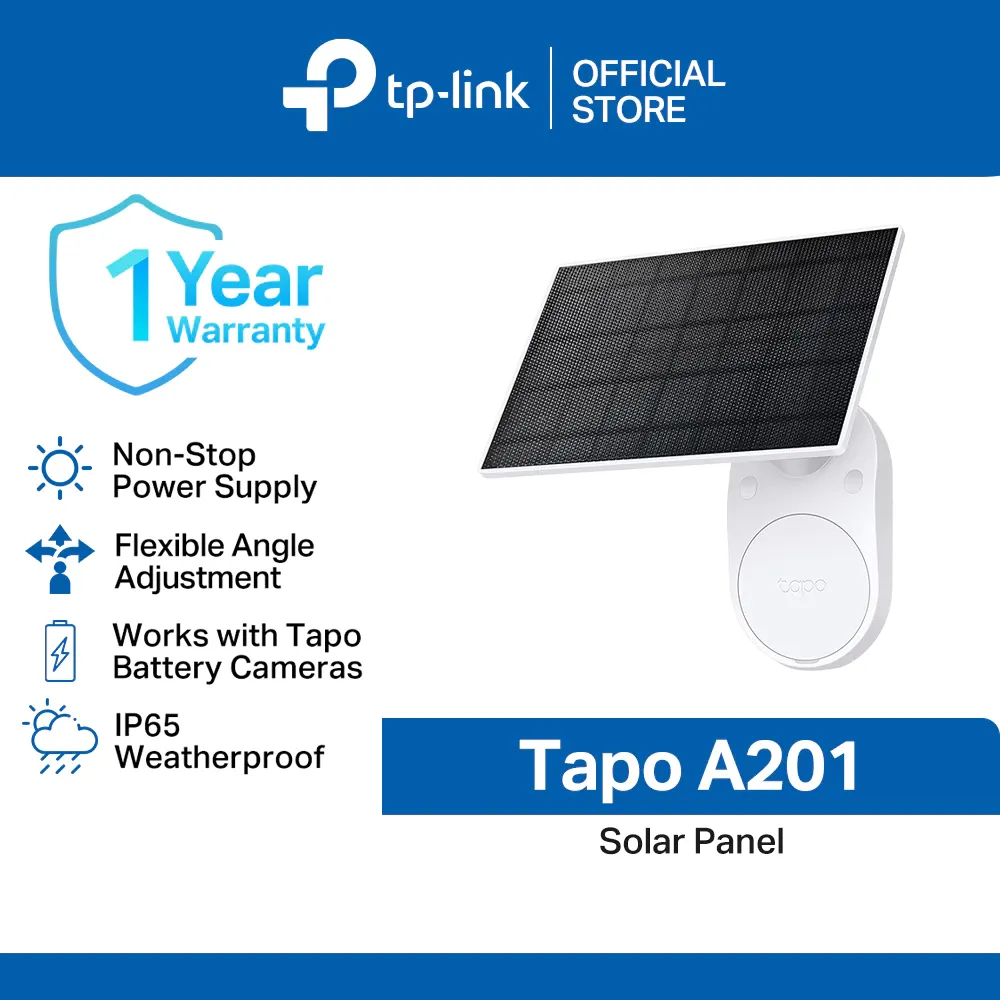
Best for Security Cameras: TP-Link Tapo A201 Solar Panel
₱1,200as of Aug 2, 2026
Read our review of the Tapo A201 Solar Panel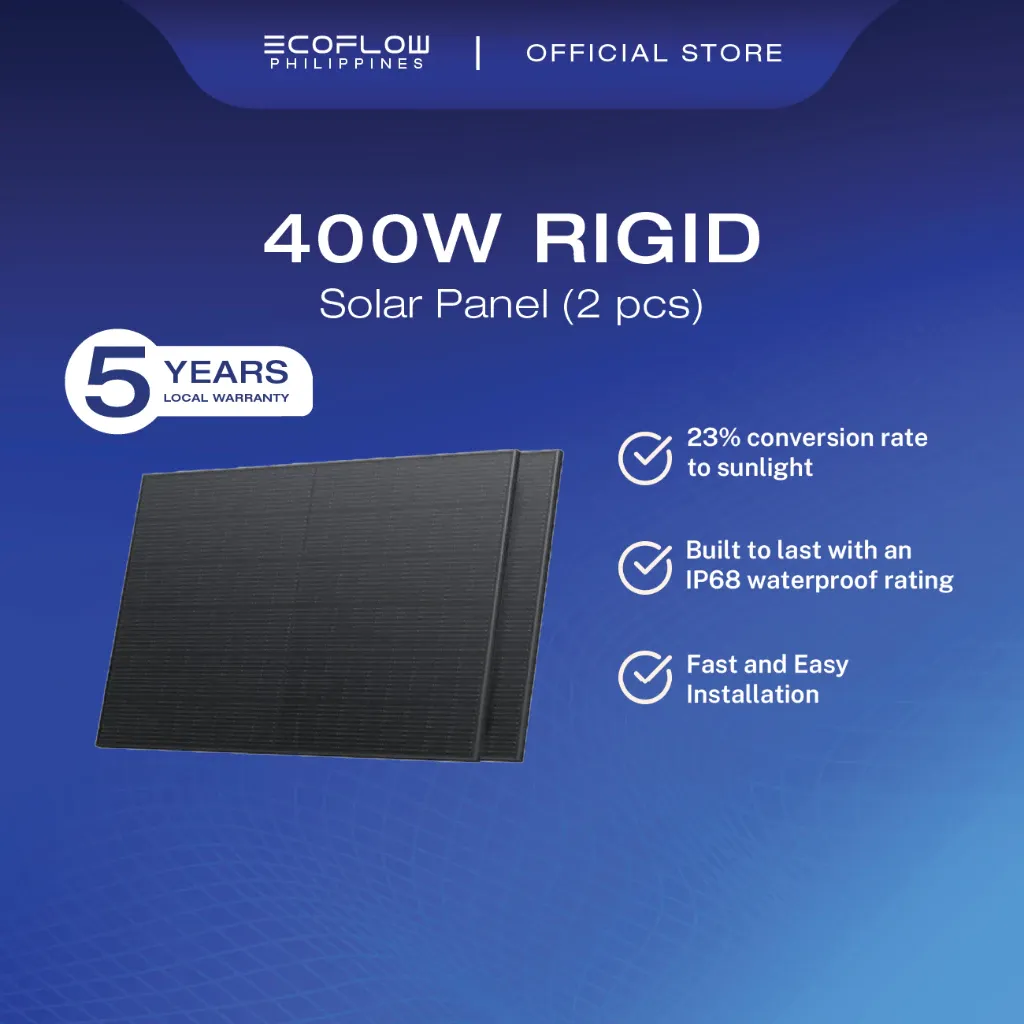
Best for Permanent Install: EcoFlow 400W Rigid Solar Panel
₱40,000as of Aug 2, 2026
Read our review of the EcoFlow 400W RigidTop picks compared
Swipe the table sideways to see Rated power and Cell type.
| # | Product | Award | Price | Shopee rating | Rated power | Cell type |
|---|---|---|---|---|---|---|
| 1 | EcoFlow 125W Bifacial | Best Overall | around ₱9,000 | 4.9 ★ | 125 W front, up to 138 W with the back face | N-type TOPCon monocrystalline, both faces |
| 2 | EcoFlow 100W Flexible | Best for Curved Roofs | around ₱8,000 | 5 ★ | 100 W | 182 monocrystalline silicon cells |
| 3 | EcoFlow 110W Panel Kit | Best First Panel | around ₱15,000 | 5 ★ | 110 W | 32 monocrystalline cells with ETFE film |
| 4 | EcoFlow 400W Portable | Best Premium | around ₱35,000 | 5 ★ | 400 W | Monocrystalline silicon |
| 5 | Firefly FSP120/18 Panel | Best Local Brand | around ₱13,500 | 5 ★ | 120 W | Monocrystalline |
| 6 | Tapo A201 Solar Panel | Best for Security Cameras | around ₱1,200 | 4.9 ★ | 2.5 W | Monocrystalline |
| 7 | EcoFlow 400W Rigid | Best for Permanent Install | around ₱40,000 | 5 ★ | 400 W | Monocrystalline silicon |
Prices are Shopee PH listings as of each product's last check. See the linked reviews for dates. Ratings are the Shopee listings' own owner ratings, not our score.
A solar panel turns a power station from a battery you have to recharge into one that refills itself. Here is how the panels on Shopee Philippines compare, from ₱1,000 to ₱40,000.
Cost per watt and published efficiency
We compared cost per watt, published efficiency, weather rating, weight, connector type, and stated warranty, then weighed each against what it can actually charge. Specs come from manufacturer data wherever it exists. EcoFlow publishes complete sheets for most of its range and TP-Link publishes one for the Tapo A201. Where a brand publishes nothing, we say so in the review rather than repeat a listing claim as a spec. New to this? Start with our solar panel buying guide.
Three findings shaped this list. Cost per watt varies more than three times across documented panels, from about ₱72 to ₱143, and the most expensive panels are rarely the ones giving you the most power. “Flexible” and “portable” are not the same thing, and the listings use both loosely: a flexible panel has no kickstand and cannot be aimed. And warranty length is wildly inconsistent within one brand, with EcoFlow’s Philippine listings stating one year on some panels and five on others at similar prices.
Will it actually refill your battery?
Match the panel to your battery, not your budget. A panel should refill your power station in one day of sun; beyond what the station can accept, extra watts do nothing. Cost per watt is the only fair way to compare panels of different sizes, and it exposes a lot. A stated IP rating matters here more than in most countries, and the real problem is a listing with no rating at all. The connector decides compatibility: MC4 is universal, XT60 is manufacturer-specific and needs an adapter for another brand’s station.
Finally, check whether the panel has USB ports or DC output. They are not interchangeable. A USB panel charges phones and cannot feed a power station; a DC panel does the opposite.
Panels with honest efficiency claims
EcoFlow 125W Bifacial wins Best Overall at around ₱9,000: 125W from 25% TOPCon cells, up to 138W with the back face, 4.2kg, IP68, and roughly ₱72 per watt, the best in this group. For a curved van or jeepney roof, the EcoFlow 100W Flexible bends up to 258 degrees at just 2.3kg for around ₱8,000. If it is your first panel, the EcoFlow 110W Portable Solar Panel Kit folds into its own kickstand case and states a 5-year warranty, the longest here, at around ₱15,000.
At the top end, the EcoFlow 400W Lightweight Portable is Best Premium at around ₱35,000, the most output of any single panel and worth it only with a large battery to absorb it. The Firefly FSP120/18 is our Best Local Brand at around ₱13,500, bought for Philippine service rather than its spec sheet, which Firefly does not publish. The TP-Link Tapo A201 is Best for Security Cameras at around ₱1,200, keeping a Tapo battery camera running on 45 minutes of daily sun. And the EcoFlow 400W Rigid is Best for Permanent Install at around ₱40,000, rated for 130 mph winds and weighing 21.8kg.
We also reviewed but did not rank the EcoFlow 220W Lightweight and 220W Portable (Single-Face), two near-identical panels EcoFlow Philippines sells at the same price without explaining the difference; the EcoFlow 160W, a previous-generation panel at a current-generation price; the EcoFlow 60W Flexible, beaten on value by the 100W; the EcoFlow 28W, a USB-only pocket panel with the lowest owner rating here; and the Jiditech CX-25W, a cheap 18V trickle charger with almost nothing published about it.
Pair any of these with a battery from our best portable power stations in the Philippines roundup.
All prices are as of August 2, 2026.
Pros and cons of our top picks
- 1
EcoFlow 125W Bifacial Solar Panel
✓ Pros
- Best watts for the money of any full-size panel in this roundup
- Bifacial back face collects reflected light for up to 138W total
✗ Cons
- A single rigid panel that does not fold, so it is more awkward to carry than a folding panel of the same output
- The bifacial gain only appears over a bright, reflective surface, so on grass or soil you get the 125W front figure
- 2
EcoFlow 100W Flexible Solar Panel
✓ Pros
- Bends up to 258 degrees, so it follows a curved van or jeepney roof
- Only 2.3kg, around 70% lighter than a framed panel of the same output
✗ Cons
- No kickstand or carry case, so you cannot angle it at the sun the way a folding panel lets you
- Built for permanent mounting, which makes it the wrong panel to bring to a campsite
- 3
EcoFlow 110W Portable Solar Panel Kit
✓ Pros
- The most popular panel in this roundup, with a perfect owner rating
- Listed with a 5-year warranty, the longest stated by any panel here
✗ Cons
- 110W is less output than the 125W Bifacial panel that sits lower in this lineup, so it is not the value choice
- A 110W panel takes most of a day to refill a large power station like the DELTA 3
- 4
EcoFlow 400W Lightweight Portable Solar Panel
✓ Pros
- 400W is the most output of any single panel in this roundup
- Folds down for transport despite the size, unlike the rigid 400W panel
✗ Cons
- 400W is more than a small power station can take in, so it only pays off paired with a large battery
- Big and heavy even folded, so this is a car-boot panel rather than something you carry to a campsite
- 5
Firefly Monocrystalline Solar Panel FSP120/18
✓ Pros
- A Philippine brand with local service, so support does not depend on an overseas seller
- 120W folding design with carry handles at both ends
✗ Cons
- Firefly publishes no full data sheet for this model, so efficiency, weight, and weather rating are all unstated
- 18V output needs a charge controller before it can safely charge a 12V battery
- 6
TP-Link Tapo A201 Solar Panel
✓ Pros
- Keeps a Tapo battery camera running on about 45 minutes of daily sun
- 4m cable, long enough to put the panel in sun while the camera sits in shade
✗ Cons
- 2.5W powers a camera and nothing else, so it cannot charge a phone or a power station
- Works only with Tapo battery cameras, not with other brands
- 7
EcoFlow 400W Rigid Solar Panel
✓ Pros
- Rated for winds up to 130 mph, which matters in a typhoon belt
- Anti-corrosive aluminum frame built for years of outdoor mounting
✗ Cons
- 21.8kg and over 1.7m long, so it is a roof or ground-mount panel and not portable in any real sense
- No kickstand or carry case, so mounting hardware and wiring are on you
Frequently Asked Questions
How many watts of solar do I need?
Work from your battery, not your budget. The test is whether the panel refills your power station in one day of sun. A 256Wh station is comfortable with 100-125W, a 700-900Wh station wants around 220W, and a 1,000Wh station really wants 400W. Watts beyond what your station can accept do nothing.
What is a good cost per watt in the Philippines?
Roughly ₱72 to ₱100 per watt for a documented full-size panel, based on the panels in this roundup. Above that you are paying for something other than power: a carry case, a longer warranty, a local brand, or a specialist shape. The 125W Bifacial leads this group at about ₱72.
Is a flexible panel the same as a portable one?
No, and it is the most common mistake here. Flexible means it bends to fit a curved roof and is meant to be mounted permanently, with no kickstand to angle it. Portable means it folds up with a stand so you can carry it out and aim it at the sun.
Can a solar panel charge my phone directly?
Only if it has USB ports built in. Most panels here output DC for a power station's solar input, which a phone cannot use. The EcoFlow 28W is the exception in this group, with USB-C at 20W and USB-A at 18W, and it has no DC output at all.
Do I need a charge controller?
Not for a portable power station, which has one built in, so the panel plugs straight into it. You do need one for a bare 12V battery: an 18V panel wired directly to one can overcharge it. Budget for a controller if you are topping up a car, motorbike, or boat battery.
Disclosure: Product Choicest is reader-supported. We may earn a commission when you buy through our Shopee links, at no extra cost to you. Read affiliate disclosure.