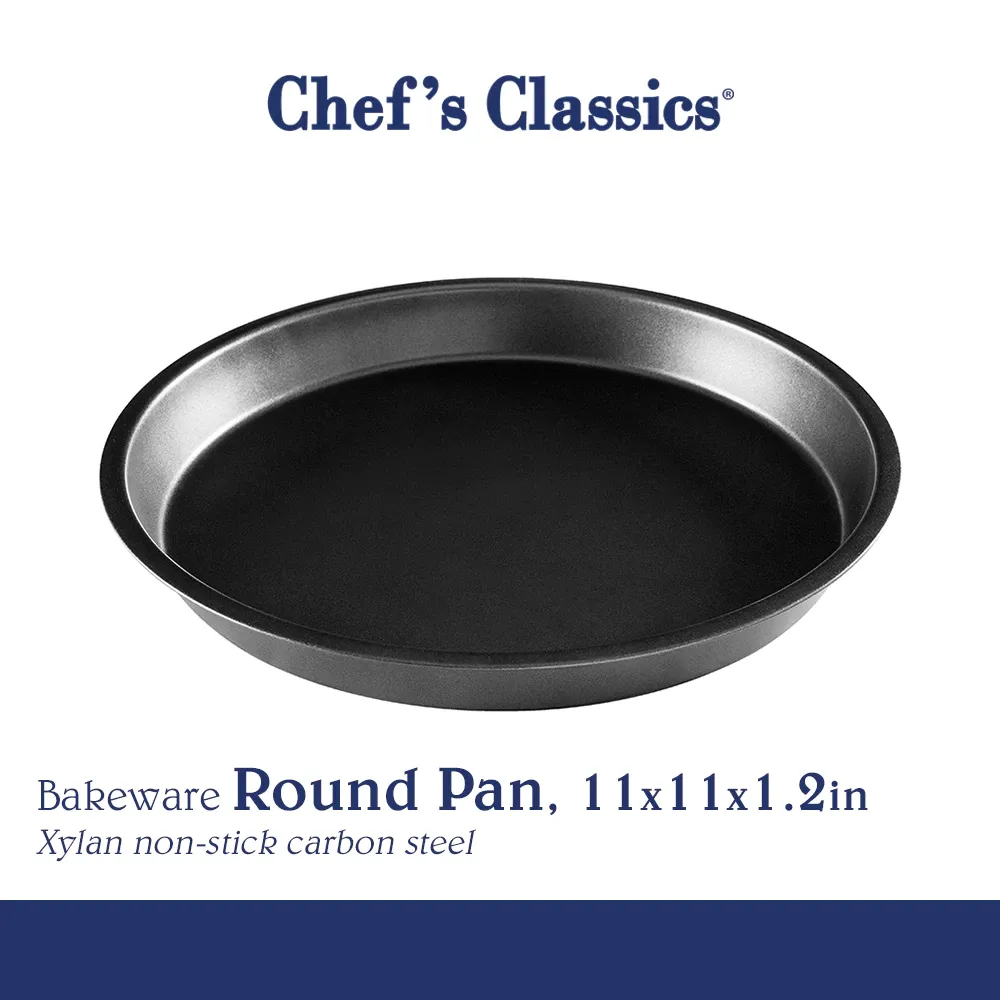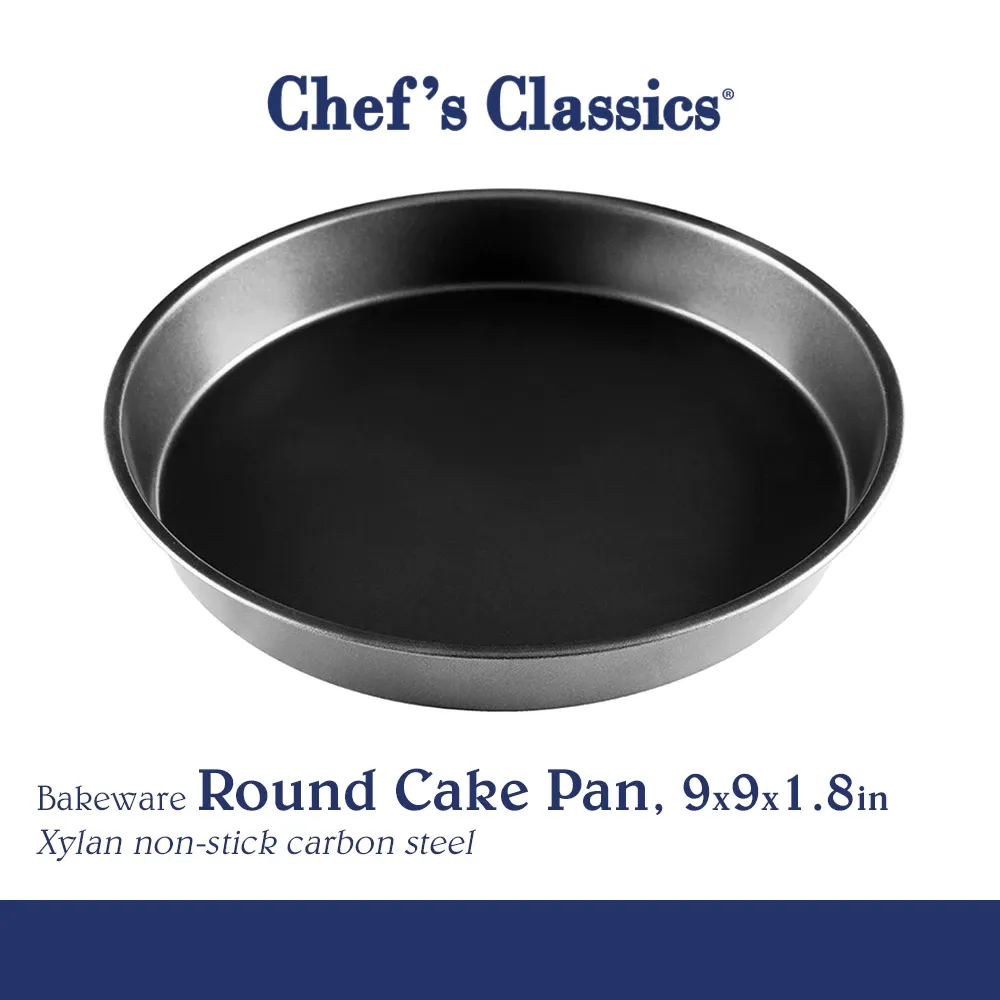
Chef's Classics Bakeware Non-Stick Round Cake Pan, 9x9x1.8in
₱290as of Aug 20, 2026
COD · Shopee-protected payment

Disclosure: Product Choicest is reader-supported. We may earn a commission when you buy through our Shopee links, at no extra cost to you. Read affiliate disclosure.
Nine by 1.8 inches is the classic layer-cake size, and this is the only pan in the range deep enough to be one. You need two of them, which is the honest catch.
₱290as of Aug 20, 2026
COD · Shopee-protected payment
| Brand | Chef's Classics |
|---|---|
| Type | Round cake pan |
| Price | ₱290 (as of Aug 20, 2026) |
| Owner rating | 4.9 ★ from 77 reviews |
| Shop | Chef's Classics |
| Units sold | 253 |
Specs per Chef's Classics Philippines
| Type | Round cake pan |
|---|---|
| Material | Carbon steel |
| Coating | Double-layer Xylan non-stick |
| Dimensions | 9 x 9 x 1.8 in |
| Oven safe | Yes |
Nine by 1.8 inches is the classic layer-cake size, and this is the only pan in the range deep enough to be one. You need two of them, which is the honest catch.
Because the recipes are. Almost every published layer-cake recipe is written for a 9-inch pan, and the quantities, the bake time and the finished proportions all assume it.
That is not a small convenience. Bake a 9-inch recipe in a 10-inch pan and the batter spreads thinner, sets faster, and you get a flatter layer that dries at the edges. Bake it in an 8-inch and it domes and splits. Owning the size the recipes assume removes an entire class of problem.
At 1.8 inches deep, it is also the only pan in the Chef’s Classics shallow-round family with real height. The 1.2-inch rounds are pizza and flat-sponge pans. This one is a cake pan.
Carbon steel under a double-layer Xylan coating. The steel spreads heat evenly to the rim, which on a cake matters because an uneven pan gives you a domed centre and a dry edge, and then you are trimming the top off to stack it.
The Xylan means no greasing and flouring first, and a layer that lifts clean rather than leaving its outer crust behind.
One pan is half a cake. A layer cake wants two pans baking side by side in the same oven pass. Bake sequentially and the second batter goes into a hot pan, sets faster on contact, and comes out with a visibly different crumb from the first. Budget for two.
The base is fixed, so each layer has to be inverted onto a rack. That is routine for a firm sponge and it is not an option for anything with a set topping, which is what springforms are for.
Nylon or wood only around the edge. Running a metal knife round a cake to loosen it is the single most common way people kill a non-stick pan.
Around ₱290 as of August 20, 2026. Check the latest price on Shopee. That is expensive for a shallow round pan, and doubly so once you accept you need two. What you are paying for is the depth and the standard diameter, which nothing cheaper in this range offers together. The record is modest: 253 sold with 77 ratings at 4.9.
Buy two of these if you bake layer cakes and follow published recipes. If you bake a single cake at a time, or you want cheesecake, buy a springform instead and get the depth with a release mechanism.
See how it ranks in our best non-stick bakeware in the Philippines roundup, or read which pan suits which bake in our non-stick bakeware buying guide.
Want the depth plus a base you can unclip, for cheesecake? The Chef’s Classics 9.5-inch marble springform is the one to compare. Want a cheaper way to get a soft cake out intact? The ART EXHIBITION round cake pan has a removable base.
See how it compares with the other top picks in our non-stick bakeware comparison.
Because most published layer-cake recipes are written for it, and two 9-inch layers make a cake of familiar proportions. Deviating means recalculating quantities and bake times, which is why the size has stayed standard for decades.
For a layer cake, yes, or you bake one layer then the other in a hot pan, which gives them different textures. Two pans in one oven pass is how the recipe expects to be made.
It is deep enough for a proper layer, which is what it is for. A single tall cake baked in one pan wants more depth than this and a centre tube or a springform, because a deep batter cooks unevenly from the outside in.
The base is fixed, so you run a nylon or wooden tool round the edge and invert it onto a rack. Do not use a metal knife: it cuts the coating in one stroke and the pan never releases as well again.
Every card links to our full review.