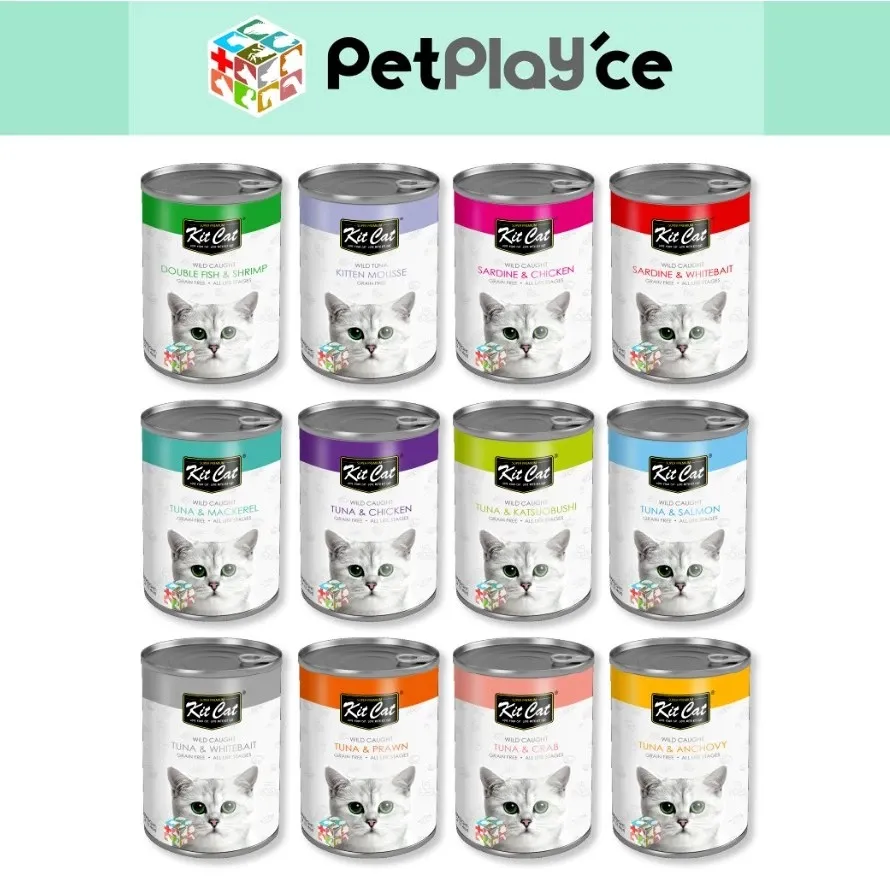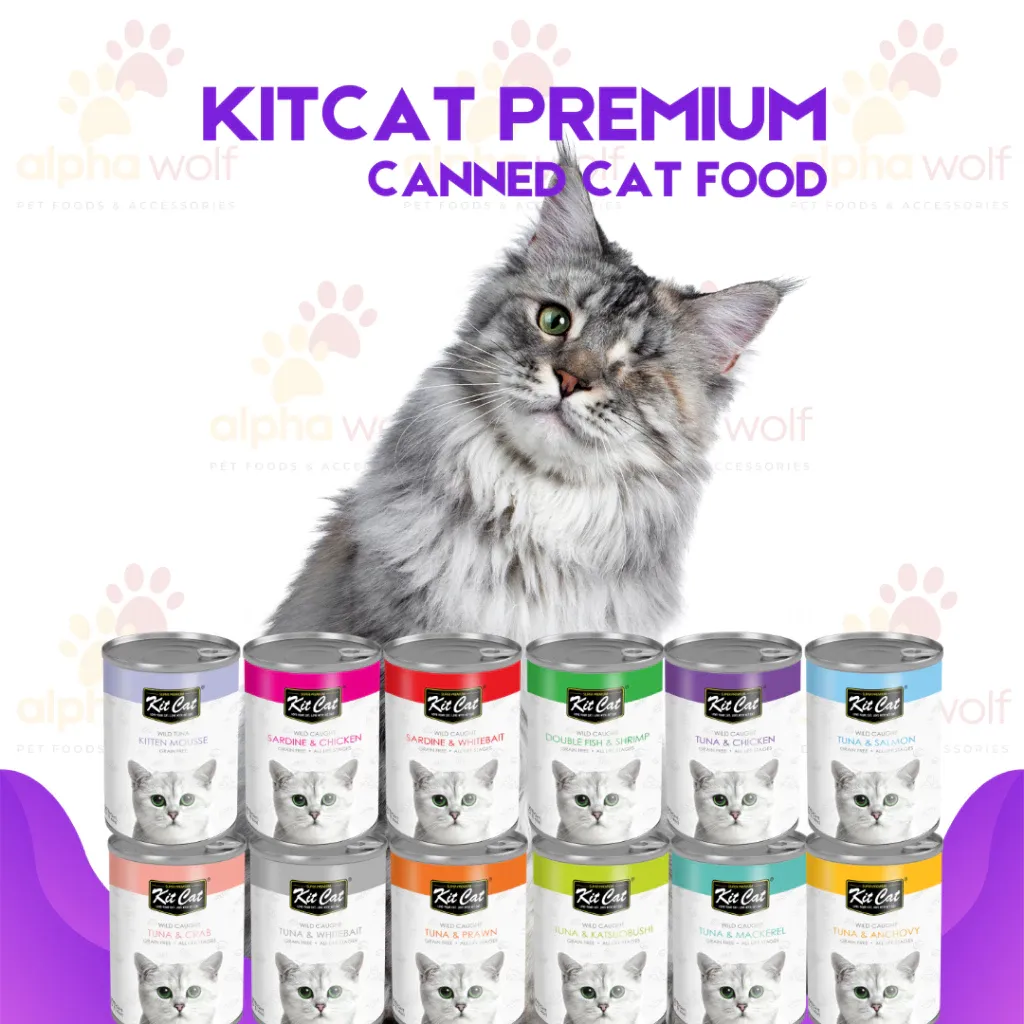
Kitcat Super Premium Can Cat Food Grain Free 400g Wet Food
₱94as of Aug 1, 2026
COD · Shopee-protected payment

How we reviewed this: we read the Shopee PH listing, checked the listed specs, and went through 10,823 owner ratings.
Kitcat Super Premium Can Cat Food Grain Free 400g Wet FoodA well-documented can with taurine and a named additive list, sold on a grain-free promise that means far less for a cat than the marketing suggests.
₱94as of Aug 1, 2026
COD · Shopee-protected payment
| Brand | Kit Cat |
|---|---|
| Type | Wet cat food |
| Price | ₱94 (as of Aug 1, 2026) |
| Shopee owner rating | 4.9 ★ from 10,823 Shopee ratings |
| Shop | alphawolf323 |
| Units sold | 10K+ |
Guaranteed analysis per Kit Cat's premium grain-free 400g line; varies by flavor.
| Pack size | 400g can |
|---|---|
| Life stage | All life stages |
| Crude protein (min) | 12% |
| Crude fat (min) | 0.5% |
| Crude fibre (max) | 1% |
| Moisture (max) | 85% |
| Calories | About 45 kcal/100g |
| Key ingredients | Fish or meat, broth, taurine, FOS, vitamins & minerals; grain-free |
A 400g can at around ₱94 as of August 1, 2026, roughly ₱235 a kilo, from one of the few brands here that publishes a real ingredient list.
Grain-free is a genuine selling point in dog food, where grain can make up a large share of a recipe. In cat food it does much less work.
Cats are obligate carnivores. A decent cat food was never built on grain in the first place, so removing it is not the upgrade the phrase implies, and the word on the front of a can tells you what is absent rather than what is present.
What does tell you something is further down the label: added taurine, FOS, vitamins and minerals, over fish or meat and broth. Taurine matters most. Cats cannot make enough of it themselves, and a shortage damages the heart and the eyes, which is why a complete cat food has to add it and a tin of plain tuna does not.
Kit Cat states 12% crude protein, 0.5% fat, up to 85% moisture and about 45 kcal per 100g.
Those last two figures sit awkwardly together. Twelve grams of protein supplies roughly 48 kcal on its own, before any fat, so a can carrying 12% protein should read higher than 45 kcal per 100g rather than lower.
The likely explanation is that the figures come from different variants of the range, since the brand sells several recipes under one listing. Either way, treat the calorie line as a rough guide and read the can in your hand. It is a small thing, and it is the sort of thing worth noticing when a label is the only evidence you have.
Take the water out of a 12% protein, 85% moisture can and you get roughly 80% protein by dry weight. That is very high, and the caveat is built into how guaranteed analyses work: protein is stated as a minimum, moisture as a maximum, so the calculation flatters whatever it is applied to.
Read it as a strong figure rather than an exact one. Even discounted heavily it beats every dry food on this page.
Kit Cat’s 400g grain-free can is listed by two shops on this site. The other is the Kit Cat grain-free 400g, a few pesos dearer, and it holds the roundup’s Best Premium spot.
The food is the same, so compare the two on price and stock rather than on the recipe.
Buy this if you want a wet food with a published analysis, added taurine and a named additive list, and you are not paying a premium for the grain-free wording itself. It is a genuinely better-documented can than most of this shelf.
Skip it if price per kilo is your main measure. Several cans here cost less and feed a cat perfectly well.
For a higher published protein at a lower price per kilo, see the Maxwell real tuna 400g can. For the same brand in a single-serve size, the Kit Cat deboned 80g can is the most expensive cat food per kilo on this page.
See how it compares with the other top picks in our cat food comparison.
Less than for dogs. Cats are obligate carnivores and grain was never a large part of a good cat food anyway, so grain-free mostly tells you what has been left out rather than what has been put in.
The listing publishes 12% crude protein at up to 85% moisture, which is roughly 80% protein by dry weight. Treat that as a ceiling, since protein is a minimum and moisture a maximum.
Fructo-oligosaccharides, a soluble fibre added to feed the bacteria in the gut. It is a common addition in premium wet foods and is there for digestion rather than nutrition.
Every card links to our full review.
Disclosure: Product Choicest is reader-supported. We may earn a commission when you buy through our Shopee links, at no extra cost to you. Read affiliate disclosure.