
10 Best portable aircons in the Philippines (2026)
The KANAZAWA 1HP is our Best Overall pick: the cheapest portable aircon we rank at around ₱10,500, the most bought by a wide margin, with a DTI-BPS safety license and a stated one year warranty. Below are the best portable aircons right now, ranked on published capacity, compressor protection, and real owner ratings, with a warning about the exhaust hose nobody mentions.
In a hurry? The KANAZAWA 1HP Portable Air Conditioner with Remote is our top pick for most homes, or go for the Greenfield 1.0HP Portable Air Conditioner at around ₱13,600 if you're on a budget.
Our quick picks
- 1
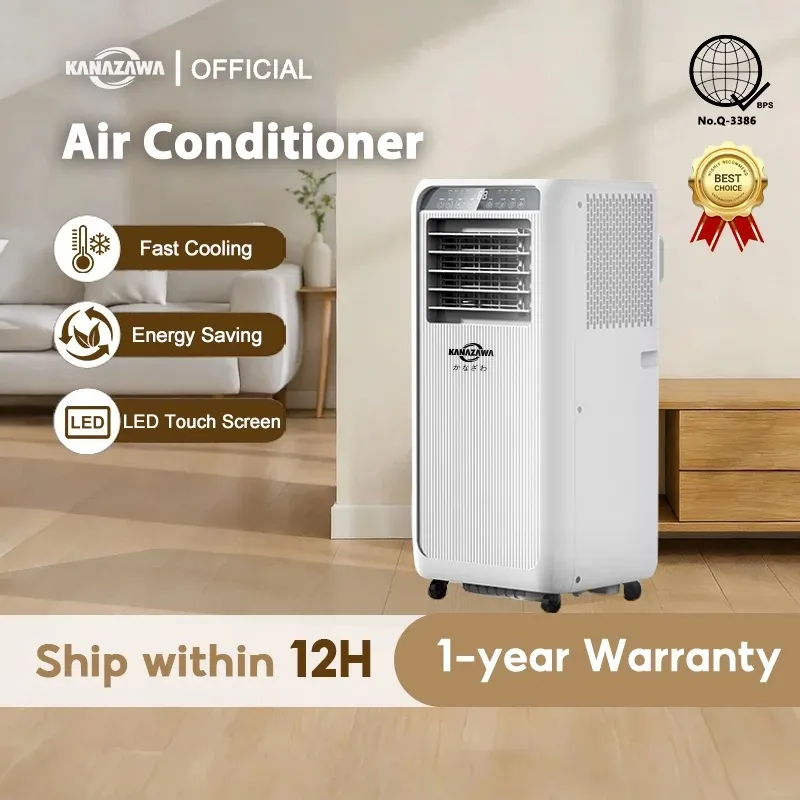
Best Overall: KANAZAWA 1HP Portable Air Conditioner with Remote
₱10,500as of Aug 11, 2026
The cheapest portable aircon here at around ₱10,500 and the most bought by a wide margin, with a DTI-BPS license and a one year warranty.
- 2
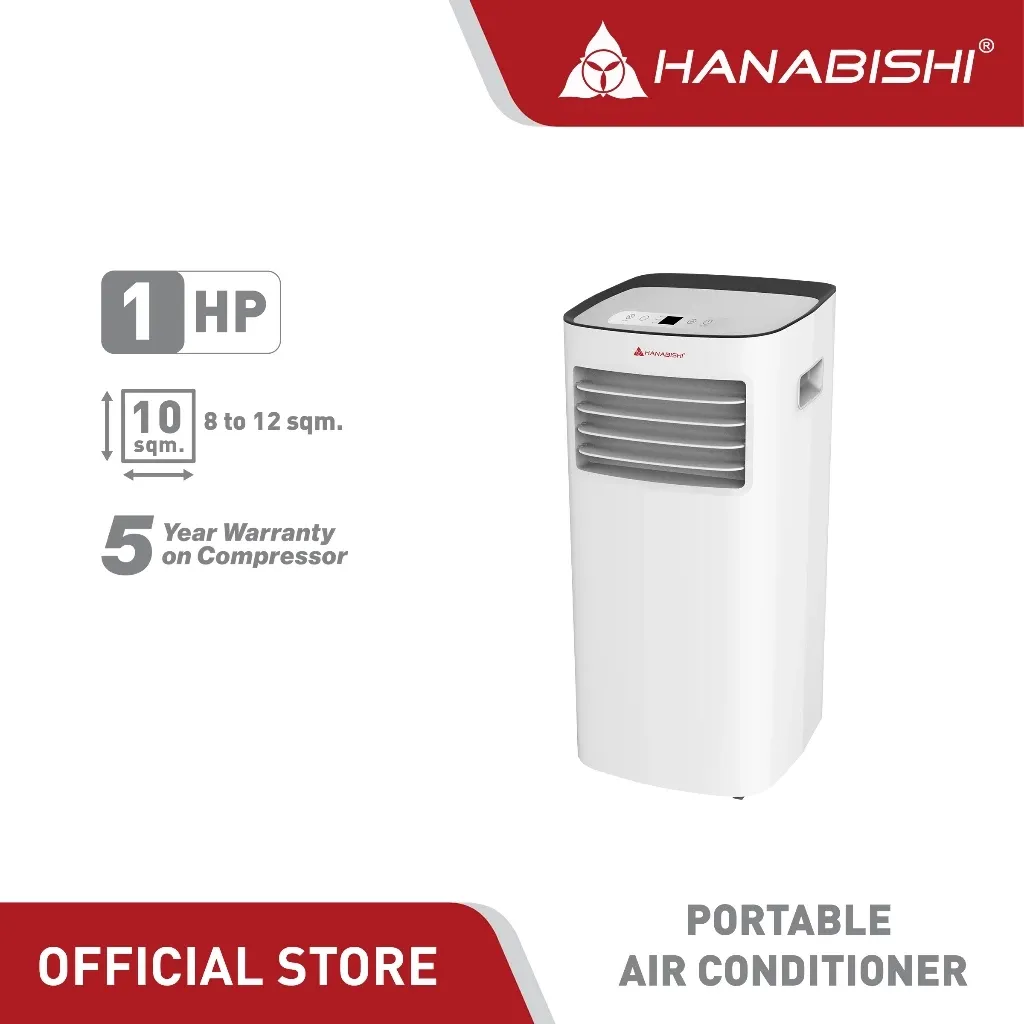
Best Warranty: Hanabishi HPORTAC Portable Aircon 1HP
₱17,900as of Aug 11, 2026
Five years of compressor warranty and a published 8 to 12 sqm coverage for around ₱17,900: the only unit here that tells you both what it covers and for how long.
- 3
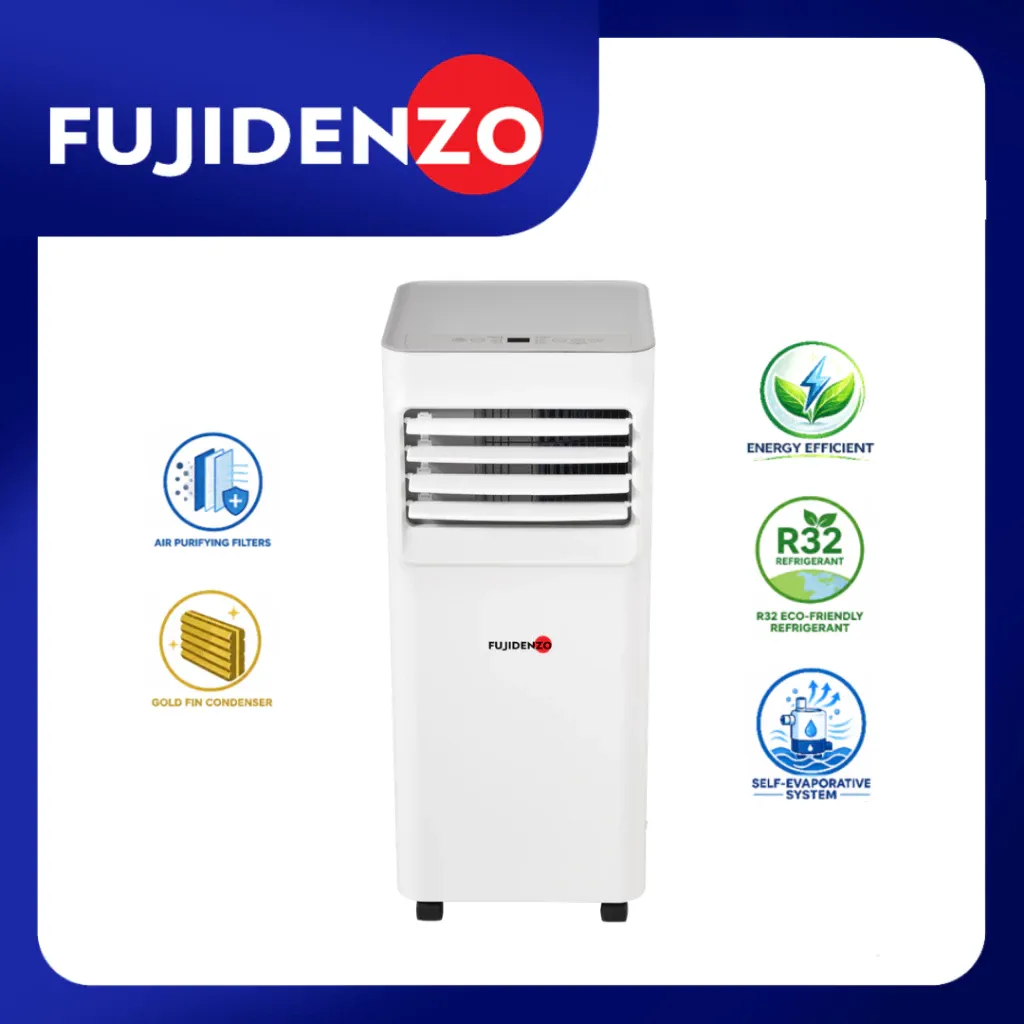
Best Refrigerant: Fujidenzo PAC-150AIG2 1.5HP Inverter Grade Portable Aircon
₱17,200as of Aug 11, 2026
R32 refrigerant, a gold fin condenser and self-evaporative drainage at 1.5HP for around ₱17,200: the most modern hardware here, sold without a stated warranty.
- 4
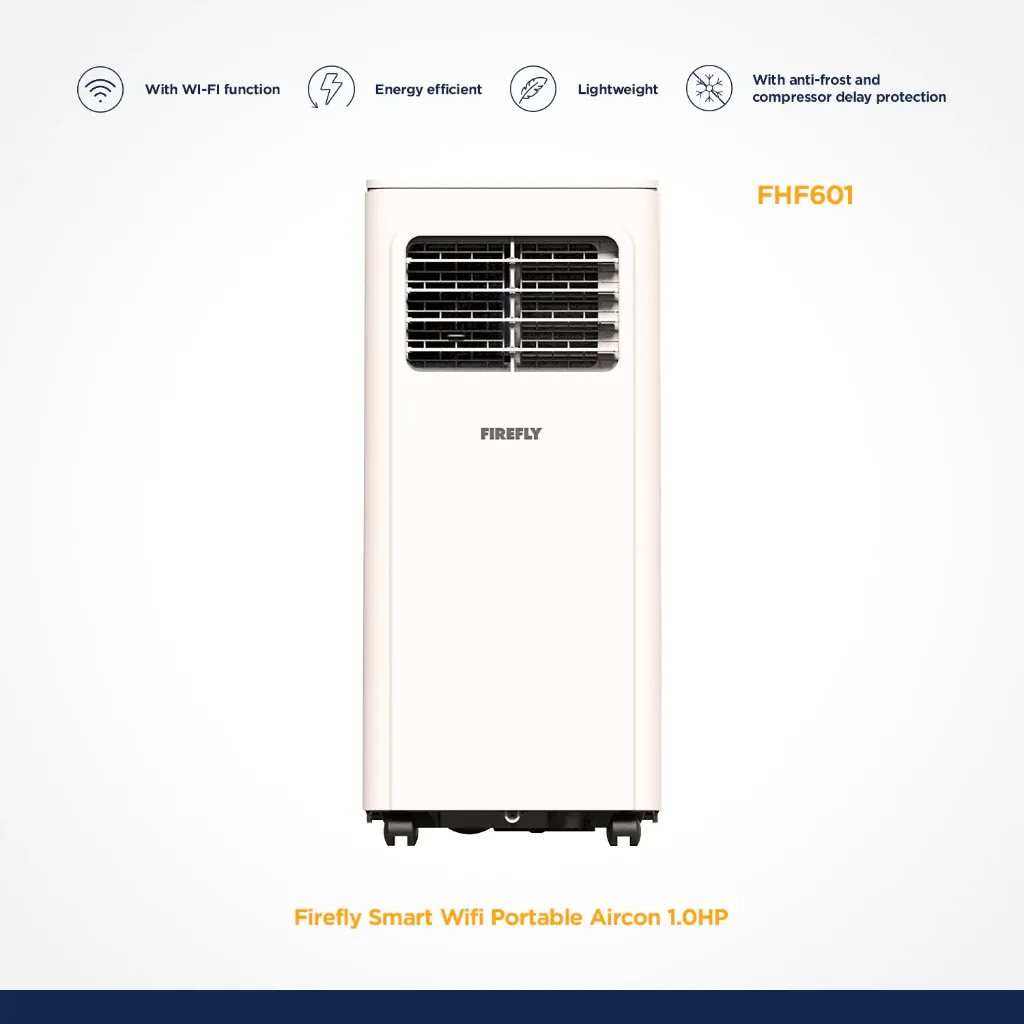
Best Brownout Protection: Firefly FHF601 Smart Wi-Fi Portable Aircon 1.0HP
₱15,100as of Aug 11, 2026
Compressor delay and anti-frost protection plus Wi-Fi for around ₱15,100: the features that keep a portable aircon alive in a country with brownouts.
- 5
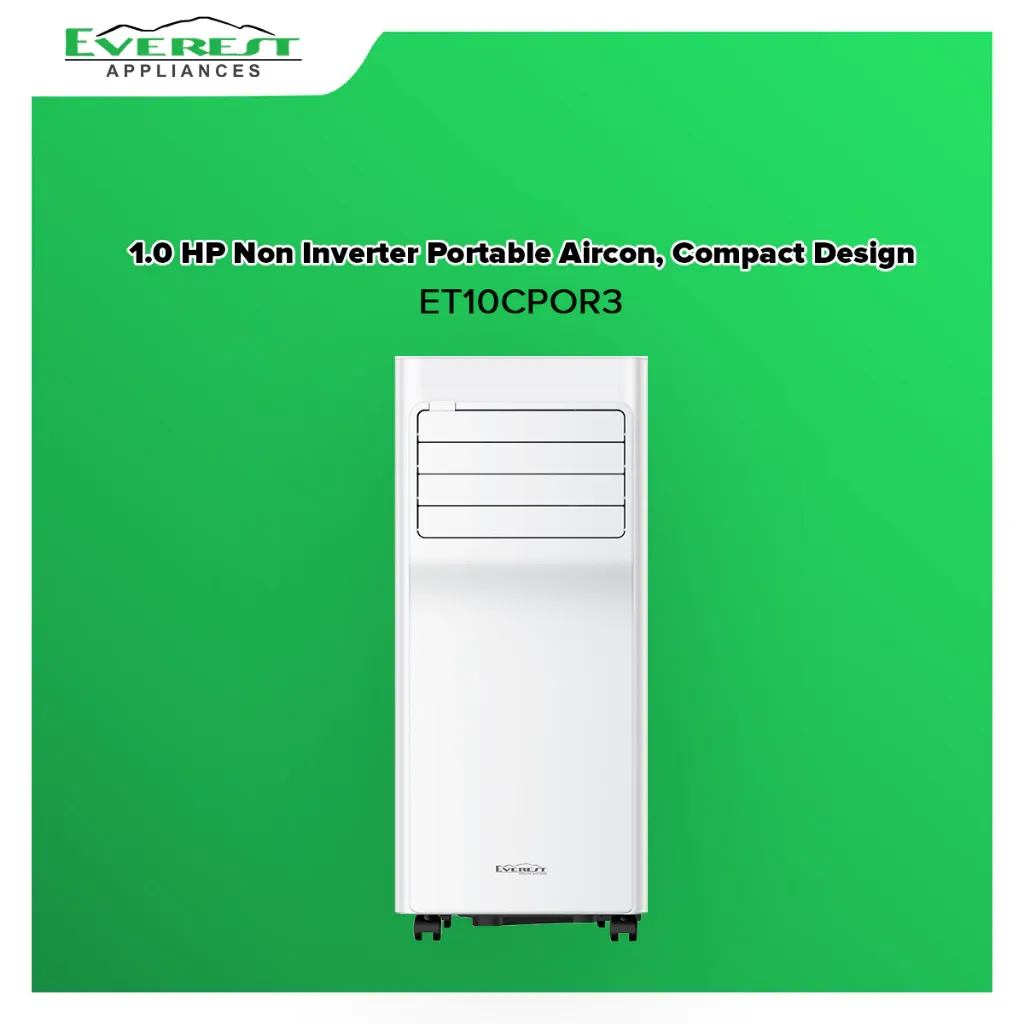
Best for Small Rooms: Everest ET10CPOR3 Portable Aircon 1.0HP Compact
₱17,000as of Aug 11, 2026
A compact 1.0HP unit with a published 11 to 20 sqm coverage for around ₱17,000: honest sizing information on a body that takes little floor space.
- 6
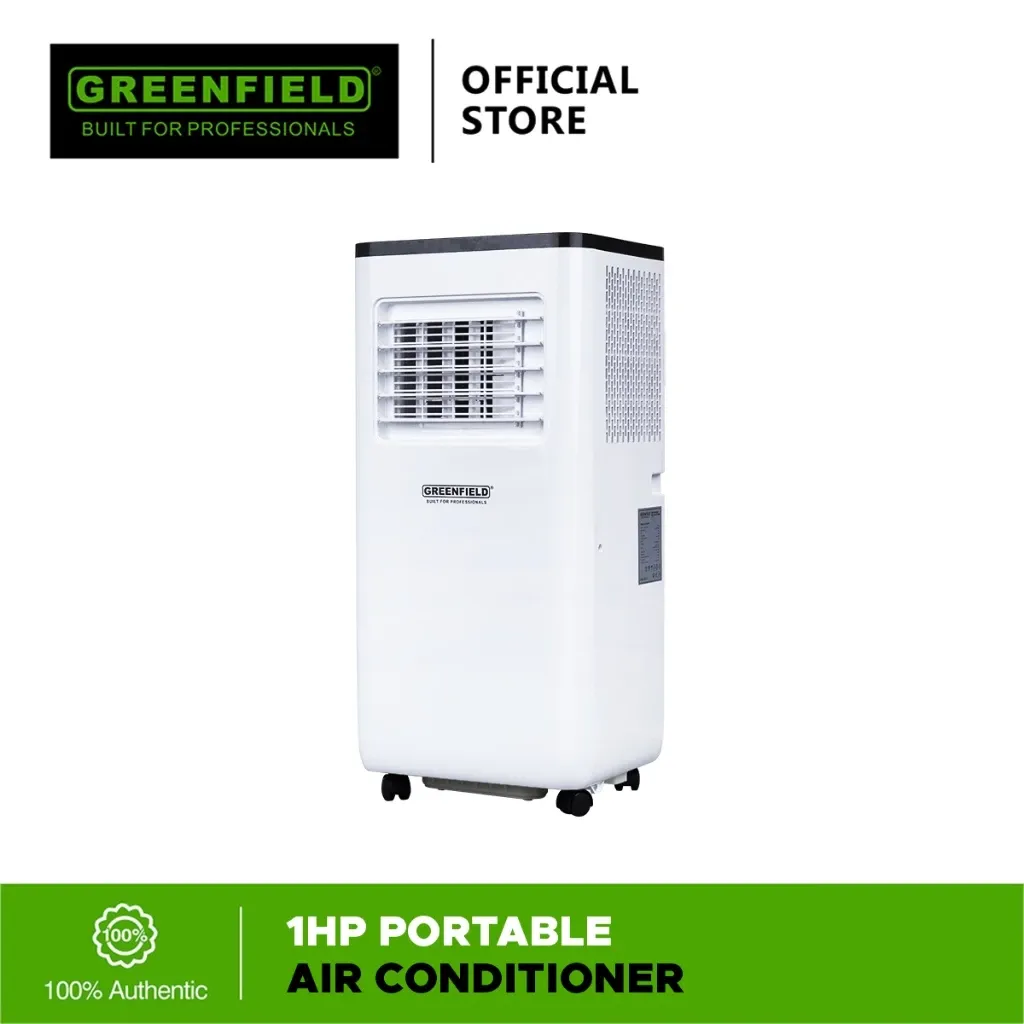
Best Budget Runner-Up: Greenfield 1.0HP Portable Air Conditioner
₱13,600as of Aug 11, 2026
The second cheapest portable aircon here at around ₱13,600, from a known local brand, on a listing that publishes almost nothing about it.
- 7
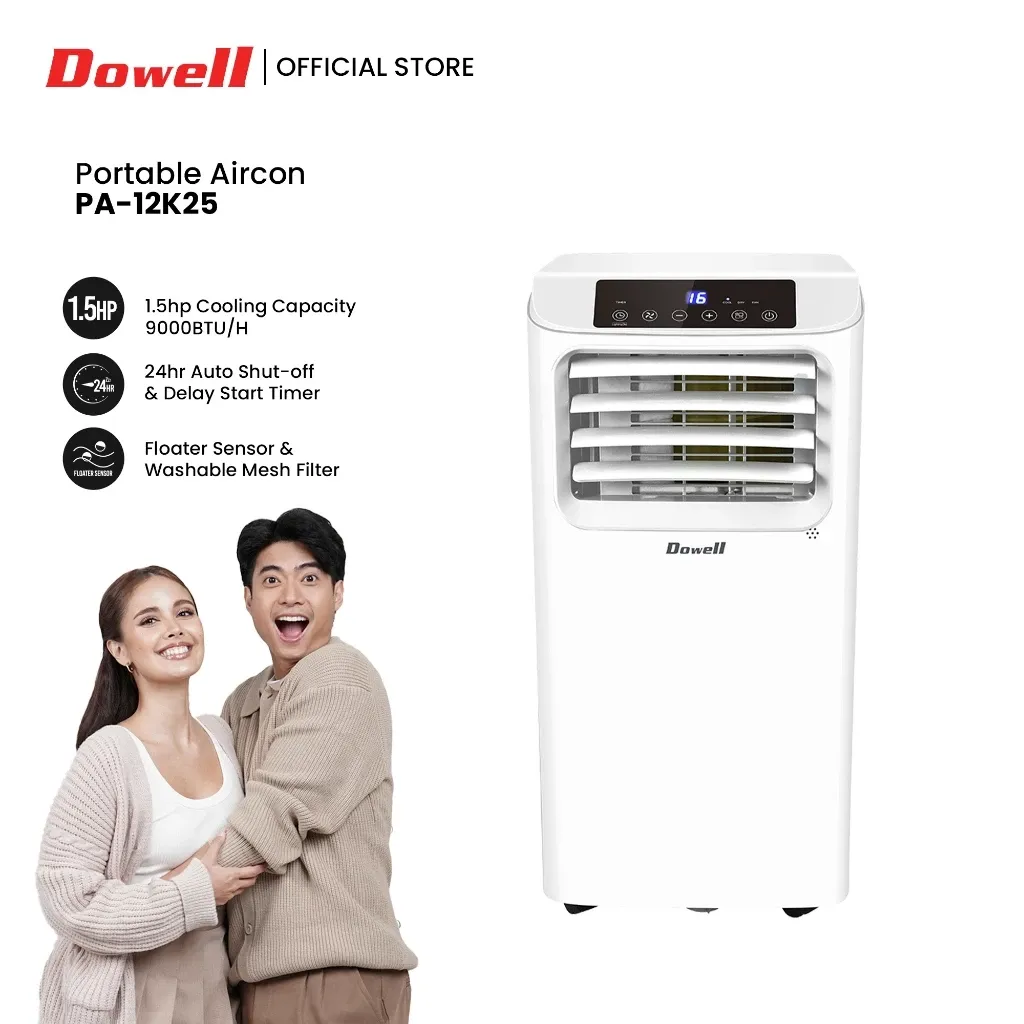
Best Timer: Dowell PA-12K25 Portable Aircon with LCD Display
₱22,000as of Aug 11, 2026
A 24 hour timer, a floater sensor and a rare published BTU figure for around ₱22,000, on a listing that calls 9,000 BTU/hr a 1.5HP unit.
- 8
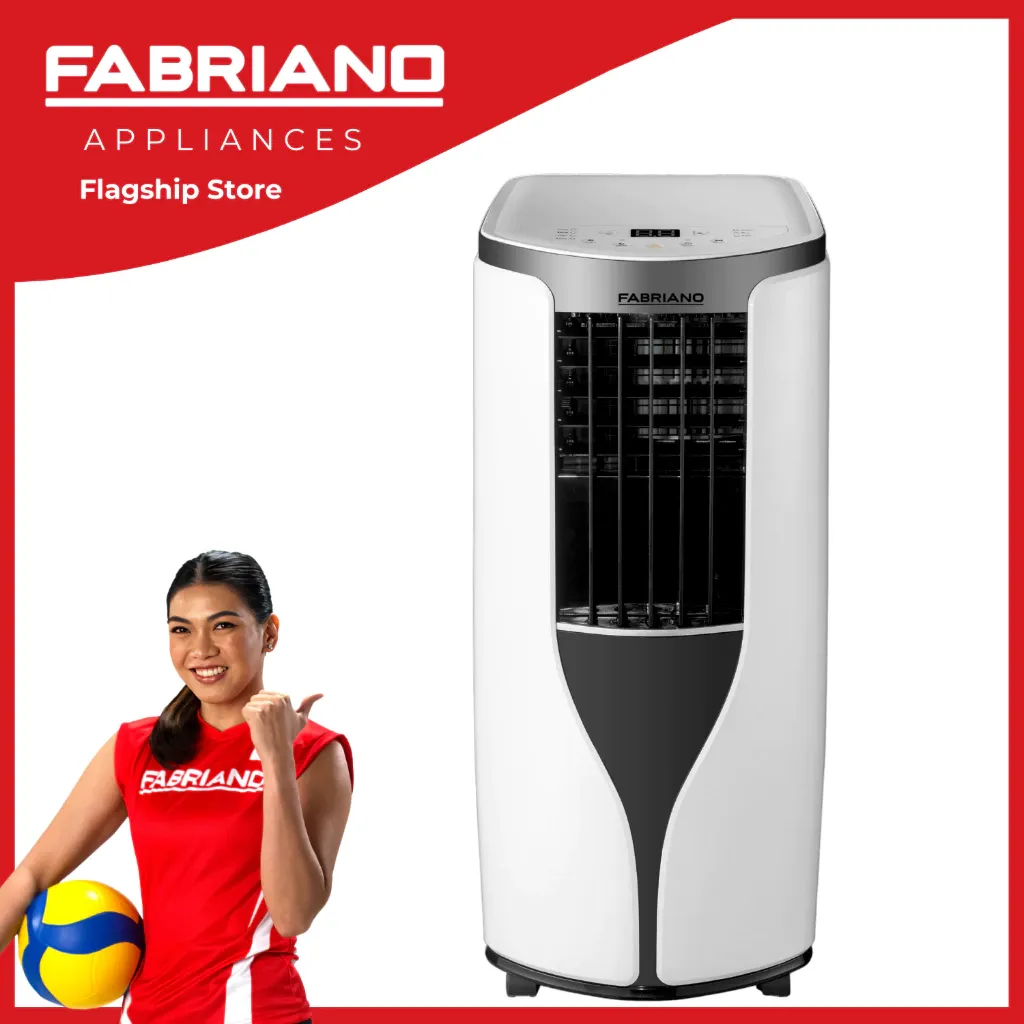
Best 3-in-1: Fabriano FPE12GW 1.5HP Portable Aircon 3-in-1
₱20,000as of Aug 11, 2026
1.5HP that also dehumidifies, for around ₱20,000: the unit that keeps earning its floor space through the rainy season, if you accept a thin spec sheet.
- 9
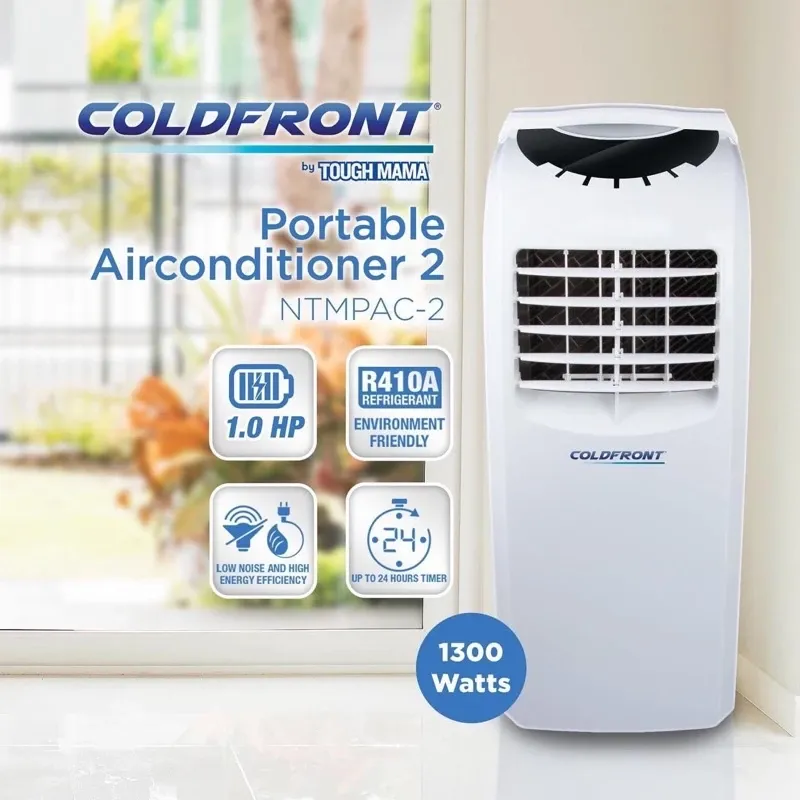
Best Published Wattage: Coldfront by Tough Mama NTMPAC-2 1.0HP Portable Aircon
₱22,000as of Aug 11, 2026
1300W stated and a 24 hour timer for around ₱22,000, but it delivers only 1.0HP on the older R410A refrigerant at the top of the price range.
- 10
Fabriano FPE09GW 1HP Portable Aircon 3-in-1
₱18,000as of Aug 11, 2026
1HP cooling, fan and dehumidifying for around ₱18,000: useful through the rainy season, at a price where rivals sell the same capacity for less.
Top picks compared
Swipe the table sideways to see Capacity and Control.
| # | Product | Award | Price | Shopee rating | Capacity | Control |
|---|---|---|---|---|---|---|
| 1 | KANAZAWA 1HP | Best Overall | around ₱10,500 | 4.7 ★ | 1HP | LED touch screen and remote |
| 2 | Hanabishi HPORTAC | Best Warranty | around ₱17,900 | 4.7 ★ | 1HP, with a 1.5HP variant | Panel and remote |
| 3 | Fujidenzo PAC-150AIG2 | Best Refrigerant | around ₱17,200 | 4.7 ★ | 1.5HP, inverter grade | – |
| 4 | Firefly FHF601 | Best Brownout Protection | around ₱15,100 | 4.8 ★ | 1.0HP | Wi-Fi app, panel and remote |
| 5 | Everest ET10CPOR3 | Best for Small Rooms | around ₱17,000 | 4.8 ★ | 1.0HP non-inverter, with a 1.5HP variant | Panel and remote |
| 6 | Greenfield 1HP | Best Budget Runner-Up | around ₱13,600 | 5 ★ | 1.0HP | Panel and remote |
| 7 | Dowell PA-12K25 | Best Timer | around ₱22,000 | 5 ★ | Listed as 1.5HP, with a stated 9,000 BTU/hr | – |
| 8 | Fabriano FPE12GW | Best 3-in-1 | around ₱20,000 | 4.9 ★ | 1.5HP | Top digital panel and remote |
| 9 | Coldfront NTMPAC-2 | Best Published Wattage | around ₱22,000 | 5 ★ | 1.0HP | – |
| 10 | Fabriano FPE09GW | – | around ₱18,000 | 5 ★ | 1HP | Top digital panel and remote |
Prices are Shopee PH listings as of each product's last check. See the linked reviews for dates. Ratings are the Shopee listings' own owner ratings, not our score.
A portable aircon is a real air conditioner on wheels. It is also the least efficient way to buy cooling, and this category’s listings are unusually bad at telling you what you get.
Brownouts kill these units, so compressor protection counted most
We started from the portable aircons actually selling on Shopee PH and ranked them on four things:
- Published capacity. BTU or square-metre coverage, the only honest way to size a unit. Almost nobody publishes it, so those who do earned credit, and the one listing that contradicts itself got marked down for it.
- Protection against how these actually die. A compressor warranty and compressor delay protection matter more here than any feature, because brownouts and hard restarts are what kill portable aircons in the Philippines.
- Refrigerant and drainage. R32 over the older R410A, and a self-evaporative system or floater sensor over a tray you empty by hand.
- Real owner ratings, weighted by how many people rated. A 4.7 from 296 raters beats a 5.0 from two.
Undersize it and the compressor never stops
Match the HP to the floor area, and undersizing is the expensive mistake.
- 1.0HP suits a bedroom of roughly 8 to 12 sqm. Hanabishi publishes exactly that figure for its HPORTAC.
- 1.5HP suits roughly 15 to 20 sqm, a large bedroom or a small sala. Everest publishes 11 to 20 sqm for its range.
If you undersize, the compressor never stops. The room never quite gets cool, and the electricity bill is worse than it would have been with the right unit.
Insist on a number. Most listings here publish neither BTU nor square metres, and one, the Dowell PA-12K25, calls itself 1.5HP while stating 9,000 BTU/hr, which is a 1.0HP capacity. When the listing contradicts itself, believe the BTU figure.
Where will the exhaust hose go?
Work this out before you buy anything. It is the single most common regret in this category.
A portable aircon does not create cold. It moves heat out of the room, and that heat leaves through a flexible exhaust hose that has to reach a window, a vent, or a hole in a wall. Run without the hose vented outside, the unit puts more heat into the room than it takes out.
Practical checks:
- Is there a window within hose reach of where the unit will stand? Hoses are short.
- Will the window kit fit your window type? Sliding and casement windows need different arrangements, and jalousie windows are awkward.
- Can you live with the gap? A vented window is a gap in your room’s seal, which is also where hot air and mosquitos come back in.
If none of that works in your space, an air cooler needs no hose at all, though it also does not really cool.
Most units here are non-inverter, and labels can mislead
Most units sold here are non-inverter, and the labels are slippery.
- Non-inverter: the compressor is either at full power or off. It cools hard, overshoots, stops, restarts. Cheaper to buy, noisier in cycles, more power over a long run.
- Inverter: the compressor modulates its speed, holds a steady temperature, and draws less once the room is cool.
- “Inverter grade” is a marketing phrase, not a true inverter. The Fujidenzo PAC-150AIG2 uses it. Read it as “better than a plain non-inverter” and no more.
Why choose R32 refrigerant over R410A?
- BTU/hr or sqm coverage. The only honest way to size the unit. Rare on these listings; treat it as a sign of a serious seller.
- Refrigerant. R32 is the current, more efficient, less damaging standard. R410A is a generation behind. Fujidenzo uses R32; Tough Mama still uses R410A.
- Compressor warranty. The compressor is the part that fails and the part that costs most. Hanabishi publishes five years on it; most publish nothing.
- Compressor delay protection. Stops the compressor restarting too soon after a brownout, which is what kills these units in the Philippines. Firefly’s FHF601 lists it.
- Drainage. A self-evaporative system or a floater sensor saves you emptying a tray in humid weather.
- Wattage. Only Tough Mama publishes it (1300W), and it is what tells you the running cost.
KANAZAWA’s 1HP carries a DTI-BPS safety license
- Best Overall: KANAZAWA 1HP. The cheapest here, the most bought, with a DTI-BPS license and a one year warranty. Around ₱10,500 as of August 11, 2026.
- Best Warranty: Hanabishi HPORTAC. Five years on the compressor and a published 8 to 12 sqm coverage. Around ₱17,900.
- Best Refrigerant: Fujidenzo PAC-150AIG2. R32, a gold fin condenser and self-evaporative drainage, at 1.5HP. Around ₱17,200.
- Best Brownout Protection: Firefly FHF601. Compressor delay and anti-frost protection, plus Wi-Fi. Around ₱15,100.
- Best for Small Rooms: Everest ET10CPOR3. A compact body with published 11 to 20 sqm coverage. Around ₱17,000.
Long timers and a dehumidifying 3-in-1 among the runners-up
- Best Budget Runner-Up: Greenfield 1HP. The second cheapest here and a plain, no-nonsense unit, though the listing publishes almost nothing.
- Best Timer: Dowell PA-12K25. A 24 hour auto shut-off and delay start, a floater sensor, and one of only two BTU figures in this ranking, though it contradicts its own HP label.
- Best 3-in-1: Fabriano FPE12GW. 1.5HP that also dehumidifies, which earns its space through the rainy season.
- Best Published Wattage: Coldfront NTMPAC-2. 1300W stated and a 24 hour timer, held back by older R410A refrigerant.
- Fabriano FPE09GW. The 1HP version of the FPE12GW, at a price where rivals sell comparable capacity for less.
Compressor protection and room coverage figures start mid-range
Prices are approximate and move around (Shopee PH ranges as of August 2026). Check the live listing before buying.
| Budget | What you get |
|---|---|
| Around ₱10,500–₱13,600 | Entry 1.0HP units with a remote and castors. The best-selling models live here, and some carry a DTI-BPS safety license and a one year warranty, but expect no published BTU or coverage figures |
| Around ₱15,000–₱18,000 | The sweet spot: 1.0HP to 1.5HP with real features. Wi-Fi and compressor delay protection, R32 refrigerant, self-evaporative drainage, published room coverage, and in one case five years of compressor warranty |
| Around ₱20,000–₱23,300 | 1.5HP units and 3-in-1 dehumidifying models. Build and capacity go up, but several publish less than the cheaper tier does, so check what you are actually paying for |
For most Filipino bedrooms the ₱15,000 to ₱18,000 band is where the money is best spent, because that is where the protections and the published figures start.
Frequently asked questions
What is the best portable aircon in the Philippines?
The KANAZAWA 1HP for most buyers: it is the cheapest here at around ₱10,500, the most bought by a wide margin, and it carries a DTI-BPS safety license and a one year warranty. If you want the longest protection instead, the Hanabishi HPORTAC covers its compressor for five years and publishes its 8 to 12 sqm room coverage.
What HP portable aircon do I need for a bedroom?
1.0HP covers a bedroom of roughly 8 to 12 sqm, and 1.5HP suits about 15 to 20 sqm. Hanabishi and Everest are the two brands here that publish coverage figures, which is the number you should be sizing on. Undersizing is the expensive mistake, because the compressor never stops and the room never gets cool.
Do portable aircons need a window?
Yes. A portable aircon moves heat out of the room through an exhaust hose, and that hose must reach a window, a vent, or a hole in the wall. Without it venting outside, the unit adds more heat to the room than it removes. Check the hose can reach a window from where the unit will stand before you order.
Is a portable aircon cheaper to run than a split-type?
No, it is less efficient. A portable unit sits inside the room it cools, so its compressor heat and its hot exhaust hose both add heat back into the space, while a split-type puts the compressor outside. You buy portable for the flexibility and the lack of installation, not to save on the Meralco bill.
Air cooler or portable aircon?
A portable aircon genuinely refrigerates and dehumidifies regardless of the weather, but needs a hose out a window and draws roughly ten times the power. An air cooler needs no hose and costs almost nothing to run, but it only works well when the air is dry, which in much of the Philippines it often isn't.
What is the difference between inverter and non-inverter?
A non-inverter compressor is either on at full power or off, so it cools hard, overshoots, stops, and starts again. An inverter modulates its speed, holding a steady temperature and drawing less power once the room is cool. Most portable aircons sold here are non-inverter, and some are marketed as 'inverter grade', which is not the same thing as a true inverter.
Where does the water go?
Into a tray, or out through a drain hose, depending on the unit. Cooling pulls moisture out of the air, and in Philippine humidity that adds up fast. Some units have a self-evaporative system that disposes of most of it automatically, like the Fujidenzo, and a floater sensor that shuts the unit off when the tray is full, like the Dowell. Without those you will be emptying a tray.
Disclosure: Product Choicest is reader-supported. We may earn a commission when you buy through our Shopee links, at no extra cost to you. Read our affiliate disclosure.