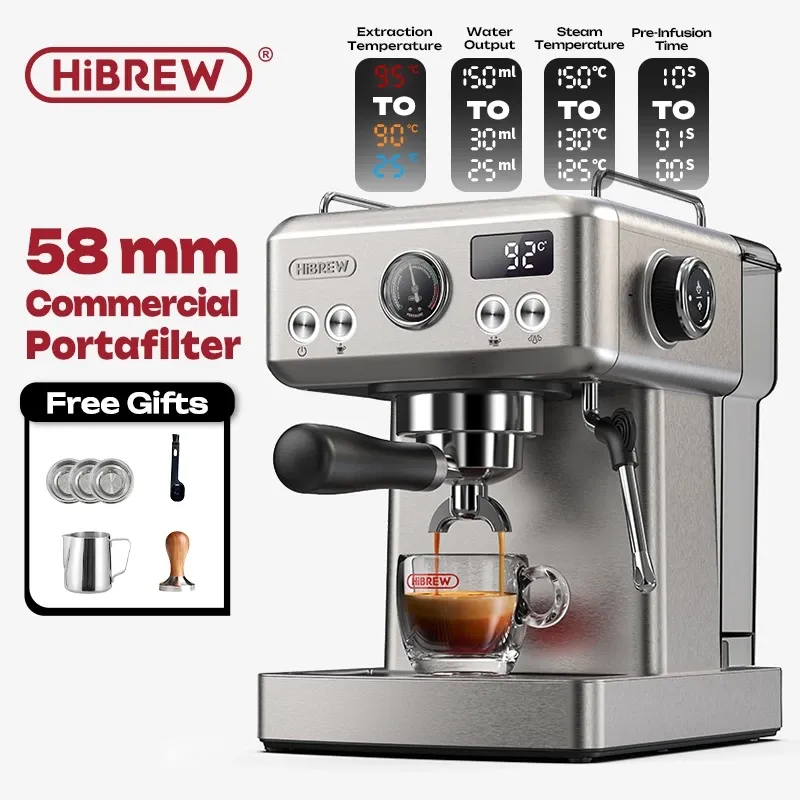
HiBREW H10A Semi-Automatic Espresso Machine 58mm
₱10,300as of Aug 20, 2026
COD · Shopee-protected payment

How we reviewed this: we read the Shopee PH listing, checked the listed specs, and went through 108 owner ratings.
HiBREW H10A Semi-Automatic Espresso Machine 58mmThe only espresso listing here honest about what a 20-bar pump does, and the 58mm portafilter is the spec that opens up the rest of the coffee world.
₱10,300as of Aug 20, 2026
COD · Shopee-protected payment
| Brand | HiBREW |
|---|---|
| Type | Espresso machine (semi-automatic) |
| Price | ₱10,300 (as of Aug 20, 2026) |
| Shopee owner rating | 4.9 ★ from 108 Shopee ratings |
| Shop | HiBREW Offical Store(PH) |
| Units sold | 385 |
| Type | Espresso machine (semi-automatic) |
|---|---|
| Pump pressure | 20 bar, regulated to 9 bar at the group |
| Portafilter | 58mm stainless steel |
| Heating | Thermoblock, about 35s heat-up |
| Temperature | Adjustable 90–95°C |
| Frother | Steam wand |
At around ₱10,300 as of August 20, 2026, with a 58mm stainless portafilter, an adjustable 90 to 95°C brew temperature, a thermoblock heating in about 35 seconds, and a pump described as 20 bar, regulated to 9 bar at the group.
That last phrase is the most useful sentence in this whole category.
Espresso is extracted at around 9 bars of pressure. That is the figure the drink is defined by, and it has been for decades.
Nearly every machine on this page advertises 15 or 20 bars. That number is the vibratory pump’s maximum output with nothing in its way, and it is not the pressure reaching the coffee. A well-built machine regulates it down to about 9; a poorly built one pushes harder than it should, which channels water through the puck and produces a thin, sour shot with fake crema.
So “20 bar” on a listing tells you about a component, not about the coffee. This listing is the only one here that says what happens to that pressure afterwards, and that is worth more than the number itself.
Fifty-eight millimetres is the commercial standard. Cafe machines use it, which means the whole accessory world fits: tampers, distribution tools, precision baskets, bottomless portafilters.
Smaller proprietary sizes, common on cheaper machines, lock you into whatever the manufacturer chooses to sell. A 58mm machine can be improved over years; a 51mm one mostly cannot.
It also means a larger dose. A standard 58mm double basket takes around 18g of coffee, which is what most modern recipes are written around.
90 to 95°C, set by you.
Brew temperature changes the balance of a shot: cooler pulls emphasise acidity, hotter pulls emphasise body and bitterness, and a light roast usually wants the top of that range while a dark one wants the bottom. Being able to set it is what lets you match the machine to the beans rather than the other way round.
Machines without it run at whatever their thermostat does, which is why cheap espresso tastes the same whatever you put in it.
This is the honest advice about espresso and it costs money nobody budgets for.
Grind size is the main control over extraction. Too coarse and water runs through in ten seconds, giving a sour, thin shot; too fine and it chokes. Dialling that in requires a grinder that adjusts in small steps, and pre-ground supermarket coffee is both too coarse for espresso and stale by the time it reaches you.
A capable machine fed pre-ground coffee is worse than a modest machine with a good grinder. If the budget is fixed, spend it in that order.
Buy this if you want to actually learn espresso, you have or will buy a grinder, and you want a machine you can add to rather than replace.
Skip it if you want coffee without the learning, where a capsule machine delivers a consistent cup with none of this.
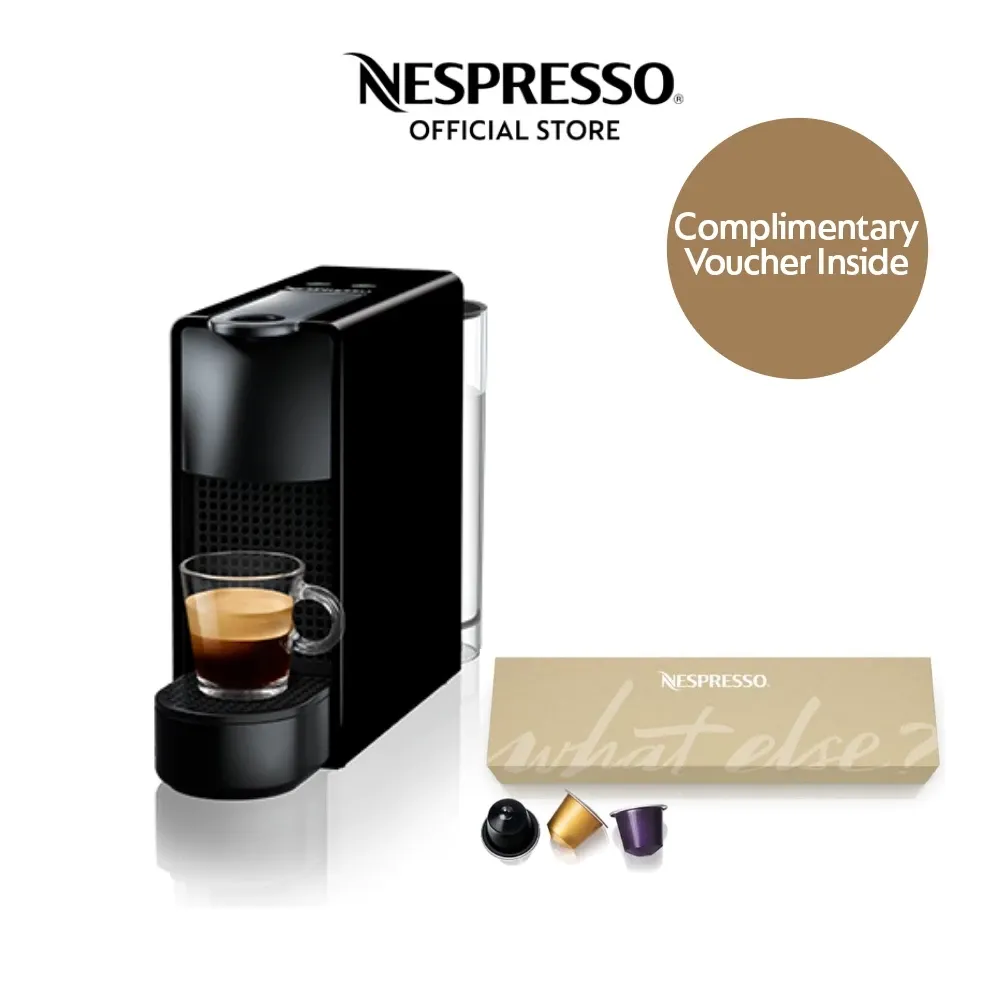
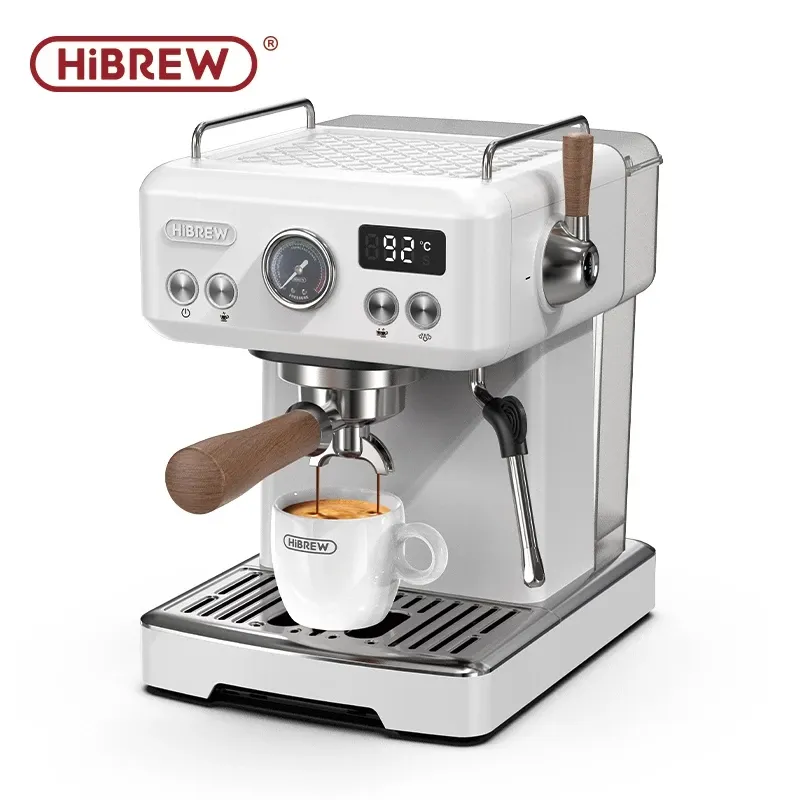
For the same brand at a lower price, see the HiBREW H10B. For consistency with no technique required, the Nespresso Essenza Mini is the opposite approach.
Because both are true and only one matters. The pump can generate 20 bars unloaded; espresso is extracted at around 9, and this machine regulates down to it. Most listings quote only the bigger number.
It is the commercial standard size, so tampers, baskets and accessories made for cafe machines fit. Smaller proprietary sizes lock you into whatever the manufacturer sells.
For espresso, yes, more than you need a better machine. Grind size is the main control over extraction, and pre-ground coffee is almost always too coarse and too stale for it.
Every card links to our full review.
₱8,600as of Aug 20, 2026
₱15,000as of Aug 20, 2026
₱20,000as of Aug 20, 2026
Disclosure: Product Choicest is reader-supported. We may earn a commission when you buy through our Shopee links, at no extra cost to you. Read affiliate disclosure.