
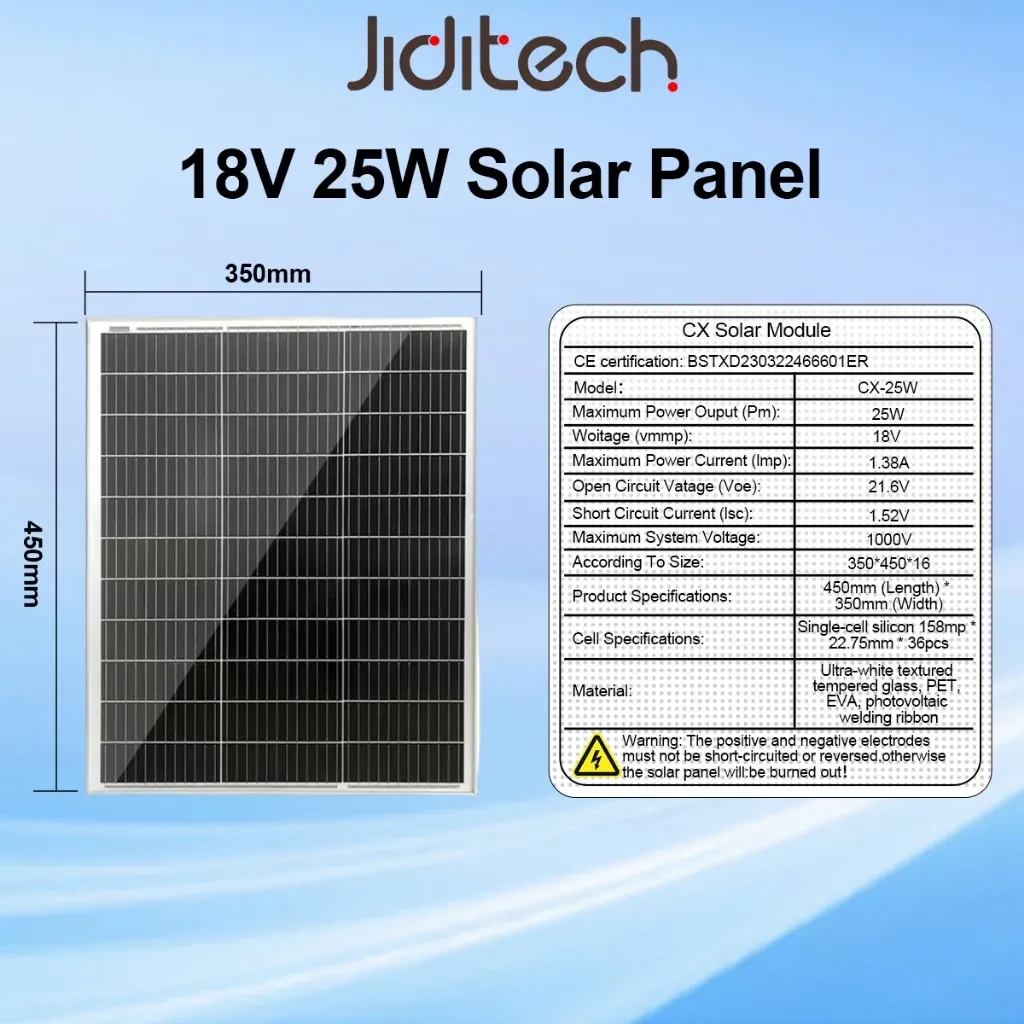
Jiditech CX-25W solar panel review: cheapest 18V panel
How we reviewed this: we read the Shopee PH listing, checked the listed specs, and went through the owner reviews.
Jiditech CX-25W 18V 25W Solar PanelThe cheapest real 18V panel here at around ₱1,000, sized for trickle-charging a 12V battery, with almost nothing published about it.
- Price: ₱1,000 as of Aug 2, 2026
- Biggest pro: The cheapest way into a real 18V panel rather than a USB toy
- Main catch: Jiditech publishes no data sheet, so efficiency, weight, and weather rating are all unstated
At a glance
| Brand | Jiditech |
|---|---|
| Type | Solar panel |
| Price | ₱1,000 (as of Aug 2, 2026) |
| Shopee owner rating | 5.0 ★ from 17 Shopee ratings |
| Shop | Jiditech Mall |
| Units sold | 22 |
Specifications
Specs per the Jiditech listing; the brand publishes no data sheet for this model
| Type | Solar panel |
|---|---|
| Rated power | 25 W |
| Voltage | 18 V |
| Cell type | Monocrystalline |
| Intended use | 12 V battery charging for cars, boats, and RVs |
Pros and cons
✓ Pros
- The cheapest way into a real 18V panel rather than a USB toy
- Monocrystalline cells, the same cell type as the branded panels here
- Sized for topping up a 12V car, boat, or motorcycle battery
- Small enough to leave permanently on a dashboard or a shed roof
✗ Cons
- Jiditech publishes no data sheet, so efficiency, weight, and weather rating are all unstated
- Needs a charge controller before it can safely charge a 12V battery, which is an extra purchase
- 25W trickle-charges a battery rather than running anything directly
- No stated IP rating, where every EcoFlow panel here documents one
The Jiditech CX-25W is the cheapest real panel in this roundup at around ₱1,000: 25W at 18V, sized for trickle-charging a 12V battery. Almost nothing about it is published.
What is it for?
A specific, useful job the big panels do not do: keeping a 12V battery alive. A car that sits parked for weeks, a motorbike, a boat, a small shed light. The panel puts back what the battery loses to self-discharge so you are not jump-starting it every time you come back.
25W at 18V is the standard shape for that task, and monocrystalline cells are the same type used in the branded panels here.
What do you need to add?
A charge controller. An 18V panel wired straight to a 12V battery can overcharge it, which shortens the battery’s life or worse. A basic controller is cheap, but it is a second purchase, so count it when you compare this against alternatives.
What is not published?
Most of it, and this is the honest reason it sits low in our ranking. Jiditech publishes:
- no efficiency figure, so there is no way to compare it against the 23% and 25% ratings elsewhere here
- no weight
- no IP rating, where every EcoFlow panel in this roundup documents one
For a panel meant to live outdoors on a dashboard or a shed roof, a missing weather rating is the gap that matters most. We would not leave it exposed without knowing what it is sealed against.
Is the Jiditech solar panel sulit?
Around ₱1,000 as of August 2, 2026. Check the latest price on Shopee. On raw arithmetic it is roughly ₱40 per watt, the lowest number in this roundup by a wide margin.
That figure needs a caveat, though, and it is a big one: cost per watt only compares like with like. These are 25 watts you cannot point at a power station, from a brand that publishes no efficiency rating, and you still need a controller. Against a documented panel the comparison is not really apples to apples.
For its actual job, keeping a parked battery topped up, it is cheap and it works. Just do not read that number as “best value panel here”.
Who the Jiditech solar panel suits
Buy this if you need to keep a car, motorbike, or boat battery from going flat and you are comfortable adding a charge controller. It is the wrong buy if you own a power station, because 25W at 18V is not what that input wants. See how it ranks in our best solar panels in the Philippines roundup, or browse more on our Home Improvement page. Our solar panel buying guide explains charge controllers and panel voltages.
If the Jiditech solar panel is not right
If you want a documented panel for a power station instead, the EcoFlow 125W Bifacial is our Best Overall at around ₱9,000 with a full published spec sheet. If you want a local brand with service behind it, the Firefly FSP120/18 is a 120W folding panel at around ₱13,500.
Frequently Asked Questions
What is this panel actually for?
Keeping a 12V battery topped up. Think a car left parked for weeks, a motorbike, a boat, or a small shed light. It trickle-charges rather than running anything directly, which is a genuinely useful job that the big power-station panels do not do.
Do I need anything else to use it?
Yes, a charge controller. An 18V panel connected straight to a 12V battery can overcharge it. A basic controller is inexpensive but it is a second purchase, so factor it in when comparing prices.
What specs does Jiditech publish?
Very little. The listing gives 25W and 18V and calls the cells monocrystalline. There is no published efficiency figure, no weight, and no IP weather rating, where every EcoFlow panel in this roundup documents all three.
Is it worth the risk at this price?
For topping up a car battery, probably yes, because the job is simple and the downside is small. We would not build anything you depend on around an undocumented panel, and we would not leave it in the weather without knowing its rating.
More solar panels we've reviewed
Every card links to our full review.
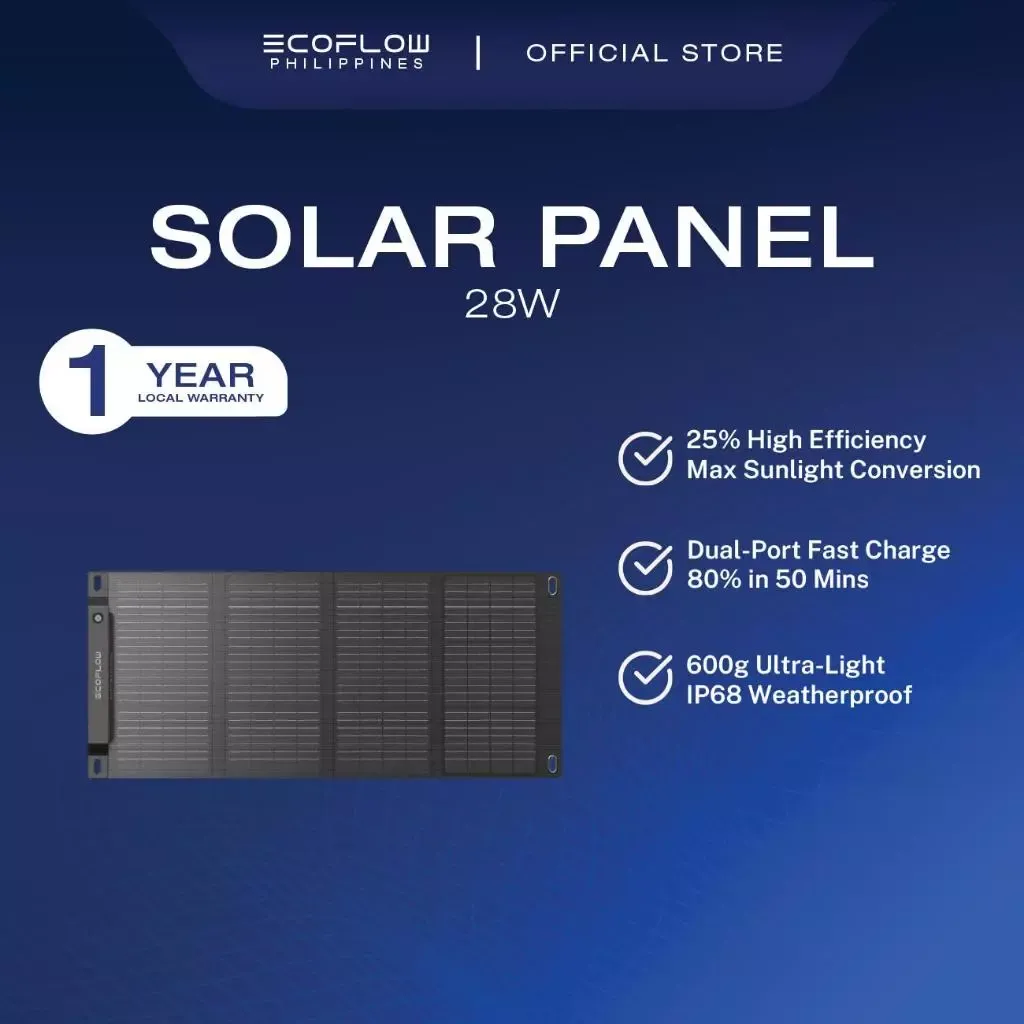
EcoFlow 28W Portable Solar Panel
₱4,000as of Aug 2, 2026
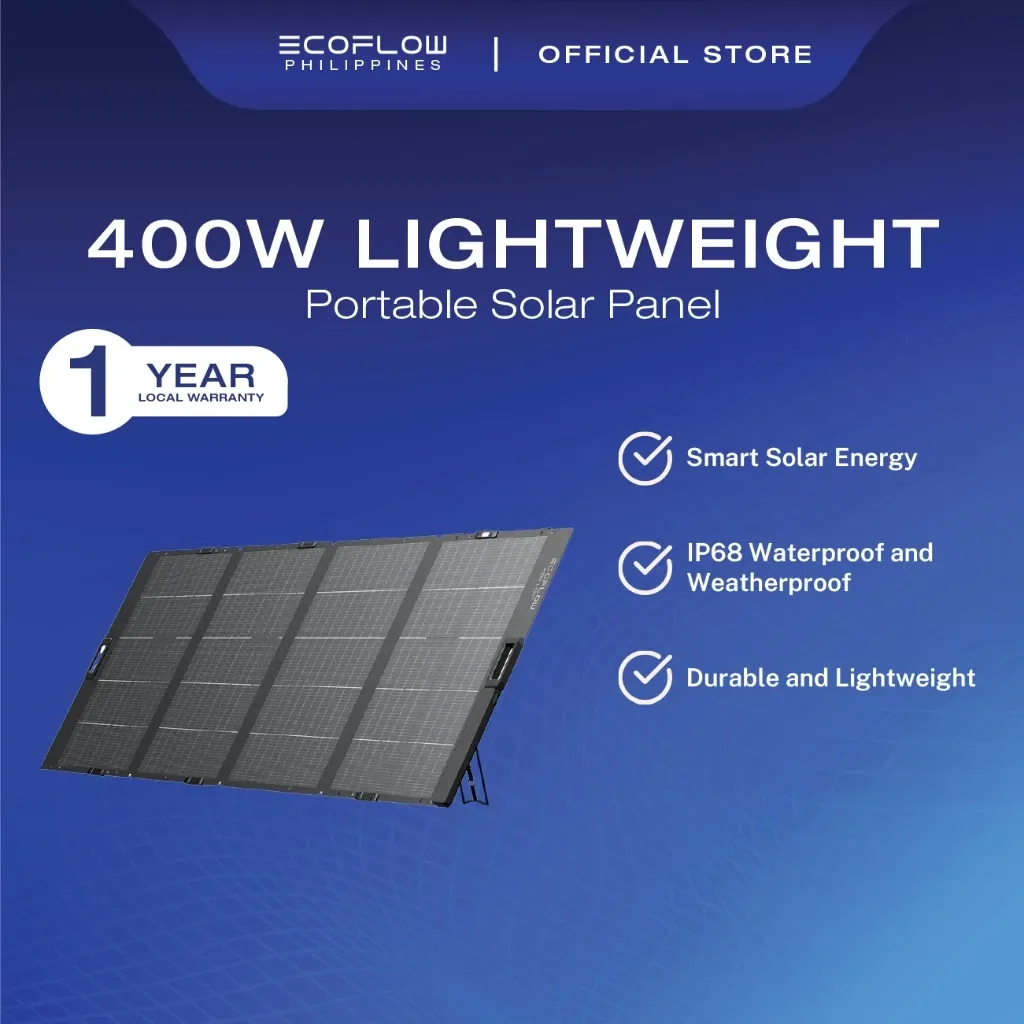
EcoFlow 400W Lightweight Portable Solar Panel
₱35,000as of Aug 2, 2026
Disclosure: Product Choicest is reader-supported. We may earn a commission when you buy through our Shopee links, at no extra cost to you. Read affiliate disclosure.
Jiditech CX-25W 18V 25W Solar Panel₱1,000 when last checked
See today's price 🛒