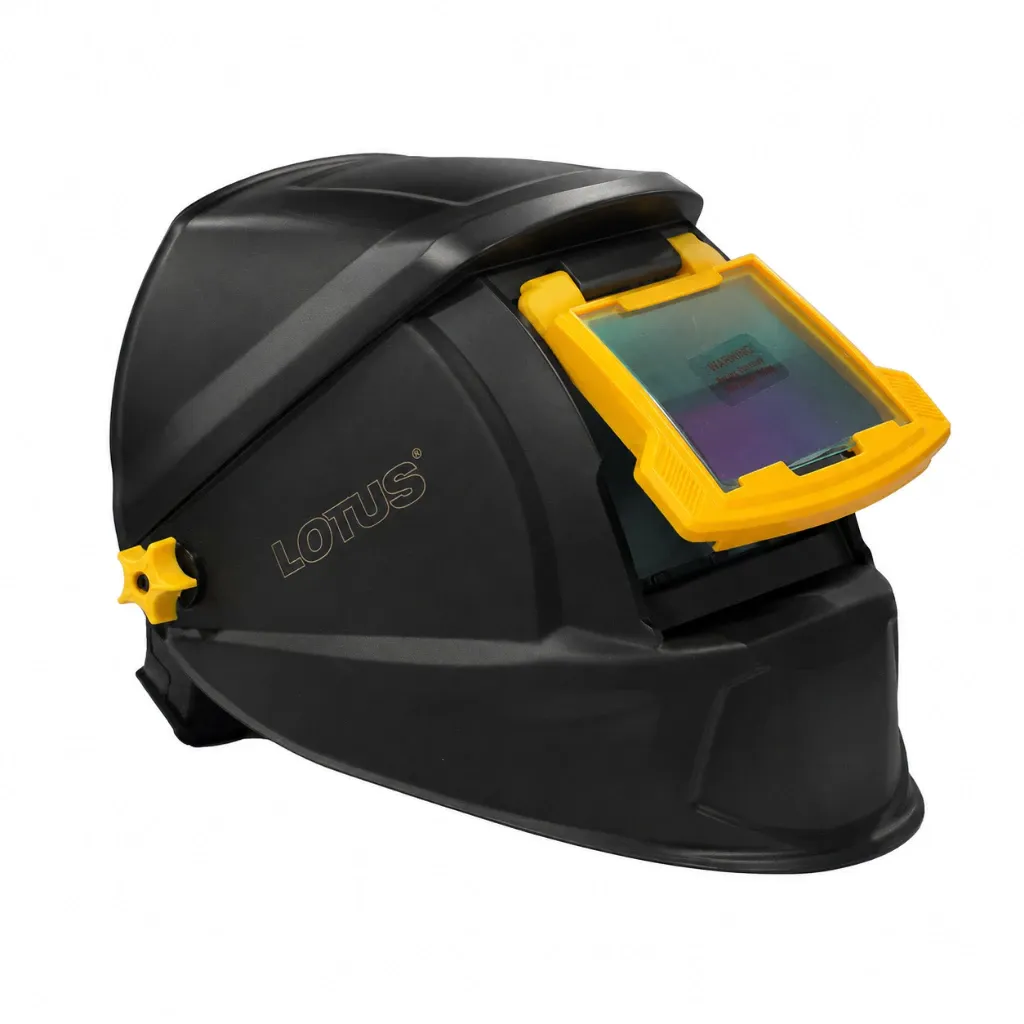
Lotus LTWH300 Ironman Auto Darkening Welding Mask
₱877as of Aug 16, 2026
COD · Shopee-protected payment

Disclosure: Product Choicest is reader-supported. We may earn a commission when you buy through our Shopee links, at no extra cost to you. Read affiliate disclosure.
Our Best Overall pick: a variable DIN 9-13 shade with an adjustable delay for around ₱877, where most rivals at this price give you one fixed shade.
₱877as of Aug 16, 2026
COD · Shopee-protected payment
| Brand | Lotus |
|---|---|
| Type | Welding helmet |
| Price | ₱877 (as of Aug 16, 2026) |
| Owner rating | 4.8 ★ from 819 reviews |
| Shop | Lotus® |
| Units sold | 1K+ |
Specs per Lotus Philippines published data for the LTWH300
| Type | Welding helmet |
|---|---|
| Shade control | Variable, DIN 9-13 |
| Light state | DIN 4 |
| Arc sensors | 2 |
| Delay | Dark to light 0.1-1.0 s, adjustable by internal knob |
| Filter size | 110 x 90 x 9 mm |
| Viewing area | 90 x 34 mm |
| Power | Solar powered |
| Shell | High-impact polyamide |
| Headgear | Ratchet headband |
The Lotus LTWH300 Ironman is our Best Overall welding helmet: a variable DIN 9-13 shade with an adjustable delay for around ₱877, at a price where most rivals hand you one fixed shade and no adjustment at all.
Auto-darkening helmets sit clear at around DIN 3 or 4 so you can see the joint, then darken the instant an arc appears. The question is what they darken to.
The LTWH300 darkens to anywhere from DIN 9 to DIN 13, adjustable. Its rivals at this price darken to a fixed shade 11 and stop.
That single difference decides what the helmet suits. Shade 11 is right for general stick welding around 100 to 200 A. Low-amp TIG needs 9 or 10 to see the puddle at all; high-amp work needs 12 or 13 to avoid aching eyes afterwards. A fixed-shade helmet cannot follow you across that range, and this one can.
Two arc sensors rather than one, which reduces the chance of the lens failing to trigger when your hand or the workpiece sits between you and the arc.
An adjustable dark-to-light delay, 0.1 to 1.0 seconds, set by an internal knob. Short for tacking where you want to see between welds; long for hot heavy work where the glowing puddle would dazzle you the moment the lens cleared. Very few helmets under ₱1,000 offer this at all.
A DIN 4 light state and a proper ratchet headband that adjusts precisely and holds position, rather than a friction strap that slips.
The 90 x 34 mm viewing area is the smallest in this comparison. On short household welds that is fine; on a long bead where you want to see ahead of the puddle, a 92 x 42 mm window is noticeably more comfortable.
Lotus also does not publish a switching time, so the light-to-dark reaction speed cannot be verified. And there is no grinding mode, so the helmet comes off between welding and dressing the bead.
Around ₱877 as of August 16, 2026. Check the latest price on Shopee.
Comfortably the best value here. It costs less than fixed-shade helmets in this comparison while offering the one feature that actually changes what you can weld. Lotus is also a long-established Philippine brand with local service behind it.
Buy this if you want one helmet that handles TIG, stick, and everything between, and you would rather spend on shade control than on a bigger window. It is the right first helmet for almost anyone. See how it ranks in our best welding helmets in the Philippines roundup, or browse more on our Home Improvement page. Our welding helmet buying guide explains the shade numbers, and our welding machine buying guide covers the machine.
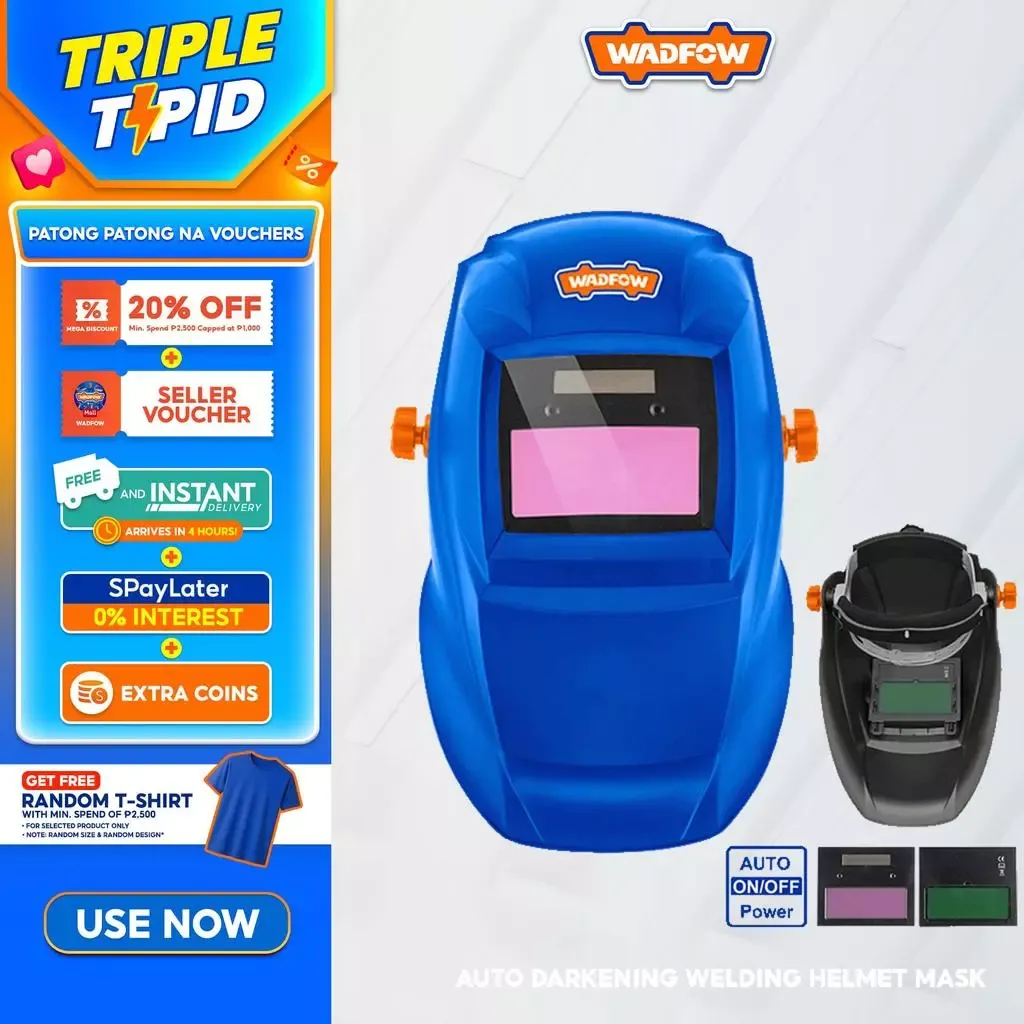
If you weld often or follow long beads, the Tolsen 45087 adds a much larger 92 x 42 mm window, an external shade knob, and adjustable sensitivity. If the budget is tighter, the Wadfow WWH2501 is cheaper and switches faster, though its shade is fixed at 11.
See how it compares with the other top picks in our welding helmets comparison.
Because the right shade changes with the job. Low-amp TIG needs a lighter lens or you cannot see the puddle and your welds wander. High-amp stick needs a darker one or your eyes ache afterwards. A fixed shade 11 helmet suits general stick welding and nothing else particularly well.
It sets how long the lens stays dark after the arc stops, from 0.1 to 1.0 seconds. Short is right for tacking, where you want to see between welds. Long is right for hot heavy work, where the glowing puddle would otherwise dazzle you the instant the lens cleared.
At 90 x 34 mm it is the smallest in this comparison, and you notice it on a long bead where you want to see ahead of the puddle. It is not a safety issue, and for short household welds it is perfectly workable, but a 92 x 42 mm window is genuinely more comfortable.
Yes, and it removes the failure mode that catches people out: a flat battery mid-job. The cell charges from the arc itself and from ambient light. If the helmet has sat in a dark cabinet for months, leave it in daylight for an hour before you weld.
Every card links to our full review.
₱798as of Aug 16, 2026
₱1,300as of Aug 16, 2026