The Lotus LTWH300 Ironman is our Best Overall welding helmet on Shopee Philippines: a variable DIN 9-13 shade with an adjustable delay for around ₱877, at a price where most rivals give you one fixed shade and no adjustment at all. We compared the most popular helmets on shade control, switching speed, viewing area, and price.
Arc light damages eyes permanently and fast, and it does it before anything hurts. Here is how the most popular welding helmets on Shopee Philippines compare, from ₱168 to ₱2,400.
How we picked
We compared shade control, light-state clarity, switching time, sensor count, viewing area, published UV and IR protection, and adjustability, then weighed each against its price. Specs come from manufacturer data where it exists, and where a brand publishes nothing we say so plainly. If you are buying your first helmet, start with our welding helmet buying guide, and if you still need the machine, see our best welding machines roundup.
One finding shaped this list: price barely predicts shade control. The cheapest variable-shade helmet here costs less than the most expensive fixed-shade one. Variable DIN 9-13 is the feature to buy, and it is available well under ₱1,000.
What to look for
Shade control first. A variable DIN 9-13 lens adapts to the job; a fixed shade 11 lens does not, and that single limitation decides what welding the helmet suits. Sensitivity and delay adjustment come next, because they stop the lens flickering on a partly obscured arc and let you tune recovery to your work. Viewing area ranges from 90 x 34 mm to 92 x 42 mm here, which is a bigger difference in use than the numbers look. Sensor count matters when the arc is hidden behind the workpiece. And check for a published DIN 16 UV/IR rating, because that is the protection that works even when the lens fails to darken.
Our top picks at a glance
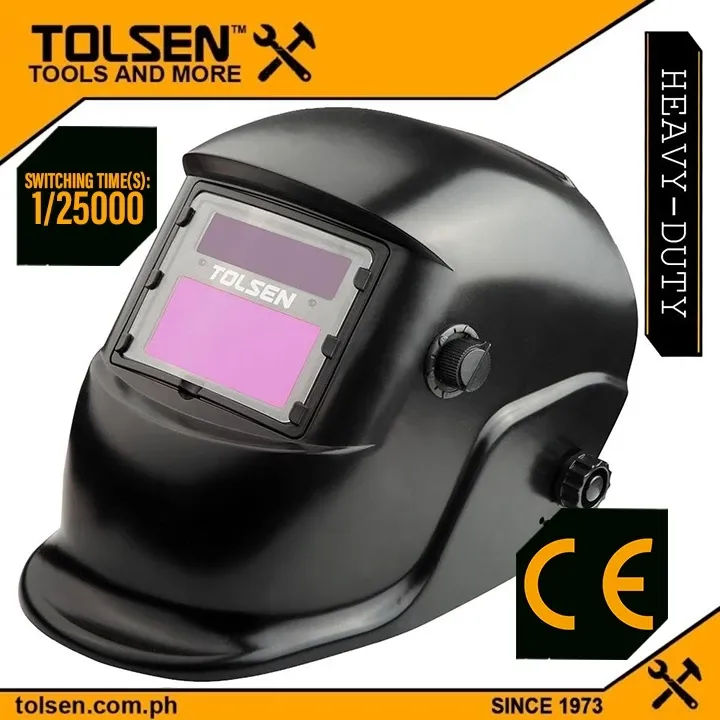
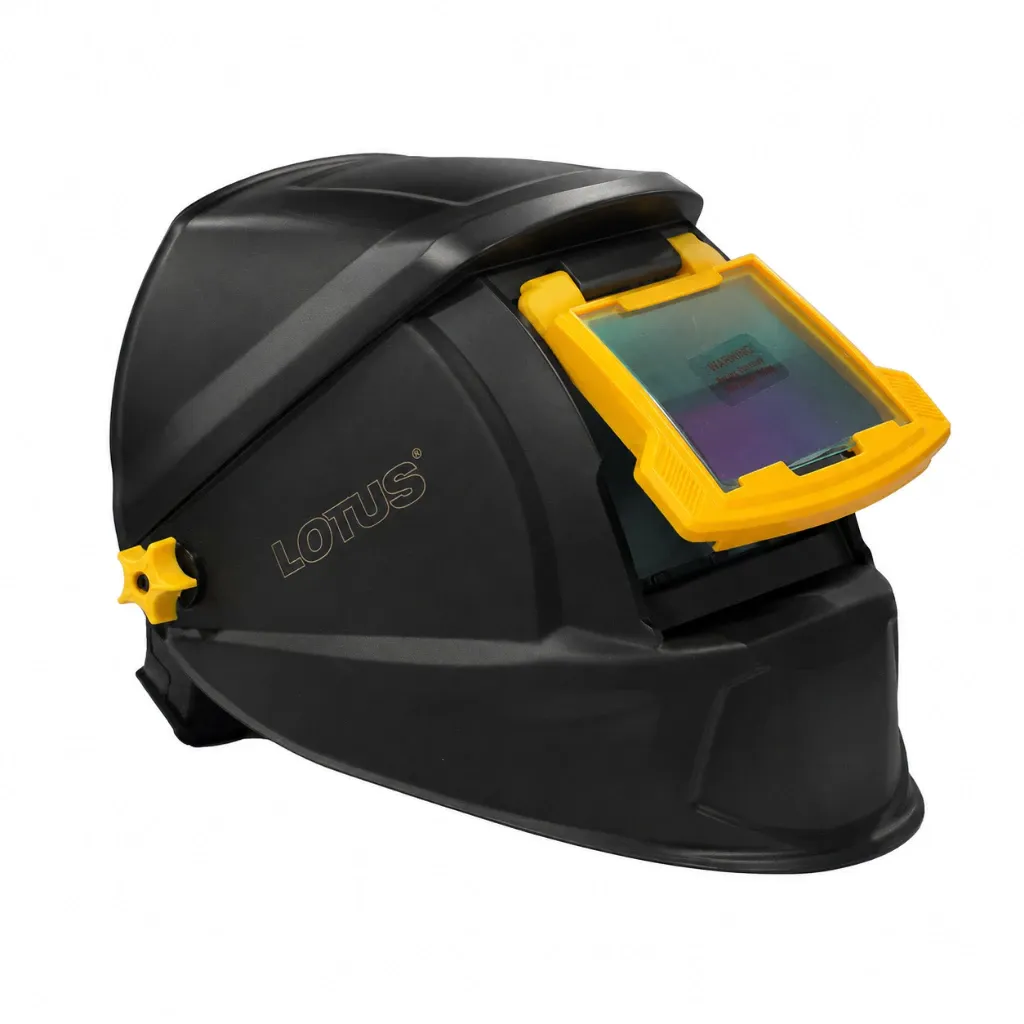
Lotus LTWH300 Ironman wins Best Overall at around ₱877: variable DIN 9-13, a DIN 4 light state, two arc sensors, and an adjustable 0.1 to 1.0 second delay, which is a control set that rivals at twice the price do not match. The Tolsen 45087 is Best for Frequent Welding at around ₱1,500: the largest window here at 92 x 42 mm, 1/25000 s switching, and the only helmet that adjusts shade, sensitivity, and delay together, with the shade knob on the outside.
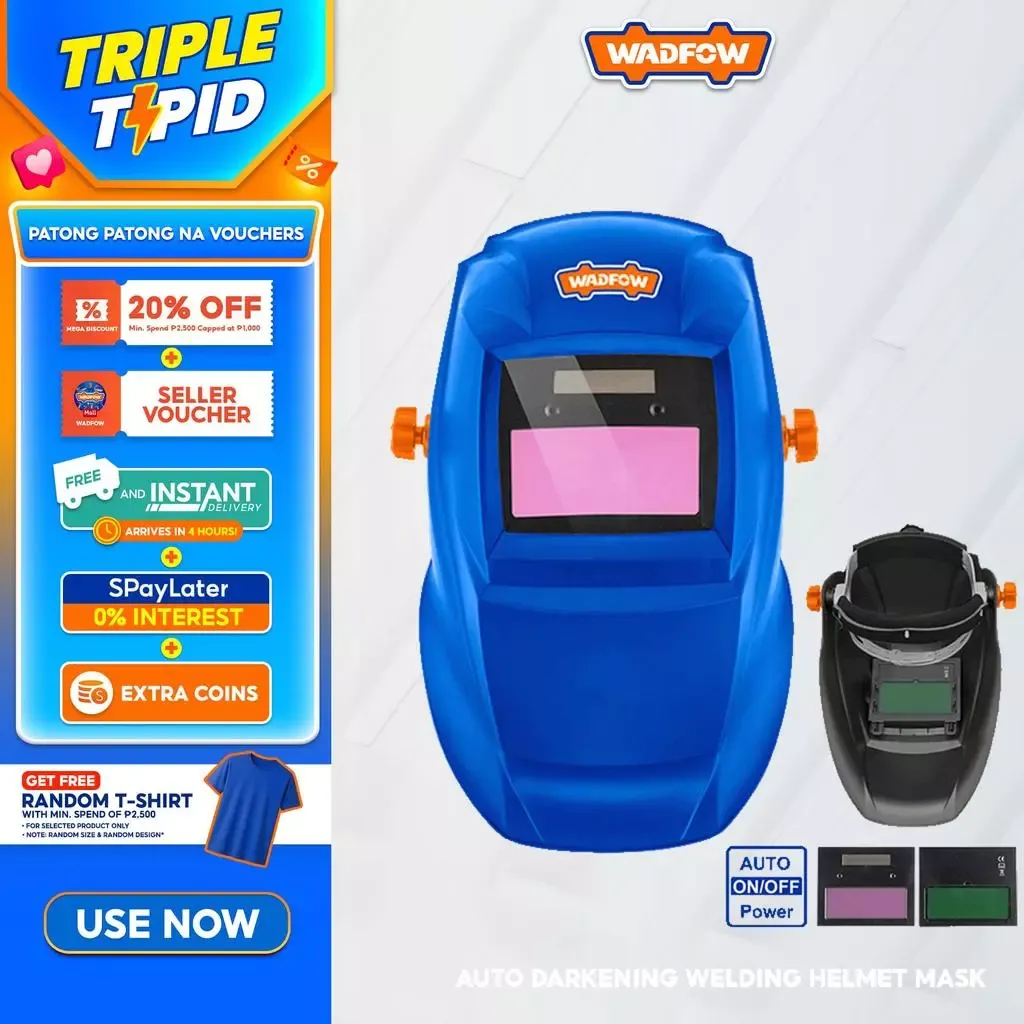
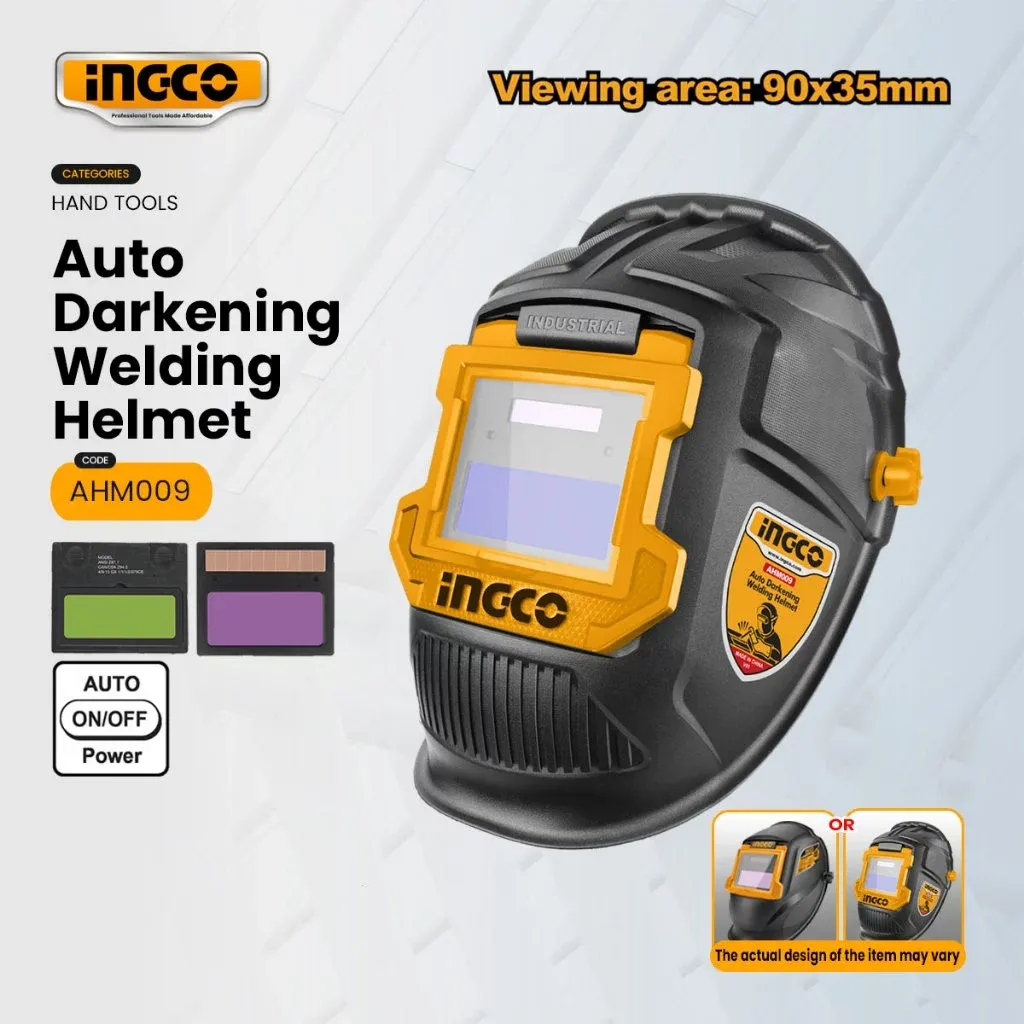
The Wadfow WWH2501 is our Best Budget at around ₱798, with 1/25000 s switching and the clearest DIN 3 light state here, though the shade is fixed. The INGCO AHM009 is Best for Stick Welding at around ₱1,300: its fixed shade 11 is exactly right for general stick work, and it is the only helmet here with a replaceable CR2032 cell rather than a sealed battery.
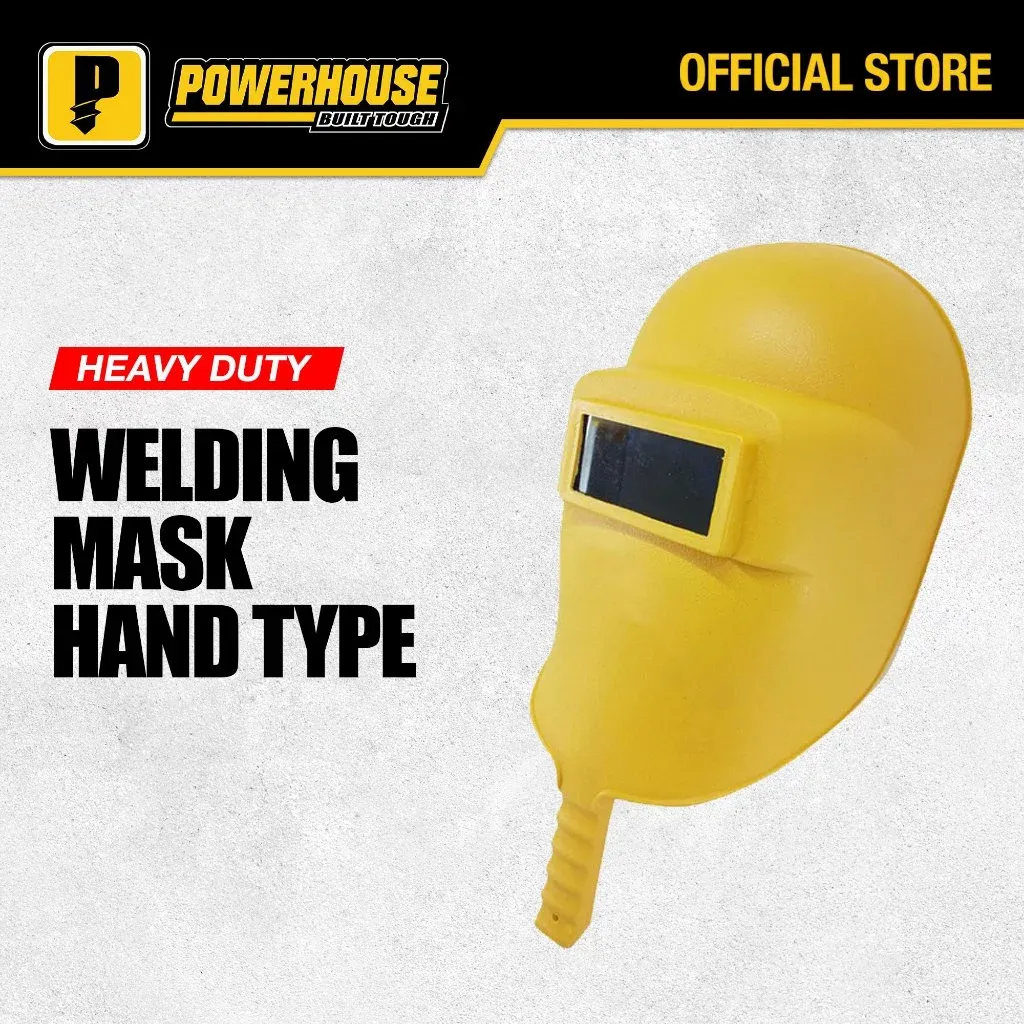
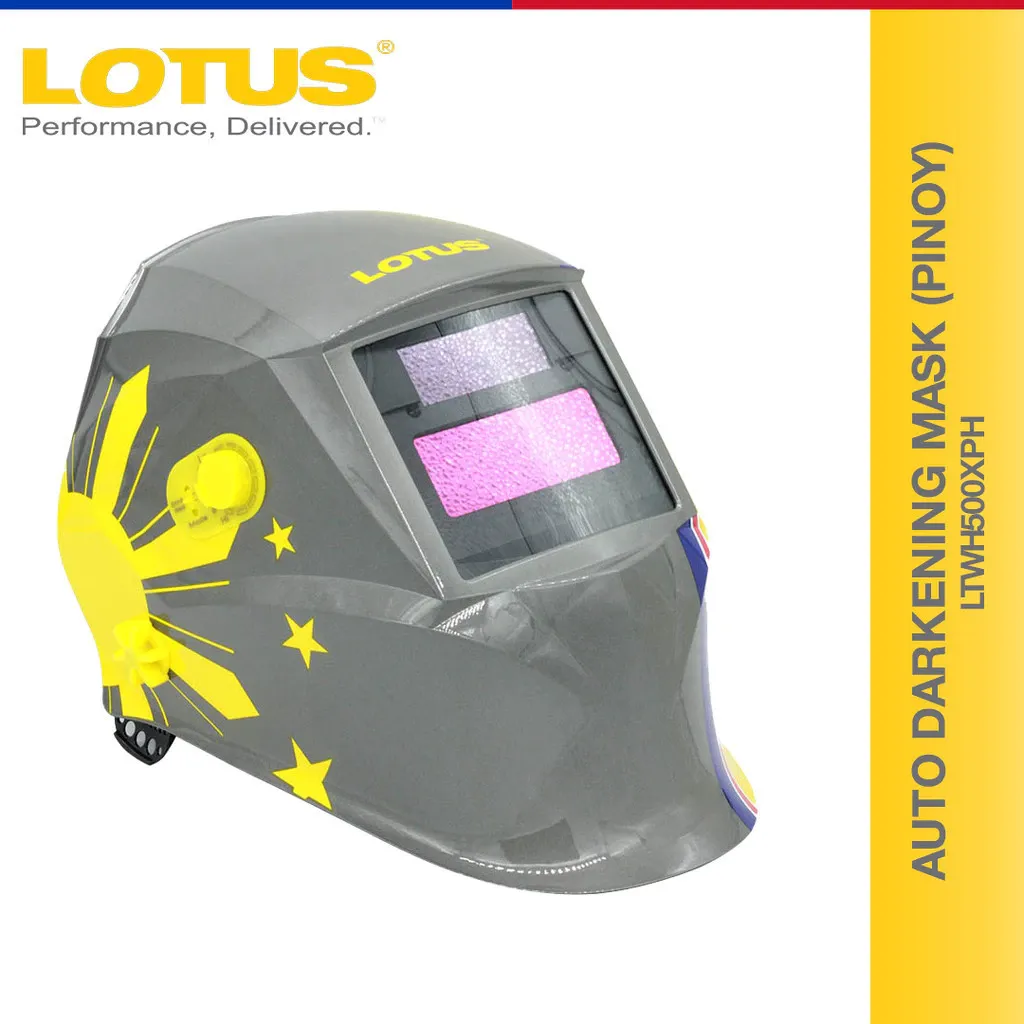
For a spare, the Powerhouse hand type mask is our Best Backup Mask at around ₱168, with shade 12 glass and nothing to fail. And the Lotus LTWH500XPH Pinoy is our Best Upgrade Pick at around ₱1,600, adding adjustable sensitivity and a tougher polyamide shell.
We also reviewed the Powerhouse Ultimate Series, the Greenfield auto darkening helmet, and the Deli Tools LCD helmet and left all three unranked: none publishes a shade range, which is the one thing you need to know before buying. The Tolsen 45086 hand mask is unranked because its glass shade number is unpublished.
All prices are as of August 16, 2026.
Frequently Asked Questions
Fixed shade or variable shade, which do I need?
Variable, unless you only ever run one machine at one setting. Shade 11 is right for mid-range stick welding, but low-amp TIG needs a lighter shade to see the puddle and high-amp work needs a darker one. A fixed shade 11 helmet is too dark for the first and too light for the second, and you cannot fix that.
What shade number should I use?
Roughly: shade 9-10 for TIG and low-amp stick under 100 A, shade 11 for general stick welding around 100 to 200 A, and shade 12-13 above that. Start darker than you think and go lighter until you can see the puddle clearly. If your eyes ache after a session, you were too light.
Does switching speed really matter?
Yes, but not as much as the numbers suggest. Every auto-darkening helmet here switches in well under a hundredth of a second, faster than your eye reacts. The difference between 1/5000 s and 1/25000 s is real but small. Shade range and sensor count change your work far more.
Are the cheap auto-darkening helmets safe?
The lens blocks UV and infrared whether or not it has darkened, so even a failed helmet protects against the invisible damage. The risk with an unbranded helmet is not blindness, it is a lens that fails to darken and leaves you with arc eye, which is painful and takes days to pass. Buy one that publishes a DIN 16 UV/IR rating.
Is a hand-held welding mask ever the right buy?
As a spare, yes. They cost a fraction of an auto-darkening helmet and never fail, which makes them useful for a helper or a visitor watching the arc. As your only mask, no: one hand is permanently occupied, and you have to position the rod blind before striking.